Solutions
Bhutan’s Food System Ethos Offers an Alternative to Factory Farming, but Can it Survive?
Farms•7 min read
Investigation
As H5N1 infects over 70% of the state’s dairy herds, exposed farmworkers are left without PPE or mitigation training in their native language. And some aren’t informed of an outbreak at all.
Investigation • Food • Workers

Words by Grey Moran
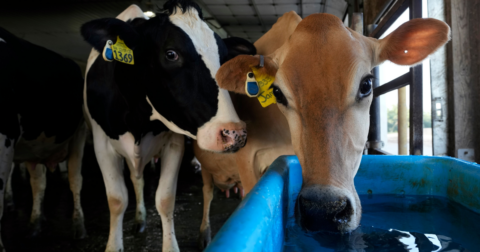
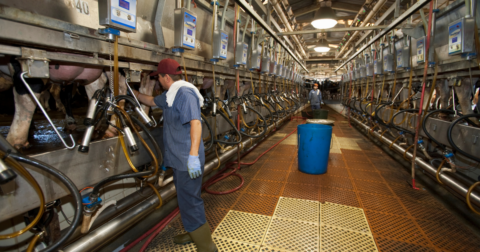
It’s not unusual for cows to be sick, but this time it was different: the cows appeared restless and tired, sometimes with swollen, purple-colored udders and nasal discharge. They’d lose interest in eating, withering away. A virus had been silently spreading through U.S. dairy herds for a few months. Its identity was first confirmed in March 2024 as the highly pathogenic strain of avian flu, H5N1. By the end of summer, the virus hit dairy farms in California, the nation’s top milk producer, which emerged as the epicenter of the virus.
As cows died in droves, California’s dairy farmworkers began falling sick with flu-like symptoms and conjunctivitis — often without knowing why.
California has some of the nation’s strongest labor protections and is the only state with an occupational standard for zoonotic aerosol transmissible diseases that leap from animals to humans, such as avian flu, tuberculosis and COVID-19. Farmworker advocates say that despite California’s more robust regulations, many dairy employers still fail to provide many of the safeguards the law is supposed to guarantee. This includes providing training on avian flu mitigation for both humans and cattle, personal protective equipment and access to medical services.
As avian flu surges again, advocates believe it’s imperative that farmworkers receive more protective gear and training on the virus in their primary language.
“We have heard from our community that they’re not getting that information. It’s not accessible…in the language they understand,” says farmworker organizer Jorge Monterrey, referring to workplace training on the virus. It’s often delivered as “online Zoom trainings and so the format is not really accessible for the community.” Monterrey is the director of the workers’ rights program at Valley Voices, a nonprofit in the Central Valley that has closely supported farmworkers throughout the outbreak, while urging employers to step up their efforts.
The training should be “appropriate in content and vocabulary for the educational level, literacy, and language of employees,” as outlined in California’s Zoonotic Aerosol Transmissible Diseases’ regulations. When training is provided, Monterrey says that employers often overlook safety measures to reduce exposure to farmworkers and guidance on identifying avian flu symptoms in humans. Instead, he says that the trainings are largely focused on mitigating the risk in animals and protecting the milk supply, such as by “making sure they’re able to understand when there’s a symptom that a cow has.”
Some farmworkers aren’t even informed of outbreaks at their own workplaces. “In many cases, the workers themselves don’t know if they are laboring alongside sick or dying animals, or if they do know that their animals are sick, they often aren’t aware about the risk that that poses to them, personally and to the broader public,” says David Cremins, a lawyer with California Rural Legal Assistance, which conducted outreach to dairy farmworkers in 2024 and 2025, distributing PPE and legal explainers.
Still today, Monterrey says that farmworkers lack basic PPE. “We do a lot of outreach on a weekly basis. And one of the things that has been requested the most are just basic things, like gloves and face shields,” he says. He notes that it can be challenging for farmworkers to work at the pace they’re expected to while wearing this gear, resulting in employers not encouraging workers to wear it — another example of how farm productivity can take precedence over worker health and safety.
Farmworker advocates and other experts point to a convergence of factors that has stalled California’s rollout of mandated avian flu protections, leaving dairy farmworkers vulnerable more than 18 months into the outbreak. These barriers include a lack of effective penalties for employers out of compliance with labor laws, communication gaps between state agencies, pushback from agricultural employers and the challenges of protecting a largely undocumented population during expanded immigration raids.
These gaps in protections have likely contributed to the rapid spread and persistence of the virus in California. To date, over 70 percent of California dairy herds have been infected with the H5N1 virus. There have also been 71 reported human cases of the virus in the U.S., and 36 are California dairy farmworkers. But the scale of the outbreak among the state’s farmworkers is thought to be much larger, given the lack of access to testing. And it’s not over.
William & John Jongsma Dairy, a farm in Tulare County with around 3,000 cows and 20 workers, serves as an illustrative example of how miscommunication between agencies can hinder California’s public health response to avian flu.
In late summer of 2024, the dairy was among the first to test positive for avian flu in California and ordered to quarantine, under the supervision of California Department of Food and Agriculture (CDFA)’s State Veterinarian. This requires additional measures to prevent the virus’s spread, including isolating sick cows, increasing worker protections and limiting visitors to the farm.
Shortly after the farm was placed under quarantine, California Occupational Safety and Health Administration (Cal/OSHA) inspectors showed up unannounced on September 12, 2024 and were promptly told to leave by the farm’s owner. “Upon entry we were approached by Bill Jongsma and instructed to exit the premises,” reads Cal/OSHA’s inspection notes. The note continued: “Bill informed us that they were under quarantine for avian flu,” and the inspectors were asked “that we exit for our health and safety.”
CDFA has stated that their protocol is to immediately provide “via confidential transmission the location of H5N1 quarantined poultry and dairy facilities to CDPH and/or Local Public Health,” in an email to Cremins. It’s unclear why Cal/OSHA inspectors arrived at Jongsma’s farm while it was under quarantine, suggesting a breakdown in communication protocols between the agencies.
“There could have been better proactive communication between the agencies,” says Cremins. “But because CDFA has the information, I think it’s incumbent on them to make sure that their partner agencies have the information they need to do their jobs effectively,” he added.
Cremins is also pushing CDFA to publicly release data on quarantined farms. He recently filed a lawsuit on behalf of California Rural Legal Assistance, challenging the agency’s denial of his public records request for this data. It’s information that Cremins claims is critical for conducting “timely and targeted outreach to at-risk dairy workers and communities,” in an e-mail he sent to CDFA, urging the disclosure of quarantined farms.
Cal/OSHA didn’t respond to questions about why inspectors showed up at a quarantined farm and whether this deviated from the standard protocol.
Cal/OSHA’s inspectors returned later that day for an on-site inspection with William & John Jongsma Dairy’s safety consultant. After several months, the farm was found to have violated key safety procedures by failing to provide mandatory respirators, medical checkups and documented workplace training, as outlined in state standards for zoonotic aerosol diseases and respiratory protection.
“The employer was under quarantine and made admission they did not require employees to wear respirators,” is one of the four violations documented in the inspection report. According to state guidelines, “employers must provide and ensure that exposed employees wear N95 respirators, goggles or face shield, gloves, full body coveralls, and other personal protective equipment (PPE) needed for the tasks” during a detected outbreak.
The farm did have its own written plan for zoonotic aerosol disease control, as required under Cal/OSHA regulations, but failed to meet key provisions of its own plan that stated the farm would perform medical evaluations and fit workers with N95 respirators.
Bill Jongsma claims to have provided training to the workers, but he was unable to support this with documentation. This led the agency to conclude that he “failed to provide evidence of employees’ training records for Avian Bird Flu and Respiratory Protective Program.” These are records that the dairy farm was required to maintain for a year.
The report found “evidence of employer knowledge” of these violations, suggesting that he knowingly endangered workers. It appeared that Jongsma was aware of these requirements, given that the farm violated its own written safety procedures. On top of that, he received a “guidance handout from Tulare County Health & Human Services Agency, on avian bird flu and its safety and health requirements,” as Cal/OSHA inspectors noted.
Why would an employer, informed about the safety requirements, flaunt them? The penalties for violating Cal/OSHA regulations aren’t enough to incentivize compliance, observed Jennifer Cossyleon, a researcher at the University of California, Merced Community and Labor Center.
“Even just looking at records, you can look at Cal/OSHA logs and see all the injuries that happen. There are very few repercussions,” says Cossyleon. “The potential [for] maximizing profit by taking shortcuts that deprioritize the health and safety of workers outweighs the possible repercussions under the law. We see these patterns continue to exist.”
William & John Jongsma Dairy was initially fined $1,170 for four health and safety violations of state-level standards, according to enforcement data maintained by the U.S. Department of Labor. After appealing these fines and taking corrective actions, known as abatements, the fines were reduced to $560 in a settlement agreement.
Compare this to the $464,824 in federal disaster assistance that William & John Jongsma Dairy received in 2024, according to data maintained by the Farm Service Agency. The Emergency Assistance for Livestock, Honey Bees, and Farm-Raised Fish Program was expanded in 2024 to provide partial relief to farmers facing economic losses from avian flu.
William & John Jongsma Dairy’s representative at Safety World Inc, the listed point of contact for the farm on the inspection report, didn’t respond to a request for comment with detailed questions about why these violations occurred. California’s Department of Industrial Relations, an agency that includes Cal/OSHA, didn’t respond to questions about these violations and claims in the article about the agency’s avian flu-related enforcement.
Farmworker advocates and researchers have repeatedly raised concerns about the lack of avian flu protections for dairy workers.
In February of 2025, Cossyleon and other researchers at the University of California Merced Community and Labor Center published a report based on interviews with 30 dairy farmworkers in the Central Valley. It revealed that dairy farms have a pattern of noncompliance with the safety practices needed to protect workers from avian flu.
This included a lack of personal protective equipment, improper sanitizing of equipment, insufficient training on virus mitigation and the absence of a designated place to eat and take breaks, which meant employees were eating on the job and near the cows.
“You are eating on foot. The cows when there are flies, they disconnect from the machine. You’re eating, you drop your taco to go put the machine back on,” said one of the farmworkers interviewed. “Why don’t they put another person to be there?”
The report also identified many apparent violations that weren’t specific to Cal/OSHA’s zoonotic aerosol disease regulations, but protections that farmworkers should be guaranteed at all times, including access to clean water and soap to wash their hands.
Edward Flores, a researcher on the report and the faculty director of the University of California Merced Community and Labor Center, described these findings at a 2025 hearing before the California Senate, urging for stronger enforcement of worker protections.
“Our entire approach has been focused on quarantining animals, trying to stop the spread among animals. We haven’t focused enough on what it means for the workers,” said Flores, before the California Senate. “Because even if animals are sick, workers still have to give them injections medicine. They still have to milk the cow so they won’t get mastitis. And we have to ask ourselves, how are we protecting workers?”
In response, Flores was met with reluctance from Republican State Senator Marie Alvarado-Gil, who represents counties in the dairy-rich Central Valley.
“I do feel that having an animal emergency approach is the right approach for California, being that the gross impact is on our poultry and dairy industry,” said Alvarado-Gil. “You know, I’m not discounting the workers and what they’re experiencing, but I’m also looking at the numbers, and I want to make sure that, you know, there’s education around this virus. I mean, it’s not the COVID-19 virus that we dealt with and the mass hysteria we dealt with.”
This claim that avian flu poses a low risk to humans is a common misunderstanding, which advocates say has been used to push back against stronger protections for farmworkers. Yet the virus is only considered low risk to the general public. According to the Centers for Disease Control and Prevention (CDC), “the general public’s health from current H5N1 bird flu viruses is low, however some people may have job-related or recreational exposures to birds that put them at higher risk of infection.”
And while most human cases are mild, avian flu can cause severe illness — including seizures, multi-organ failure and pneumonia — according to the CDC.
Strong enforcement of workplace health and safety standards is essential to protect the largely immigrant dairy workforce, whose fear of being fired for asserting their rights can discourage them from reporting avian flu symptoms or raising concerns about gaps in workplace protections.
“Dairy farmworkers are often undocumented, and this limits their safety net. Many are afraid of either deportation or reporting non-compliance because they need work and they’re afraid of losing their work,” says Cossyleon. Some of the farmworkers she spoke to had their hours cut or lost jobs at their previous employer for speaking up about workplace conditions.
“As a result, due to fear of losing their job and not having any income, some workers did not report illnesses or worked while sick,” said Flores, before the California State Senate in March of 2025. “Workers reported being told not to come back to work after requesting a day off, being written up for something minor after taking time off, being required to present a doctor’s note for any use of sick pay or being advised not to report work-related injuries.”
As ICE raids dramatically escalate throughout the U.S., this fear has intensified, and some employers have taken advantage of this political climate by trampling on workers’ rights, according to Jorge Monterrey at Valley Voices.
“Employers really take advantage of the current situation to make conditions worse for workers,” says Monterrey. “And we have heard of instances where workers have been threatened. We’ve heard instances where workers have been told, ‘If you don’t do this.’ Threats have been made to call ICE or immigration enforcement on workers.”
Farmworker advocates at Valley Voices have continued to push the state to implement stronger avian flu workplace protections. In March, the group petitioned the California Occupational Safety and Health Standards Board, seeking to add both an emergency and permanent amendment to California’s Aerosol Transmissible Diseases Standard, which would include a requirement that infected employees stay home with exclusion pay.
“We wanted to make sure that we isolated workers, and they were able to take the time that they needed off work, and they were able to come back in the same position with the same benefits, with the same seniority,” says Monterrey.
They also proposed that employers be required to report any avian flu symptoms to state and local health authorities. As it stands, medical facilities are required to report positive test results to the state. Yet advocates with Valley Voices were concerned that this overlooks the many workers without access to healthcare who do not get tested but exhibit symptoms.
In September 2025, the proposal for an emergency amendment was shut down, but the board directed Cal/OSHA to form an advisory committee to evaluate amending the law to include the exclusion pay requirement initially proposed. Valley Voices will be part of the commitment, but the process ahead is likely long and could result in no changes. As of January 2026, Monterrey says that they “haven’t heard back about the advisory committee.”
Grey is an award-winning investigative journalist with Sentient who is based in Durham, North Carolina. They have written for Civil Eats, The Guardian, The Atlantic, The New Republic, Al Jazeera, The New York Times, The Intercept, Guernica, The Nation, New York Magazine, Popular Science, Mother Jones, The American Prospect, Teen Vogue, Grist, Autostraddle and The Center for Public Integrity. Their articles have been anthologized in No Planet B, published by Haymarket Books, and The Best American Food Writing, edited by Mark Bittman.
Feature
Food•6 min read
Feature
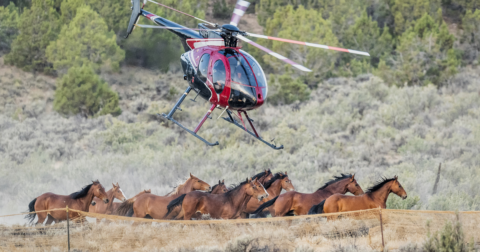
3,700 federally protected wild horses were sold in 2025, and a new investigation reveals some end up at the slaughterhouse.
Food•7 min read
Feature
Cooke Aquaculture touts the jobs its salmon farms bring to the state, but local critics say the potential costs to their waters, livelihoods and wild Atlantic salmon outweigh the benefits.
Fisheries & Aquaculture•9 min read