News
TB-Infected Cow in Michigan Discovered Beyond High-Risk Zone
Health•5 min read
News
Backyard chickens are also vulnerable to avian flu, and experts warn that spring migration can accelerate infections across these bird populations.
News • Health • Public Health

Words by Emily Payne
Avian influenza, or bird flu, was detected in two backyard chicken flocks in Iowa this month. The cases, located in Iowa’s southeastern Washington County and northwestern Buena Vista County, come as wild birds enter a high-migration period, increasing the risk of avian flu infection among domestic flocks.
These are Iowa’s fifth and sixth reported avian flu detections this year, part of an ongoing national outbreak among domestic birds. In total, more than 30 million birds have been affected by avian flu in Iowa since the start of this outbreak — more than any other state.
Experts say that spring and fall are particularly high-risk times for the spread of avian flu, because wild birds can carry the virus asymptomatically as they migrate across regions and spread it through feces, saliva and mucus.
“The entire state of Iowa is in the path of migrating birds of all types of species that are potential carriers of the virus. While cases may be isolated to an area, there is also a good chance they will be across the entire state because of this,” Christa Hartsook, small farms program coordinator for Iowa State University Extension and Outreach, tells Sentient in an email.
Avian flu exists in two types: low pathogenicity and highly pathogenic. Low pathogenicity avian flu typically causes few or no signs of illness, but certain strains can mutate into highly pathogenic avian flu, which is deadly to domestic poultry and often wipes out entire flocks within just a few days. Humans can contract avian flu through direct unprotected exposure to an infected animal, though it is rare. One person in Iowa has been infected since 2024, and the U.S. Centers for Disease Control and Prevention rates the current public health risk as low.
However, when one bird is infected, it is likely to have infected an entire flock. The USDA depopulates all exposed animals — meaning, kills all the birds in the flock — as soon as possible when highly pathogenic avian flu is detected. Iowa primarily depopulates with what’s known as ventilator shutdown plus, a method that involves turning off cooling ventilators in a chicken barn and adding additional heat sources, killing the birds by heatstroke.
Iowa is the largest shell egg-producing state in the United States. The $1.33 billion industry relies on 47 million hens to produce more than 15 billion eggs each year. The state is also home to 12 million turkeys. Both industries are vulnerable to avian flu outbreaks, and for large commercial flocks, infections mean culling millions of birds at once.
So far in 2026, Iowa has not reported infections in commercial flocks, but all flocks remain at risk. In Wisconsin alone, three commercial flocks and one backyard flock have affected more than 4 million birds in 30 days.
“It’s not a matter of if, it’s a matter of when” there will be a positive detection of avian flu during migratory season, says Dr. Yuko Sato, poultry extension veterinarian and diagnostician at Iowa State University. Sato notes that there could be more backyard poultry cases in Iowa this year that were unreported.
The United States lacks a national predictive surveillance system for avian flu risk. Government agencies collect data on infection locations and dates, but do not disclose it due to privacy concerns. Researchers say this prevents more robust monitoring of the virus as it evolves and circulates throughout the country.
Nationally, over 15 million birds have been confirmed infected across 48 commercial flocks and 38 backyard flocks in the last 30 days.
Experts like Sato and Hartsook say the best way to protect backyard flocks is to be diligent about keeping them contained during the spring and fall migration seasons. This can be easier for commercial flocks, which are typically raised indoors. Both free-range and certified organic flock owners can request a waiver from the state veterinary offices to contain their birds temporarily during periods of risk.
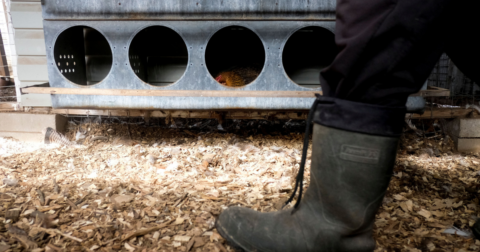
Practicing biosecurity measures is also important, writes Hartsook. Flock owners should wear dedicated footwear when feeding, watering and cleaning backyard flock areas, sanitize them frequently and ensure they are not worn outside of chore activities. Keep feeders and waterers clean to remove infected saliva and droppings from shared surfaces, and limit human traffic into the flock area.
Backyard flocks located near food and water sources are at increased risk of infection, says Sato. Waterfowl, such as ducks and geese, have played a major role in the global spread of avian flu. As these birds congregate around lakes, ponds, puddles or forage, they can leave infected feces, saliva and nasal secretions. This can infect domestic flocks through direct contact or indirectly through shoes, clothing and shared surfaces.
Poultry that are infected with low pathogenic avian flu may show mild symptoms such as sneezing, coughing and discharge from eyes or beaks. They may also decrease food and water intake, decrease egg production or lay deformed eggs. Highly pathogenic avian flu typically manifests as blood-tinged discharge from eyes or beak, skin appearing blue, swollen combs, wattle or shanks, severe lethargy, severe difficulty breathing or sudden death.
Experts say it’s important to pay attention to backyard flock behavior, as a bird isolating itself can be an early sign of illness. Owners are advised to immediately separate birds with suspected illness from the rest of the flock. And anyone who suspects a reportable animal disease in Iowa, such as avian flu, must report it to a federal or state animal health official.
“Everyone plays a role in reducing the risk of avian influenza outbreaks across the state of Iowa, no matter the size of your flock,” writes Hartsook. “Because this virus is contagious and deadly to poultry, practicing good biosecurity at all levels is crucial to reducing the spread.”
Emily Payne is a journalist covering the intersection of food, agriculture, health and climate. Currently based in Denver, Colorado.
News
Health•4 min read

Perspective
If industrialized processing is a marker for ‘not real’ food, how can industrialized meat fall under the designation of ‘real’?
Diet•4 min read

News
Millions of birds have been exposed to the avian flu virus since the beginning of January alone.
Health•9 min read