Feature
AI Promises Cleaner Farming in Tanzania — and the World. Now Comes the Real Test.
Food•7 min read
Feature
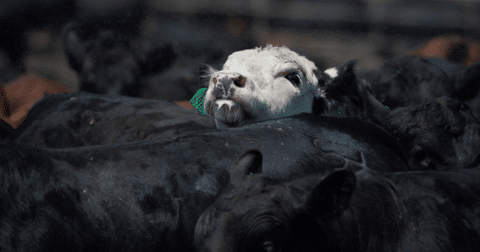
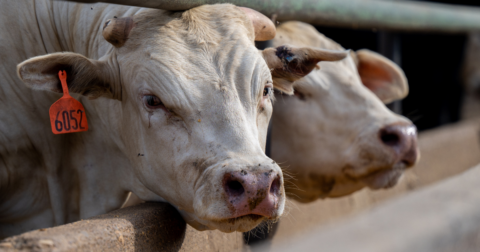
A retired Cargill meat scientist urged the industry to take seriously a growing list of health concerns, including lameness, heat stress, congestive heart failure and late-term deaths in feedyards.

Words by Juan Vassallo, Investigate Midwest
In 1975, the average cattle carcass weight — the combined average for steers and heifers after slaughter — was 615 pounds. By 2024, it had risen to 890 pounds, an increase of about 45%, according to U.S. Department of Agriculture data.
Advances in genetics, growth-promoting hormones, pharmaceuticals and high-energy diets have largely led to the increased weight.
Despite year-to-year fluctuations, the long-term trend shows an average gain of about 5 pounds per year over the past five decades. And while the most recent USDA figures are from 2024, industry data suggests weights rose much faster in 2025 — prompting questions about how much more weight the animals can bear.
The issue was a major focus at beef industry conferences last year, including the annual symposium hosted by the King Ranch Institute in November.
“[In 2025] steer carcass weights are up 40 pounds,” said Glen Dolezal, a retired Cargill meat scientist, citing internal company data. “We’re really putting a lot more pounds on them than the 5-pound average per year that we’ve seen previously.”
Dolezal urged the industry to take seriously a growing list of health concerns, including lameness, heat stress, congestive heart failure and late-term deaths in feedyards.
Those concerns are reflected in recent reports and data. Liver abscesses and congestive heart failure have become more common, and death-loss rates in feedlots have risen in recent years, particularly among steers.
“We are not making their lungs and hearts bigger, and that’s a problem,” said Justin Gleghorn, an animal scientist and feedlot director, at the same symposium.
Gleghorn and other presenters said a key driver of recent weight gains is that cattle are spending more days in feedlots before slaughter.
“Packers have told us we can make these cattle bigger,” Gleghorn said.
So far, the health issues highlighted at the symposium have not been severe enough to cut into industry profits. But not everyone benefits from the weight-driven system.
Ranchers, who raise cattle before they are sent to feedlots, appear to gain far less from the trend than large feedlot operators and meatpackers.
Dr. David Lalman, an extension beef cattle specialist at the University of Oklahoma, warned cow-calf producers against trying to follow the heavier-cattle trend, saying many ranches face environmental limits that cannot support the grazing demands of larger animals.
“We’re creating cattle, on average across the industry, with greater appetite,” Lalman said.
This article first appeared on Investigate Midwest and is republished here under a Creative Commons Attribution-NoDerivatives 4.0 International License.

Juan Vassallo covers agribusiness and the meat industry in Oklahoma for Investigate Midwest. Before joining Investigate Midwest, Vassallo conducted investigative reporting on public health and consumer protection, exposing issues such as fraudulent practices at a Brooklyn employment agency targeting undocumented migrants — a story that led to the agency's shutdown. His work also includes a comprehensive, 7-month investigation into the influence of patient advocacy groups on the approval of high-risk medical treatments. Vassallo brings his investigative and data expertise to uncover the economic, environmental, and regulatory challenges shaping Oklahoma's meat industry. He earned a Master of Science in Investigative Journalism from Columbia University’s Graduate School of Journalism. Originally from Uruguay, he completed his undergraduate studies at the University of Minnesota.

Feature
Farms•6 min read

Investigation
Supply chain disruptions may be on the rise throughout the industry for a host of reasons, including weather, labor issues and cybersecurity threats.
Food•4 min read
Investigation
As H5N1 infects over 70% of the state’s dairy herds, exposed farmworkers are left without PPE or mitigation training in their native language. And some aren’t informed of an outbreak…
Food•13 min read