News
Sustainable Seafood Labels Aren’t Always What They Seem
Food•6 min read
News
Sentient reporters, editors and staff give you some of our favorite stories of the past year.


Words by Jenny Splitter
This was a big year for Sentient. In 2025, our stories were cited or republished more than three thousand times across a range of local and national news outlets — including The Guardian and The Washington Post’s Climate Coach newsletter, The Gazette and the Philly Voice.
Our most widely read story of the year was this news piece about the hundreds of meatpacking employees who had their visas revoked, and many readers also clicked on this story about RFK Jr., beans and the nation’s dietary guidelines, and this piece about the antibiotic-free beef brands failing inspection. Many of you watched video footage from our stories, including this video taken by a former meatpacking plant worker and police bodycam footage after a livestock truck crash.
In addition to our own reporting, we syndicated more than two dozen stories from our independent and nonprofit news colleagues. Some of the most popular with our readers include this story from Inside Climate News on methane emissions from the world’s biggest meat companies and a piece from Grist reporting how the words used to describe nature are rapidly disappearing from our vocabulary.
Naturally, our reporters had their own favorite stories they worked on. Here are the top picks from our writers and other staff:

One of the experiences I’ve valued most at Sentient was reporting about how pollution from neighboring dairy farms is affecting the daily lives of residents from California’s Central Valley and their concerns that the state’s Low Carbon Fuel Standard will make things worse. That story offered a different view of a program often celebrated for cutting emissions and showed how its impacts can compound health, environmental, and economic burdens in low-income communities.
— Gaea Cabico, Editorial Fellow
I always like learning about nuance in topics that aren’t generally seen as very nuanced. Learning that plenty of ultraprocessed foods are perfectly healthy was a great example of that, and is something I’ve found myself discussing at more than one social occasion since I wrote the article.
— Seth Millstein, Science and News Reporter


The words and imagery in this story on meat and dairy advertising profoundly illuminate the stark contrast between what these industries try to sell to consumers, versus reality and what the animals and environment truly experience. It also helped inform more of my reporting on meat industry myths and misinformation.
— Jessica Scott-Reid, Culture and Disinformation Correspondent
This story showed the depths of the industry’s efforts to promote its own narrative about meat and the environment to elementary school students. Despite its massive climate impact, the industry portrays itself as a champion of sustainability and nutrition. The contrast between messaging and fact shows how powerful narratives can be.
— Gabriella Sotelo, Fact Checker

There’s a common narrative that avian flu is decimating the poultry industry. This article revealed that the many of the largest poultry corporations are actually having bumper years, with the support of taxpayer-funded indemnity payments. This article also showed that this indemnity system often failed to incentivize biosecurity practices on poultry farms.
— Grey Moran, Investigative Reporter
This story captures the intersection between human rights, climate change and food systems in the era of Trump. In doing this coverage I was privileged to witness the efforts volunteers are making to support workers and help them feel a little more at home through food despite mounting political pressures.
— Grace Hussain, Solutions Correspondent


I was genuinely shocked when I read the headline “Analysis: 96.2% of Climate News Stories Don’t Cover Animal Agriculture as a Pollution Source.” The role of animal agriculture in contributing food-related emissions is well established in environmental research, yet is practically absent from mainstream climate reporting. That gap matters. Without it, readers lose access to clear information about one of the most direct ways their daily choices influence pollution and climate change. Journalists also miss a critical opportunity to include, or explain, a major emissions source.
— Dorea Reeser, Editor
The impacts of factory farming on people are especially apparent in how these operations alter the livability of a place. Meeting people impacted by water scarcity in Arizona showed me just how far-reaching the impacts of industrialized agriculture are across the country.
— Nina B. Elkadi, Editor-at-Large


This story exposes horrific human rights abuses on squid-jigging vessels off the coast of Argentina, drawing connections between the food on our plates, economic hardship and marine ecosystems, and how the U.S., Canada and European countries are complicit unless they step up their lax enforcement of seafood regulations at borders and ports of entry.
— Julian Nowogrodzki, Science Editor and Newsletter Lead
As an attorney, I enjoyed this story on the intersection of animal welfare and First Amendment rights. The footage was also very impactful.
— Denise Cartolano, Operations and General Counsel


With the carnivore diet and MAHA taking over social media, and meat-free brands like MorningStar un-veganizing formerly fully plant-based products, it’s easy to get swept away by the “vegans have lost” rhetoric. This story is a good reminder to look past short-term sales and negative headlines.
— Tessa Altman, Social Media Manager
My favorite story is this investigative piece, because it revealed clear violations and showed the realities of conditions workers face — it prompted more investigations by Sentient and coverage in local and national media. It also helped generate a new line of videos for us: whistleblower clips.
— Ana Bradley, Executive Director

I liked this story because it is an extension of previous coverage I’ve followed on the battle of schools vs plant-based milk. Previously, dairy milk was required in school lunches due to a mixture of government policy, federal subsidies and clever marketing. Now, a new proposed bill could allow schools to offer dairy-free milk alternatives as a standard menu item for the first time. Previously, students needed a doctor’s note to receive non-dairy milk, so I was happy to learn that this new bill would allow students to receive plant-based milk with only a parent/guardian note. This feels like a huge shift that has the potential to impact millions.
— Taylor Meek, Development & Project Coordinator
I was thrilled to expand our collaborative work with powerhouse news outlets like Floodlight and Inside Climate News. Our co-reporting brought to light the climate cost of food waste and, in Iowa, how an antiquated regulatory system and lack of oversight is thwarting the effort to clean up the state’s polluted waterways.
— Jenny Splitter, Editor-in-Chief

Jenny is the Editor-in-Chief of Sentient Media and an award-winning climate and food journalist with bylines in The Guardian, Vox, The Washington Post, Popular Mechanics and others.
News
Farms•7 min read
Investigation
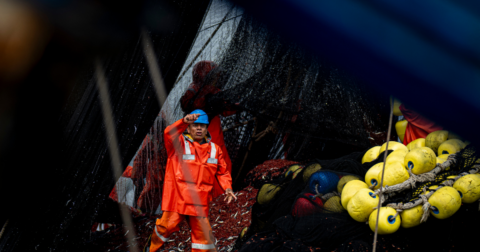
A chemical additive helped stop fishmeal from catching fire on ships, but it carried a downstream carcinogenic risk to modern food systems.
Food•6 min read
Explainer
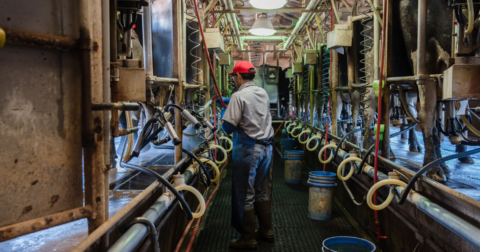
Three of the largest dairy co-ops market the vast majority of milk sales; some have expanded into milk processing and other parts of the dairy industry.Farmers say these organizations —…
Food•1 min read