News
Trump Is Suing to Overturn Prop 12 and Other Animal Welfare Laws
Policy•6 min read
News
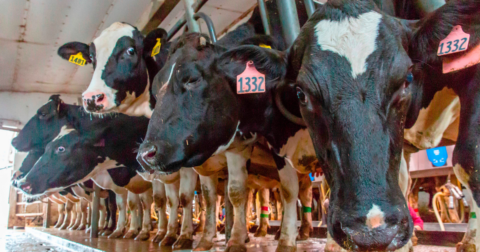
Riverview’s mega-dairy expansion in Morris would store 250 million gallons of liquid manure and use water volumes equal to 75% of the local supply.
News • Climate • Factory Farms

Words by Emily Payne
Minnesota’s largest dairy producer is seeking approval to build the biggest dairy and feedlot in state history. The expansion would more than double the capacity of an existing Riverview LLP dairy facility in Morris, Minnesota, from 7,855 to 18,855 cows. It would also pump water volumes equivalent to 75% of the local water supply and store up to 250 million gallons of liquid manure near a waterway that already fails to meet quality standards set by state regulators.
The proposal is facing growing opposition from environmental groups and residents who say it could strain regional water resources and worsen pollution. State regulators extended the public comment period through April 9 as they consider whether to require Riverview to prepare an environmental impact statement. Compared to what is typically required of large factory farms, this would be a more detailed and costly assessment of the facility’s potential environmental and socioeconomic impacts.
Concentrated animal feeding operations or CAFOs, especially dairies, use vast amounts of water. A lactating dairy cow drinks up to 50 gallons of water daily, or double when under heat stress. Riverview’s existing hog and dairy facilities in Minnesota use at least 570 million gallons of water annually, and the proposed expansion would pump and store up to an additional 226 million gallons — equivalent to 75% of Morris’s annual permitted water supply.
“It’s really concerning to know that this operation is going to pull hundreds of millions of gallons, when you include what it already does pull, more than what Morris is allowed to pull,” says Matthew Sheets, policy organizer with the nonprofit Land Stewardship Project, who is a Morris resident. “We don’t really have an accurate way to know how that’s going to affect us right now.”
Morris is also located along the watershed that channels many streams and lakes into the Pomme de Terre River. Many of these waterways are categorized as impaired by the Minnesota Pollution Control Agency because they failed to meet water quality standards. Riverview’s expansion would more than double its liquid manure storage capacity in Morris, from 102 million gallons to 250 million gallons. Opponents are concerned about the potential impacts on local water quality.
Manure from CAFOs, typically sold to local farmers as fertilizer, is often overapplied or applied during periods when crops cannot absorb nutrients, which contributes to carcinogenic nitrate contamination in local drinking water. Such storage capacity also has the risk of manure spills. In March 2025, a Riverview facility about an hour southeast of Morris reported spillage from its manure holding tank, though it was contained on-site.
The last time the pollution control agency ordered an environmental impact statement for a feedlot — when the agency was controlled by a citizens’ board — was for a 2015 Riverview proposal to milk about 10,000 cows. The company abandoned the proposal before filing the statement. Shortly after, lawmakers disbanded the citizens’ board, a move that many community members say was a direct result of its request for environmental review.
“Riverview, not just in Minnesota but elsewhere, has created such economies of scale through these massive facilities that they have the power to influence the way the environmental reviews are conducted in Minnesota,” says Dani Replogle, staff attorney at the nonprofit advocacy group Food & Water Watch. “We saw that with the eradication of the citizens’ board.”
Riverview’s decades of growth has driven many smaller dairy farms out of business. Minnesota has lost more than two-thirds of its small-scale dairy farms over the past 25 years, while its number of dairy cows has remained relatively stable. Riverview now owns almost one-third of the state’s dairy herd.
The company has faced multiple high-profile investigations in the past year. In January, Riverview agreed to pay $11 million to residents in a settlement with the state of Arizona over groundwater overpumping. It is currently facing a lawsuit in North Dakota over its expansion there last year — a proposal that both U.S. and Canadian activists are working together to block.
Riverview, which did not respond to a request for comment, and its supporting farmers argue that the dairy’s presence boosts local communities by creating jobs and generating tax revenue. In a previous permitting process, company representatives said their operations are designed to avoid impacts on neighboring water supplies and emphasized a commitment to “doing the right thing” with local landowners.
But James Kanne, a small-scale dairy farmer in south-central Minnesota, challenges those claims.
“Go out to those communities where they have been for the last 15, 20 years, look at what has happened, and tell me that that is good for those communities,” says Kanne. “They have their own construction companies, seed companies, hauling companies, everything is a closed loop. It’s not like they are supporting community veterinarians or hardware stores or food stores or anything.”
In Morris, Riverview’s hometown, Replogle believes opposition to Riverview’s expansion has grown more vocal in recent months.
“Minnesota has a lot of experience with Riverview,” says Replogle. “Rural folks are waking up to the impacts that these expansions are having on local economies, not just local environments, and so there has been really potent grassroots opposition here.”
Emily Payne is a journalist covering the intersection of food, agriculture, health and climate. Currently based in Denver, Colorado.

News
Factory Farms•5 min read
Investigation
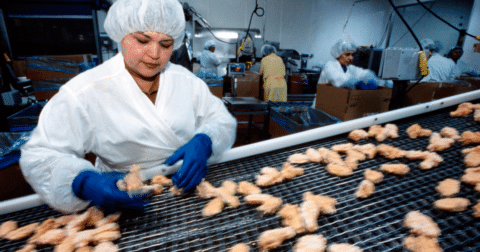
Longtime poultry plant workers are left uncertain and fearing job loss amid Tyson Foods’ confusion over immigrant Temporary Protected Status — despite their legal right to work.
Policy•9 min read
News
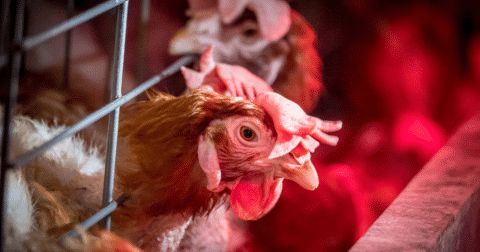
As bird flu cases surge, Colorado lawmakers target the practice of killing poultry birds by heatstroke.
Factory Farms•6 min read