News
Minnesota Asks the Public Whether Groundwater Rule Is Enough to Curb Farm Fertilizer Pollution, Following Lawsuit
Climate•7 min read
Explainer
The insects show promise in turning livestock waste into more sustainable fertilizer and by reducing antibiotic-resistant bacteria, but how well that’ll work in the real world is unclear.

Words by Bec Roldan
For as long as there’s been livestock farming, there’s been poop, and the question of what to do with it. Common solutions include composting, anaerobic digestion and the old-fashioned use of manure as fertilizer. But on today’s factory farms, there’s often more manure than nearby land can absorb, and mismanaged waste can pollute the environment and spread antibiotic-resistant bacteria and genes.
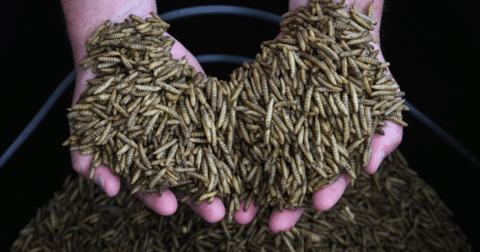
In recent years, researchers have turned to black soldier flies (Hermetia illucens) as promising agents for waste management amid rising amounts of food waste and manure. A nascent industry now raises the larvae on this waste, turning them into high-protein animal feed, and then upcycling larvae poop into fertilizer. But there are concerns about animal welfare and scale. There may not be enough black soldier flies, or humane ways to raise them, to process the billions of pounds of manure produced every year in the United States each year.
Animals raised on factory farms produce 941 billion pounds of manure in the United States each year, and this number is expected to grow as the factory farming industry continues expanding. While manure has long been used as an agricultural fertilizer, there is too much of it, and it can be mismanaged and overapplied.
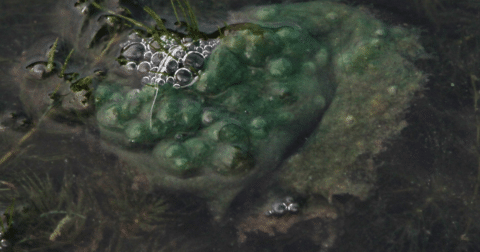
Unused and untreated manure can be harmful to the environment and public health. Excess manure is often stored in open lagoons. It emits greenhouse gases, and untreated manure applied to cropland can seep into waterways, triggering toxic algal blooms and contaminating drinking water. Raw manure also contains heavy metals like lead, mercury and arsenic from feed additives, and it harbors pathogenic bacteria and viruses like salmonella and E. coli, which can cause foodborne illnesses if they contaminate crops.
Beyond pollution, manure also drives a risk that isn’t talked about as often: antibiotic resistance. Heavy reliance on antibiotics in livestock farming has made manure a hotbed for antibiotic-resistant bacteria and genes. One study analyzing 4,000 samples of pig, chicken and cattle manure found more than 2,200 gene variants linked to antibiotic-resistance across 30 different classes of antibiotics. Chicken and pig manure had twice as many antibiotic-resistant genes as human feces and 2.5 times that of sewage. Drug-resistant infections could contribute to 40 million deaths by 2050, according to one estimate.
Jeff Tomberlin, a professor of entomology at Texas A&M University tells Sentient that black soldier flies have a unique immune system and microbiome that can handle the extreme environment of livestock manure. During digestion, they can suppress pathogens and sequester heavy metals present in the manure, so using these larvae to compost manure could reduce these health risks.
One study found that black soldier fly larvae reduced pathogenic bacteria, such as bacillus and salmonella, by up to 92% in chicken, cow and pig manure.
However, studies to date have produced mixed results regarding whether black soldier fly larvae could mitigate antibiotic resistance in manure. In a study of black soldier fly larvae raised on poultry manure, the larvae reduced resistant genes related to a frequently used class of antibiotics called tetracyclines, but suppression was limited for other common antibiotics, including sulfonamides and quinolones.
While black soldier fly larvae can kill some antibiotic-resistant bacteria, Tomberlin tells Sentient that researchers still need to determine the optimal environment for the insects to achieve remedial benefits. “There’s an optimal environment for this insect to be active,” Tomberlin says. If the environment isn’t optimal, he adds, the larvae won’t function as well.
Black soldier flies could be part of what Tomberlin calls the “bioeconomy,” where economies rely on a “harmonious engagement with nature and at the same time, create jobs and diversify incomes,” he says.
With black soldier fly larvae, researchers are exploring whether manure can be upcycled into more useful, sustainable fertilizer. Shankar Ganapathi Shanmugan, an assistant research professor in plant and soil sciences at Mississippi State University, collaborates with the insect feed industry to find alternative uses for insect excrement, or frass. He thinks frass could provide the macronutrients needed for crop production while diversifying soil microbiomes that may be depleted, though there are a number of challenges, including regulatory ones.
As the industry explores ways to use the insects across the food system and beyond manure management, some researchers share concerns about the insects’ welfare. Bob Fischer, an animal welfare researcher at Texas State University, says there are welfare considerations to using larvae to process manure. Larvae can overheat and die if their bins of waste aren’t properly temperature-controlled.
“There’s typically a purge period or a starvation period at the end of the growth to remove waste from the animal before processing,” Fischer says. After that, larvae are typically baked alive to produce high-protein feed for other animals, a practice that raises concerns among insect welfare advocates.
He adds that while consuming animal waste isn’t necessarily bad for larvae, in the case of processing manure, larvae are “primarily being used as waste managers, so people are not optimizing for the nutritional interests of the organism.” Tomberlin says researchers are working to address these concerns. “Animal welfare must be considered for the animal, of course, but also to optimize the process,” he writes.
While Tomberlin and Shanmugan are excited about the potential of black soldier flies, it’s still a small and young industry. It may be a while before researchers can use black soldier fly larvae to conduct a mass clean-up of livestock manure.
Bec Roldan is a freelance journalist covering the environment, pollution, public health, and climate. Their work has been featured in NPR, Chemical and Engineering News, Science, and more. They are based in Brooklyn, NY.
Feature
Climate•6 min read
Review
A new book makes the case for investing in cultivated and plant-based meat.
Climate•4 min read
Investigation
“Some of this is happening under the radar.”
Climate•17 min read