Investigation
North Carolina Created Complaint Systems for Its Factory Farms. They Don’t Work Very Well.
Climate•11 min read
News
Pesticides, fertilizers and habitat destruction are the likely culprits.

Words by Seth Millstein
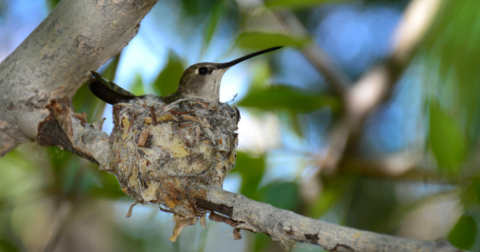
In areas with industrial agriculture, the decline of North American bird populations has been accelerating precipitously, finds a new study published in Science. While it’s been known for some time that bird populations are falling, this is one of the first studies to try to figure out where this decline is actively accelerating, and it came to a clear conclusion: near farms that rely heavily on pesticides and fertilizers.
“This is a highly significant study,” Andrew Farnsworth, visiting scientist at the Cornell Lab of Ornithology’s Center for Avian Population Studies, tells Sentient over email. Farnsworth was not involved in the study. “It is well-done, the authors were careful and analyzed a large amount of information and the results and their interpretation are done well.”
The researchers studied the populations of 261 bird species in North America between 1987 and 2021. They found that on average, these populations fell by around 15% over that period, and that 47% percent of the species had experienced what the researchers call “significant decline.”
But in addition to looking at absolute levels of bird population decline, the researchers also analyzed long-term changes in the rates of decline. This approach “can help identify emerging hot spots before populations reach low levels, providing an early warning for conservation action,” the study’s first author François Leroy wrote in The Conversation.
The researchers found that for 24% of the bird species, their populations weren’t just dropping over time. They were dropping by more and more every year. As it turns out, these hotspots of steeper population decline were strongly correlated with the heavy use of pesticides and fertilizers, as well as significant areas of cropland — in other words, agriculture.
Months before this study was released, a separate analysis by the International Union for the Conservation of Nature (IUCN) found that the populations of 61% of bird species worldwide are decreasing and that agricultural expansion and intensification is one of the leading drivers of that loss.
Industrialized agriculture poses a number of threats to birds. The conversion of natural ecosystems to cropland and farms typically involves destroying resources and habitats that birds and other species rely on: chopping down trees, tearing up existing foliage to make way for cropland, and building roads and other infrastructure that fragment natural habitats. All of this is “highly likely” to have played a role in plummeting bird populations, Farnsworth writes.
Just as important is the use of fertilizers, herbicides and other pesticides. The problem isn’t so much that these chemicals are directly killing birds, though Farnsworth writes that this probably does happen at least a little. The larger issue is that these substances kill the food sources that birds rely on.
Insects are a large part of this equation. They’re a vital food source for many birds, but many are pests to crop plants, and farmers take steps to eradicate them from their farms. Insecticides are the most obvious example of this, but Farnsworth notes that herbicides and fertilizers can also play an indirect role in depleting or contaminating insect populations, because they change the nature of the plant communities in which insects live.
“Though the herbicides may not be poisoning birds directly, their impacts are certainly cascading,” Farnsworth writes. For birds, these chemicals mean one thing: less food.
In addition to agriculture, the researchers also linked rising temperatures to decreasing bird populations, although it functioned in a slightly different way than farming. Hotter weather was correlated with an overall decrease in bird numbers, while agriculture was linked to bird populations declining at steeper rates.
Interestingly, the researchers found that the impact of intensive agriculture on bird populations was even more pronounced in areas that had become hotter over time. Although it’s not entirely clear why, the researchers noted that agricultural development itself intensifies rising temperatures in several ways. Cropland typically provides less shade than the natural habitat it replaces, and the destruction of trees to make way for farms reduces carbon sequestration, a powerful tool for cooling the atmosphere.
Farnsworth isn’t surprised at this correlation, given that over the past several decades, both the intensification of agriculture and global temperatures have been on the rise.
“We often see situations in which already-stressed populations decline further when compounding stressors are added. I am sure this is the case here,” he writes. “Agricultural intensity and rapid human-induced climate change have been increasing in tandem, and may in many cases be interrelated.”
Industrialized agriculture and aquaculture directly kill billions of animals every day for food, but the new study is a stark reminder that the industry claims many less obvious victims as well. Building and operating farms requires destroying and degrading the natural habitats on which wildlife rely, and the indirect impacts of these disruptions often aren’t immediately apparent.
Farnsworth says that alternative farming practices, such as regenerative agriculture, have the potential to reduce agriculture-induced bird decline.
“Types of farming that minimize pesticide and herbicides and promote native landscape and vegetation diversity are important,” he says. A key aspect of this is avoiding converting diverse natural habitats into monocultures of just one species.
But he acknowledges that the twin threats of intensive agriculture and rising global temperatures will be difficult to combat. Both can directly impact birds’ habitat and food resources, and global climate change can also harm birds through extreme heat and extreme weather, he notes. “These are serious, compounding issues.”
Seth Millstein is a writer and musician living in the Bay Area. He has helped launch several early-stage journalism startups, including Bustle and Timeline, and his work has been published in Bustle, Huffington Post, The Daily Dot and elsewhere.
News
Climate•11 min read
Explainer
The insects show promise in turning livestock waste into more sustainable fertilizer and by reducing antibiotic-resistant bacteria, but how well that’ll work in the real world is unclear.
Climate•5 min read
News
Officials seek public input as critics say current rule has failed to reduce nitrate pollution.
Climate•7 min read