Investigation
Meat Processing Plant Complaint Highlights Supply Chain Disruptions — And How the Meat Industry Isn’t Prepared
Food•4 min read
Sentient reporters, editors and staff look back on the year, and share what surprised us.


Words by Jenny Splitter
Reporting on one of the most undercovered news issues of our time, industrial animal agriculture (commonly known as factory farming), means we are constantly uncovering new and surprising details in our work.
Here are some of the top surprises from our reporters and staff from this year.
This story, the first in a three-part collaboration with investigative outlet Floodlight, really stuck with me. Food waste is a much bigger problem, and a more significant chunk of the climate crisis, than I realized. But the story of food waste is also hopeful because some of it is due to things that are very fixable, and food waste is the rare climate issue that hasn’t been politicized. I think of this story every time I make dinner or look at a “best buy” date at the grocery store now.
Julian Nowogrodzki, Science Editor and Newsletter Lead


I’ve seen a lot of semi-trucks hauling animals, but for some reason, I had never considered what happened when those trucks have accidents. Actually hearing and seeing how law enforcement in Ohio and Michigan (and likely elsewhere) essentially collaborate with the meat industry to block local media access so “the animal rights people” won’t “have a cow” was deeply concerning.
Tessa Altman, Social Media Manager
This year we reported that USDA Secretary Brooke Rollins appointed a former Tyson Foods executive — the same executive behind the brand’s short-lived venture into ‘climate-friendly’ beef — to lead the department’s Food Safety and Inspection Service.
Jenny Splitter, Editor-in-Chief


I was surprised by the ways in which corporations will abuse the law to exploit people for profit.
Nina B. Elkadi, Editor-at-Large
I was struck by this story about Dãnia Davy, who is using the skills she has to help others — something that I think we can all do a little bit more of.
Grace Hussain, Solutions Correspondent


What surprised me most this year was learning that epidemiologists tracking avian flu are denied access to government data about the farms with outbreaks, making it very hard to predict where the virus will spread next.
Grey Moran, Investigative Journalist
One technology often promoted as a solution to the climate impacts of livestock manure is anaerobic digestion. But when it comes to manure management to reduce climate emissions, digesters tend to fall short, I found out while reporting this story. Anaerobic digesters reduce methane emissions by at most about 35%, and even that depends heavily on the type of system used. For something so costly to build and operate, the climate benefits are modest. On top of that, digesters can malfunction, which can lead to manure spills and methane leaks that add new risks instead of solving existing ones.
Gaea Cabico, Editorial Fellow


The insidious nature of the meat industry is exposed in this story about Palantir — human lives, like animal lives, are seen as dollars.
Ana Bradley, Executive Director
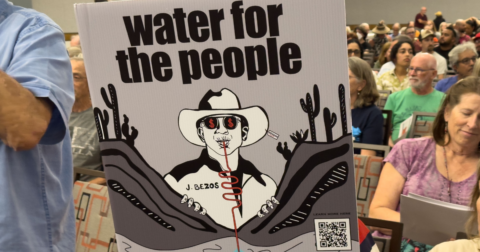
Prior to reading this story and watching the video I was not aware that this was happening in Arizona. I was especially surprised that a foreign company is able to use the residents’ resources with no repercussions.
Denise Cartolano, Operations & Legal Counsel


What shocked me the most was this story, and how unsettling it all is. Immigration raids have been increasing over the past year, and we see more and more people detained with basically no due process. Combined with the industry’s history of using detained people for food industry labor, it’s a reminder of how easily vulnerable people can get pulled into work they never chose, especially in historically dangerous industries.
Gabriella Sotelo, Fact Checker
Speaking with an expert on “naturalness” for this story helped me better understand our current cultural and political environment. This concept was particularly enlightening: In a time when people are feeling disempowered and unsure about the increasingly complex world around them “we are going to see increasing emphasis on ‘naturalness,’ both as a way of keeping us healthy, and also as a way of feeling empowered.”
Jessica Scott-Reid, Culture & Disinformation Correspondent


I didn’t know about food webs before writing this article. I grew up learning about food chains, but learning just how interconnected all life on the planet is, and how small changes in a species’ populations can have unexpected ripple effects way beyond their direct predators and prey, was eye-opening.
Seth Millstein, Science & News Reporter
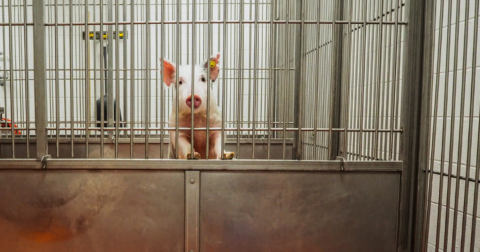
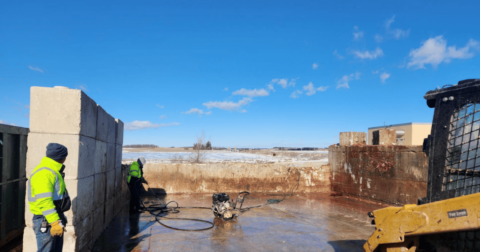
This article gained a lot of traction on social media, and for good reason. The horrific conditions were startling to some, but unfortunately not surprising to others. This story sparked conversations online of former meat processing plant workers, local communities affected by meat processing plants and consumers who were appalled by the conditions. Many of the commenters worked at this specific plant or lived nearby and stated that this plant has been a problem for years — polluting the environment, cruel treatment of pigs, hazardous working conditions, etc. The reason this story impacted me so deeply is that it was refreshing to see these conversations online. Cruelty, pollution and hazardous working conditions are frequent offenders in meat production, but are grossly under reported. That’s the goal of Sentient — to bring light to the underreported impacts of factory farming, so it was nice to see these deep conversations taking place as a result of our reporting.
Taylor Meek, Development & Project Coordinator

Jenny is the Editor-in-Chief of Sentient Media and an award-winning climate and food journalist with bylines in The Guardian, Vox, The Washington Post, Popular Mechanics and others.
Feature
Food•2 min read
Investigation
As H5N1 infects over 70% of the state’s dairy herds, exposed farmworkers are left without PPE or mitigation training in their native language. And some aren’t informed of an outbreak…
Food•13 min read

Feature
As some high-end restaurants reintroduce meat, young vegan cooks are adapting.
Food•17 min read