Feature
A Scientist Was Pushed Out for Studying Iowa’s Water. Now He’s Running To Regulate It.
Elections•15 min read
Investigation
Supply chain disruptions may be on the rise throughout the industry for a host of reasons, including weather, labor issues and cybersecurity threats.

Words by Nina B. Elkadi
On February 3, the Iowa Department of Natural Resources received a complaint alleging that Agri Star Meat and Poultry LLC — a kosher beef and poultry processing plant in Postville, Iowa — was “storing dead animal carcasses behind the facility” in a pile approximately eight feet high.
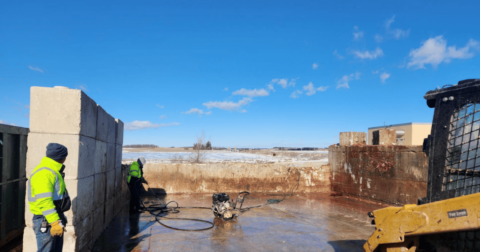
When Department of Natural Resources inspector Matt Calvert went to investigate on February 5, he found instead an offal pile, which consists of waste parts removed from butchered animals such as entrails and organs, on an offal storage pad north of the plant. Another offal pile near the processing area had already been cleaned up.
Plant employees told the inspector that the buildup was the result of a supply chain disruption at the rendering company that typically collects their offal.
Though the pile was frozen in place due to cold weather and thus deemed not a pollution risk, the complaint illustrates how disruptions in the meat-processing supply chain can cause knock-on effects that could lead to pollution.
Like many meat processors, Agri Star relies on outside companies to take away certain byproducts, including offal. If one of these facilities slows or stops accepting material, waste can accumulate at the slaughterhouse. Pileups of offal and meat can cause environmental and health issues including odor emissions (for example, ammonia and hydrogen sulfide, which can be toxic when inhaled by humans) as well as nutrient runoff into waterways, contaminating drinking water and recreational streams, rivers and lakes.
“If it were not this time of year, stormwater runoff issues could become a major concern,” Calvert wrote in the report.
Agri Star sends its chicken byproducts to Sanimax, a rendering plant in South St. Paul, Minnesota, where they are processed into products such as animal feed, oil and biofuel.
According to documents reviewed by Sentient, the Iowa state inspector phoned Mike Karmen, the Vice President of Procurement & Transportation at Sanimax, who said the plant had been operating below capacity for 3–4 weeks because of labor issues, equipment issues and “DOT [Department of Transportation] issues with trucks and trailers,” at least some of which were due to extremely cold weather. The plant is “running out of available space for chicken offal,” the inspector recalls Karmen explaining.
The inspector replied that he understands “issues can evolve, but contingency plans need to be put in place” so that Agri Star and other companies down the supply chain are not left in this position again.
With fewer trailers available to haul the material away to Sanimax, offal began to accumulate at the Agri Star plant. At one point, employees said, the chicken cut-up line discharged bones and offal onto the ground during production, though the pile was removed once a trailer arrived the next morning.
It’s also possible, an Agri Star employee told the inspector, that the complainant saw cattle hides frozen to a metal chute due to the cold weather, rather than whole carcasses. “These hides will eventually get pushed off the chute from the weight of additional hides coming from production. If the hides don’t fall into the open top trailer correctly, it may look like a pile of animals stacked up.”
The complainant also raised concerns about runoff into nearby Hecker Creek, which since 2002 has been considered impaired – that is, unsafe – for recreational activities, as well as impaired or partially impaired for supporting aquatic life. Agri Star has been fined multiple times for water quality violations, and was sued last year by a water advocacy group for the amount of effluent it discharges into the Yellow River — a lawsuit for which Agri Star was awarded a “sweetheart deal” through the state of Iowa.
The inspector ultimately concluded that there were no violations because the offal pad is walled, drains to the plant’s wastewater treatment system and sits more than 2,000 feet from the creek’s headwaters, and there were no visible signs of blood or offal in the waters or the creek.
In this case, the inspector noted, cold, dry conditions reduced the risk of runoff. But just one rain event can cause runoff into public waterways, damaging aquatic life and exposing people using those waterways to harmful toxins.
Disruptions may be on the rise, and weather and labor issues are not the only things that can disrupt meat processing supply chains. A 2025 paper in the Journal of Agriculture and Food Research “reports an increased frequency of cybersecurity threats to the food and agriculture sector,” including the meat industry. The impacts of one breakdown or delay somewhere along the way can be felt from the slaughterhouse to drinking water taps.
Nina B. Elkadi is a former Editor-at-Large for Sentient. Her investigative reporting explores corporate influence within the agricultural industry, the environmental impacts of factory farming and how negligence impacts consumers and workers. Her work also appears in National Geographic, Inside Climate News, Civil Eats, High Country News, Ambrook Research, JSTOR Daily, Barn Raiser and more. She splits her time between Washington D.C. and her hometown of Iowa City.
Feature
Factory Farms•14 min read

Explainer
What do Democrat Rob Sand and Republican Zach Lahn say they will do about Iowa’s poor water quality?
Climate•10 min read

Feature
A survey taken this past spring shows a majority of Iowans say they have experienced negative environmental impacts from industrial animal operations. But plenty are also ambivalent, or ignorant, about…
Elections•11 min read