Solutions
Bhutan’s Food System Ethos Offers an Alternative to Factory Farming, but Can it Survive?
Farms•7 min read
News
The FISH Act would allow the government to blacklist and seize ships involved in illegal fishing or forced labor.

Words by Gaea Cabico
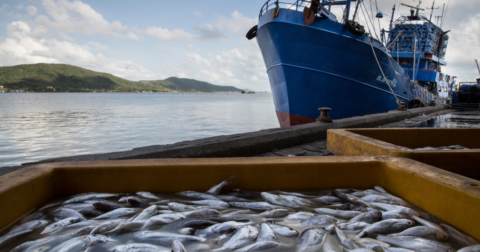
A bipartisan proposal to keep seafood from illegal, unreported and unregulated fishing (IUU) out of the U.S. market is moving closer to becoming a law. On April 21, the House Natural Resources Committee unanimously advanced the Fighting Foreign Illegal Seafood Harvest — also known as FISH — Act to the full House for its consideration. The Senate unanimously passed its own version in March.
Illegal and unreported fishing harms ocean ecosystems and disadvantages fisherfolk who follow the rules. It includes fishing without permits, failing to report catches and using prohibited gear like bottom trawlers, which destroy ecosystems and cause the release of up to 370 million metric tons of carbon dioxide yearly. Operations that use these illegal fishing practices are also often linked to labor abuses such as forced labor, human trafficking and debt bondage.
If the House passes the measure, it would head to the President’s desk next. The bill would direct the National Oceanic and Atmospheric Administration (NOAA) to create a blacklist of vessels and owners tied to illegal fishing and use of forced labor. These vessels would be barred from ports and markets in the United States and the law would allow seizure of their ships and block imports of their seafood.
It would also direct the U.S. Coast Guard to increase its monitoring of ships suspected of illegal fishing on the high seas and, when possible, inspect them in line with international agreements.
Eliminating illegal and unreported imports “would increase total operating income of the U.S. commercial fishing industry by an estimated $60.8 million,” found a 2021 International Trade Commission report commissioned by Congress. Prices, catches of fish and operating income were estimated to rise for all species examined in the report.
Advocates say the legislation could reshape global seafood supply chains, because the U.S. is one of the largest seafood importers. “Wielding our position as a top seafood importer gives us the ability to improve conditions throughout the entire seafood supply chain,” Rachel Rilee, oceans policy specialist at the Center for Biological Diversity, tells Sentient in an email.
But they also warn that the impact will hinge on whether agencies like NOAA are adequately funded and staffed to enforce it. At least 1,300 staff members of NOAA — the country’s premier authority on weather and climate as well as the science and management of fish — were laid off or resigned in the first seven weeks of the second Trump administration, according to The New York Times. In April of this year, Trump proposed slashing NOAA’s budget by 26% for fiscal year 2027, a proposed cut of $1.6 billion.
“The boost in monitoring, enforcement and foreign diplomacy efforts envisioned by the FISH Act will be dependent on robust funding for key agencies including NOAA Fisheries, Department of Labor and other member agencies represented by the U.S. Interagency Working Group on IUU Fishing,” Molly Masterton, a senior attorney at environmental organization Natural Resources Defense Council, tells Sentient in an email. “Cuts and layoffs at these agencies are short-sighted and allow further harm to our U.S. fishing communities,” she adds.
The United States currently imports nearly 90% of its seafood to meet the growing demand for fin fish and shellfish. From 1990 to 2022, per capita seafood consumption increased by 38%.
At the same time, illegal seafood continues to enter the market. In 2019, the U.S. imported an estimated $2.4 billion worth of seafood linked to illegal, unreported and unregulated fishing, according to a 2021 U.S. International Trade Commission report. This accounted for nearly 11% of all U.S. seafood imports. Major illegal or unreported imports included swimming crab, wild-caught warmwater shrimp, yellowfin tuna and squid.
China, Russia, Mexico, Vietnam and Indonesia were among the largest exporters of ocean-caught illegal seafood to the U.S., according to the report.
Advocates of the FISH Act say the proposed legislation will level the playing field for fishing communities in the U.S. “Illegal and unreported foreign fishing undercuts Rhode Island fisherman and makes it harder to compete,” said Rep. Seth Magaziner, a Democrat from Rhode Island who introduced the bill, in a release. He co-leads the legislation with Rep. Dan Crenshaw (R-Texas) and Rep. Nicholas Begich (R-Alaska). Sen. Sheldon Whitehouse (D-Rhode Island) and Sen. Dan Sullivan (R-Alaska) introduced the bill in the Senate.
Another key feature of the proposed law is aligning the U.S. definition of illegal, unreported and unregulated fishing with international standards, especially regarding labor violations. NRDC’s Masterton argues that the definition of IUU fishing in current U.S. laws, including the High Seas Driftnet Act and the Magnuson-Stevens Act, does not recognize labor rights violations, which limits the U.S. government’s ability to address illegal activity at sea.
“Labor rights abuses and IUU fishing are deeply interconnected, and compliance with international labor standards is critical to ending illegal fishing and overfishing,” she says.
In 2025, for example, 44% of the 187 buyers and importers linked to squid-jigging vessels engaged in human rights abuses and ecologically destructive fishing off Argentina were based in the United States, according to a report by the nonprofit Environmental Justice Foundation.
Journalism nonprofit The Outlaw Ocean Project has detailed how Chinese fleets engage in illegal labor practices, including physical abuse and underpayment, as well as the use of Uyghur and North Korean forced labor in China’s seafood-processing industry. Some of this seafood was imported by companies that supply U.S. military bases, public schools and federal prisons.
As Congress moves towards curtailing illegally harvested seafood in the market, the Trump administration is also rolling back certain fishing restrictions in Northeast Canyons and Seamounts Marine National Monument, off the coast of Cape Cod, where a ban had previously been in place.
The area is a biodiversity hotspot, home to at least 13 species of whale, 10 species of dolphin and dozens of species of extremely slow-growing deep-sea coral. Groups such as the Sierra Club and the National Resources Defense Council warned that commercial fishing threatens these creatures and habitats.
The USDA also recently launched an Office of Seafood aimed at integrating the U.S. seafood industry into USDA initiatives, though what concrete actions it plans to take remain unclear.
Beyond these measures, stronger international cooperation is essential, stresses Kathy Hessler, assistant dean for Animal Legal Education at the George Washington University Law School. Without it, Hessler says, stronger regulations in one country can simply displace illegal activity to another. “The U.S. in particular has been moving away from international cooperation,” she tells Sentient, “and that’s going to make it less likely that we’re going to be successful managing some of these, because it is an international problem.”
Gaea Cabico is Sentient's editorial fellow, and an award-winning journalist from the Philippines who reports on climate change, environmental issues and energy through a social justice lens. She holds a master's degree in science journalism from New York University.
Feature
Food•6 min read
Feature
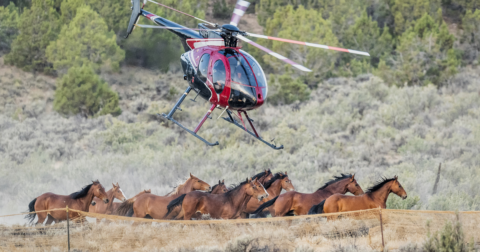
3,700 federally protected wild horses were sold in 2025, and a new investigation reveals some end up at the slaughterhouse.
Food•7 min read
Feature
Cooke Aquaculture touts the jobs its salmon farms bring to the state, but local critics say the potential costs to their waters, livelihoods and wild Atlantic salmon outweigh the benefits.
Fisheries & Aquaculture•9 min read