Feature
American Horses Are Still Being Slaughtered for Meat
Food•7 min read
Feature
Environmental groups are suing one of the largest seafood companies in the country over alleged aquaculture pollution to the Columbia River.

Words by Gaea Cabico
For generations, the Columbia River has been the lifeblood of the Pacific Northwest, sustaining salmon runs, driving local economies and supporting the culture and traditions of the Indigenous peoples who live there. “The region revolves around the health of the Columbia River but also the gifts that it provided,” Jeremy FiveCrows, a Nez Perce tribal member and communications director of the Columbia River Inter-Tribal Fish Commission, tells Sentient.
Pollution from multiple sources, including hydroelectric dams, agricultural runoff from dairy farms and contamination from sites like the Hanford Nuclear Site, has long taken its toll on the river and its aquatic life. In two lawsuits, environmental groups allege that Pacific Seafood’s aquaculture operations are adding to the problem.
The environmental groups argue that facilities owned by Pacific Seafood, one of the largest seafood companies in the United States, have repeatedly discharged large volumes of untreated waste and chemicals like chlorine into the river.
On April 23, the Oregon Department of Environmental Quality issued $3.2 million in penalties for discharging fish waste, chlorine, oil and grease into the Pacific Ocean, the Columbia River and the Chetco River.
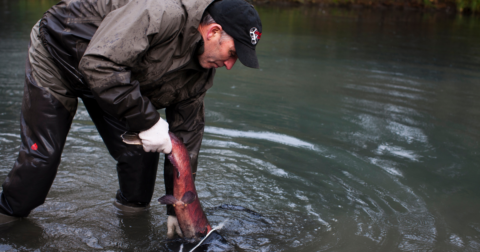
The lawsuits come alongside decades of ongoing restoration work. Tribal nations have been working to revive fish populations, particularly salmon, Pacific lamprey and white sturgeon. A coordinated network of hatcheries run by tribal, state and federal partners has become a critical tool, FiveCrows says, because they help sustain fish populations that the river can no longer support on its own.
In January, two environmental advocacy groups, the Center for Food Safety and the Northwest Environmental Defense Center, filed a lawsuit against a seafood processing facility owned by Pacific Seafood in Oregon, alleging repeated violations of the Clean Water Act, including that the facility exceeded permitted pollution limits.
A separate lawsuit filed in July 2025 targets Pacific Seafood-operated net-pen fish farms in Washington state, alleging chronic discharges of waste and unspecified chemicals used to treat diseases in fish from industrial aquaculture operations.
The Clean Water Act requires facilities like Pacific Seafood to obtain a permit, which sets limits on what facilities can discharge into bodies of water and mandates monitoring and reporting.
But according to the lawsuits, the company has repeatedly failed to do so. The company’s lack of reporting and monitoring has made it difficult to fully understand the extent of pollution entering the Columbia River, argues Kingsly McConnell, staff attorney at the Center for Food Safety.
The claims in the Clean Water Act lawsuits are “based on inaccurate data and are currently being disputed,” Amy Wentworth, Pacific Seafood’s senior director for environmental, health and safety, tells Sentient in an email. “The fact is no one cares more about protecting the marine environment than Pacific Seafood, because our business and the livelihoods of our team members depend on healthy and sustainable waterways now and in the future,” she adds.
The Oregon lawsuit focuses on Pacific Bio Products-Warrenton, a Pacific Seafood subsidiary that processes fish and shellfish waste — including shrimp and crab shells — into products used in aquaculture feed, livestock feed and pet food.
According to the complaint, the facility in Warrenton has violated its National Pollutant Discharge Elimination System (NPDES) permit at least 6,180 times since April 2022.
The complaint also alleges high levels of chlorine pollution, with monthly average discharges about 4,000% above the permit’s limit and daily maximum discharges reaching around 73,000% over. Chlorine is toxic to aquatic life and it can also react with natural organic material in water to create trihalomethanes, a harmful byproduct. High levels of trihalomethanes have been linked to elevated cancer risk in humans, as well as liver, kidney and central nervous system damage, and increased risk of reproductive harms including miscarriage, stillbirth and birth defects.
State regulators have repeatedly cited and fined Pacific Seafood and its subsidiaries over the years. The Warrenton plant was recently cited by the Oregon Department of Environmental Quality for exceeding chlorine limits and failing to submit required monitoring reports. In response, Wentworth says that the agency’s wastewater permits for seafood companies are “notoriously difficult — and in some cases — technologically impossible to comply with.”
“We support strong, science-based environmental regulations, but rules must be achievable, transparent and grounded in real engineering principles if Oregon wants its coastal economies to survive,” she adds.
The plaintiff residents are also members of the Center for Food Safety and the Northwest Environmental Defense Center. They say they live near, visit and regularly use the Columbia River and surrounding areas for boating, fishing, hiking, swimming and wildlife observation. And they allege that Pacific Seafood’s repeated violations have “diminished, adversely affected and suppressed” their uses of the river.
“NEDC members recreating on the Warrenton Waterfront Trail have noticed plumes of turbid water around the facility’s dock, and have complained about odors similar to ‘rotten crab’ or ‘rotten fish’ coming from the facility,” Jonah Sandford, executive director of the Northwest Environmental Defense Center, tells Sentient. The complaint also states that the chemical and foul odors have caused at least one member to “physically retch.”
State enforcement actions often are not strong enough to change behavior, Sandford argues. “Large facilities like Pacific Seafood can pay the fine, or tie these actions up in appeals and avoid making the fundamental changes needed to comply with the law.”
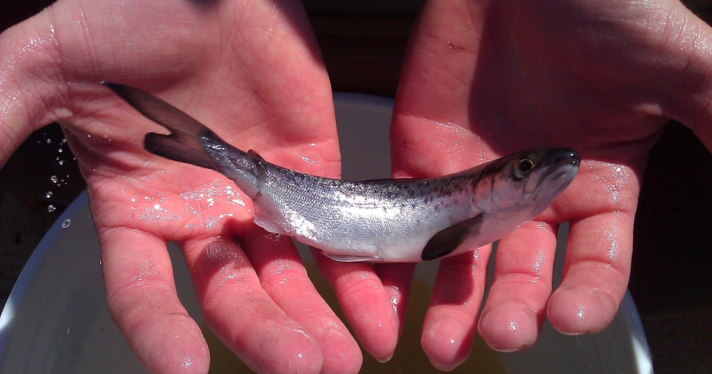
The Washington lawsuit filed by the Center for Food Safety and Wild Fish Conservancy targets Pacific Seafood’s net-pen aquaculture operations in the Columbia River that raise rainbow trout marketed as steelhead. Net pens are large floating enclosures used to raise fish in open water. Fish are hatched in freshwater facilities, then transferred to these pens and raised to market size.
Environmental groups argue that the system concentrates large amounts of waste in the water, lowering oxygen levels, spreading disease and increasing the use of antibiotics in crowded conditions. Escapes from net pens, they add, can also introduce farmed fish into wild populations, potentially competing with native species. “They’re like factory farms that we put in the water,” McConnell says.
The case filed by the Center for Food Safety and Wild Fish Conservancy alleges the Pacific Seafood’s net-pen operations have repeatedly violated permit limits for pollutants such as dissolved oxygen since permits were reissued in April 2020. According to the complaint, the pens release untreated waste into the Columbia River, including fish feces, uneaten feed, fish carcasses and chemicals used to treat disease.
Pacific Seafood says its Columbia River steelhead has a 4-star Best Aquaculture Practices certification — the highest designation of a program aimed at ensuring that seafood is produced responsibly.
When regulators fall short, residents and advocacy groups can step in, McConnell and Sandford say. Under the Clean Water Act, citizens are allowed to file lawsuits to enforce pollution limits. Both the Washington and Oregon lawsuits are still ongoing.
In 2017, a major “net pen failure” in Puget Sound released hundreds of thousands of farmed Atlantic salmon into open waters, prompting Washington to ban commercial net-pen aquaculture in state-owned waters — a move upheld in court last month. The policy, though, does not extend to the Columbia River.
The river is still suffering the effects of rising water temperatures driven by climate change and other pressures that include mercury and PCB contamination, sewage discharge and runoff from large industrial dairies.
“There’s a chronic issue with nutrient loading in the river from agricultural runoff and sewage treatment,” Stuart Ellis, deputy manager of the Columbia River Inter-Tribal Fish Commission, tells Sentient. He points to dairy operations in areas like Boardman in Oregon and Yakima in Washington that contribute high levels of nitrogen, and runoff from fertilizer on agricultural fields that pollutes groundwater in Morrow County, Oregon.
Warmer, nutrient-rich waters make it harder for salmon to migrate and create conditions that favor invasive species. Tribal fishers, who say they avoid overharvesting in their approach to fishing, experience the effects: algae can clog gill nets so quickly in summer and early fall that they must be cleaned daily, making it harder to catch fish. State governments have also warned people not to eat Pacific lamprey, a traditional tribal food, very often because of PCB and mercury contamination.
Despite the challenges, those working to protect the river say progress is still possible. Ellis points to “small victories,” such as dam removals and habitat restoration projects. He adds that seeing plants growing along restored streams and juvenile fish in the water “gives you hope that some of these things can actually start to make a difference.”
Ellis also says it will take decades before the full benefits of current restoration work are realized. “It takes a long time to heal an ecosystem,” Ellis says. “You can destroy one quite quickly, but it takes a real long time to put it back together.”
Gaea Cabico is Sentient's editorial fellow, and an award-winning journalist from the Philippines who reports on climate change, environmental issues and energy through a social justice lens. She holds a master's degree in science journalism from New York University.
Feature
Fisheries & Aquaculture•9 min read
Investigation
JBS and Cargill plants across the country are accused of pressuring unions into either accepting the same low wage structure, or mere nickels apart. The result? The largest meatpacking strikes…
Food•13 min read
Feature
In Nebraska, Blackshirt Feeders LP is building the country’s largest feedlot for 200,000 beef cattle on a square-mile slab of concrete.
Food•31 min read