News
Farmed Salmon May Not Be as Nutritious as It Once Was, New Research Suggests
Health•5 min read
Explainer
Clearing forests for agriculture isn’t just an environmental issue, it’s a growing threat to biodiversity and public health.

Words by Gabriella Sotelo
Whether a strip of woods in a local park or the Amazon rainforest, forests do more than support plants and wildlife. They can also play a role in protecting people, not just by offering scenery and cleaning the air by storing carbon, but by keeping diseases at bay that might otherwise spill over from wildlife to people.
When forests are cleared or fragmented into smaller patches, this creates ideal conditions for disease-carrying species to flourish, and the consequences for domestic animals and humans can be deadly. This pattern has been linked to outbreaks of diseases such as malaria and Ebola in regions where forests have been cleared for human use, particularly for agriculture.
Agricultural expansion accounts for nearly 90% of global deforestation, largely driven by the rising demand for meat, especially beef. Land for livestock grazing accounts for about 40% of deforestation, in addition to the land used for soy crops, the vast majority of which are grown as animal feed. In other words, forests are cleared not only to raise cattle, but also to feed them.
Deforestation has wide-ranging environmental consequences, particularly through its contribution to climate change. When forests are cleared and burned, large amounts of carbon dioxide and other greenhouse gases are released into the atmosphere. At the same time, clearing forests removes a crucial global system for absorbing and storing some of the excess carbon dioxide caused by humans.
Tropical forests are under a particularly severe threat of deforestation from agriculture. When these ecosystems are damaged or removed, their loss represents a major decline in global biodiversity. In the Amazon, more than 8,000 endemic plants and 2,300 animals are known to be at risk of extinction due to human activity, such as logging, mining, cattle ranching and agriculture.
This biodiversity loss is also a key link between deforestation and disease risk. But not all deforestation happens in the same way. These differences can lead to different outcomes for ecosystems and disease risk.
When it comes to disease risk, two processes are particularly important: complete forest loss and forest fragmentation. Complete loss occurs when large areas of forest are entirely cleared for agriculture, urban development or other land uses.
Forest fragmentation, by contrast, breaks a continuous forest into smaller, isolated patches. A once-continuous ecosystem becomes scattered. Many species decline or disappear because they lose access to specialized food or habitats, leaving only a subset of survivors.
“The species you lose aren’t random, and nor are the species that remain,” Felicia Keesing, an ecologist and educator at Bard College, tells Sentient.
First to disappear are specialist species that don’t easily adapt to changing conditions because they depend on specific habitats, foods or environmental conditions. By comparison, the survivors can exploit a wide range of resources and environments, allowing these generalist species to thrive in disturbed landscapes and even alongside humans.
The surviving species are also more likely to carry and transmit pathogens.
The destruction of ecosystems through deforestation increases the risk of infectious diseases spreading to humans because the sensitive species are lost, and the remaining ones are hardy, adaptable generalists. These species thrive and become more abundant, concentrating disease risk in smaller patches of forest, or in nearby cleared areas, increasing the likelihood of transmission to livestock and humans.
Keesing describes the changed ecostructures and wildlife dynamics as a kind of “filter.” “They’re cutting it [the forest] down for agriculture, or they’re building homes in the midst of it,” Keesing says. And because of this, people are now closer to, or in, that habitat more than before the fragmentation occurred. “So you not only have created a more dangerous place, but you’ve also created more contacts between humans and that dangerous place.”
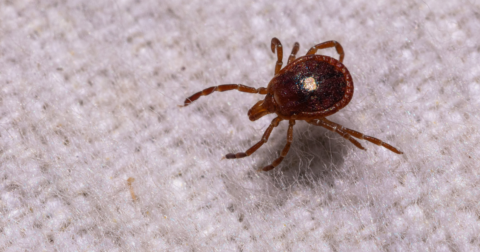
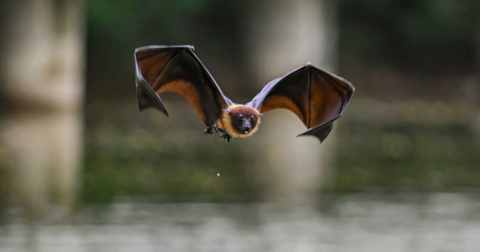
Rodents and bats are well-known examples. These adaptable animals can harbor a wide range of pathogens and often live closer to people, especially as forests are cleared. Many also carry parasites like fleas and ticks that can pass diseases to humans, increasing the chances of spillover.
Mosquitoes are another important example. As forests are fragmented, water streams can become disrupted, creating areas with standing water. Combined with potentially warmer conditions, these forest edges create ideal breeding grounds. A 2025 study also found that mosquito numbers are highest at rural forest edges, where different types mix, creating those ideal breeding conditions and raising the risk of disease spread. As environments expand with deforestation, mosquito populations can grow and spread into new areas, increasing the risk of disease spread.
Deforestation and forest fragmentation have been tied to especially lethal diseases, including malaria, smallpox and Ebola.
In the case of malaria, one study found that a 1% increase in land cleared over one month in the Brazilian Amazon led to a 6% rise in malaria cases. Deforestation changes the environment in ways that favor mosquitoes, particularly along forest edges, where cleared areas tend to have the partial sunlight, shallow water and aquatic vegetation in which mosquitos thrive. Fragmentation can also contribute to a higher mosquito population.
As forests are cleared and wildlife declines, mosquitoes also adapt their feeding behavior and move toward humans when their animal hosts become scarce. At the same time, human activity often increases near these areas, putting people in closer contact with mosquitoes and increasing the likelihood of disease transmission.
For Ebola, the earliest cases were discovered near forest fragments, where wildlife may live closer to the places people live and work, increasing their chances of exposure to the pathogens the animals carry.
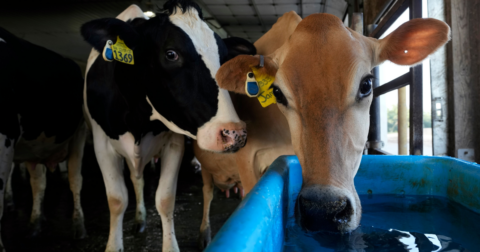
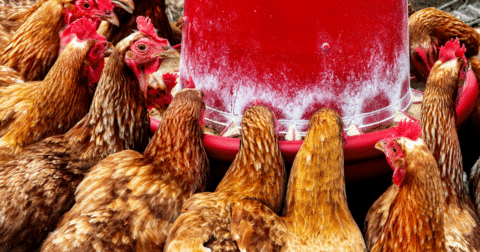
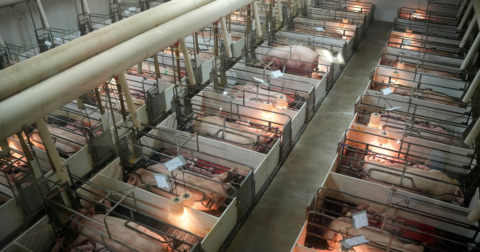
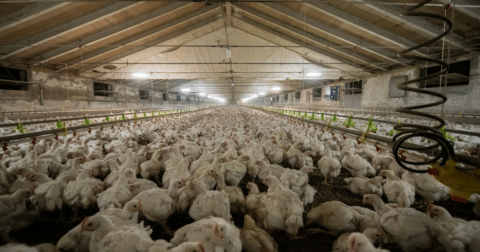
But it’s not just forests where this is happening. Keesing describes cases of “high densities of closely related individuals,” like in factory farms, where large numbers of livestock are kept in close quarters. If they are kept near a fragmented forest, Keesing says the conditions are ideal for diseases to jump from wildlife to domestic animals. Once a pathogen enters a livestock population, it can spread quickly among susceptible animals, increasing the chance it will reach humans who interact with them.
As global demand for meat and animal products continues to rise, there is increased pressure on agricultural systems to produce more animal-sourced food. This pushes both the expansion and intensification of livestock production. While farming can reduce land use through intensification, producing more food on less land, this approach often involves confining large numbers of animals and their waste in close quarters. That creates ideal conditions for disease to spread. And in turn creates an infectious disease trap.
All of this human activity creates more opportunities for pathogens to move from wildlife to people, with potentially deadly consequences. These patterns highlight how disrupting natural ecosystems increases the risk of zoonotic disease. Given the ways deforestation and high-density livestock farming can amplify disease risk, Keesing mentions that key lines of defense can include measures such as vaccines and strengthened public health systems, but maintaining biodiversity is also important. Some biodiversity researchers have recommended that countries work together with coordinated national action plans.
“In the ecology space, the single biggest thing we can do, in my view, is to protect biodiversity. And that means reducing fragmentation and actually even reversing it when we can,” Keesing says. “Because biodiversity is naturally protecting us from these zoonotic pathogens.”
Gabriella is Sentient's Fact Checker, steering the outlet's fact check process and team. Prior to this, she was an Editorial Fellow at Sentient. Her journalism background is in both environmental and science reporting, and her work has appeared in The Guardian, Gizmodo and National Audubon Society. She holds her MSc in Science Communication from Imperial College London.

News
Health•5 min read
Monona County officials and residents fear a repeat of the communication gaps and loopholes that left them caught off guard by a plan to import treated slaughterhouse manure.
Health•9 min read
News
The rapid growth of chickens — now, 31 billion globally — has sped up pathogen evolution, boosting persistence, antibiotic resistance and spillover to humans.
Health•3 min read