Feature
American Horses Are Still Being Slaughtered for Meat
Food•7 min read
Review
A new book reports how beekeeping operations are more like livestock megafarms.

Words by Sara Hashemi
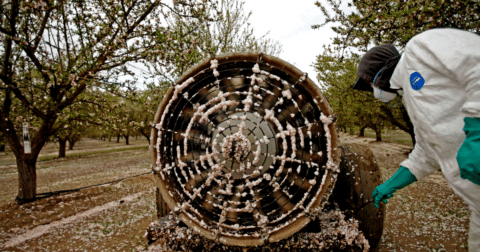
Every year, as almond trees bloom across California, the world’s largest managed bee migration event kicks off. Beekeepers from around the United States truck billions of bees onto vast orchards in the Central Valley to cross-pollinate the trees. This practice sustains California’s almond industry — the state’s top valued agricultural export — but it comes at a deep cost to the insects. It’s also just one example of how our food systems have come to rely on honey bees.
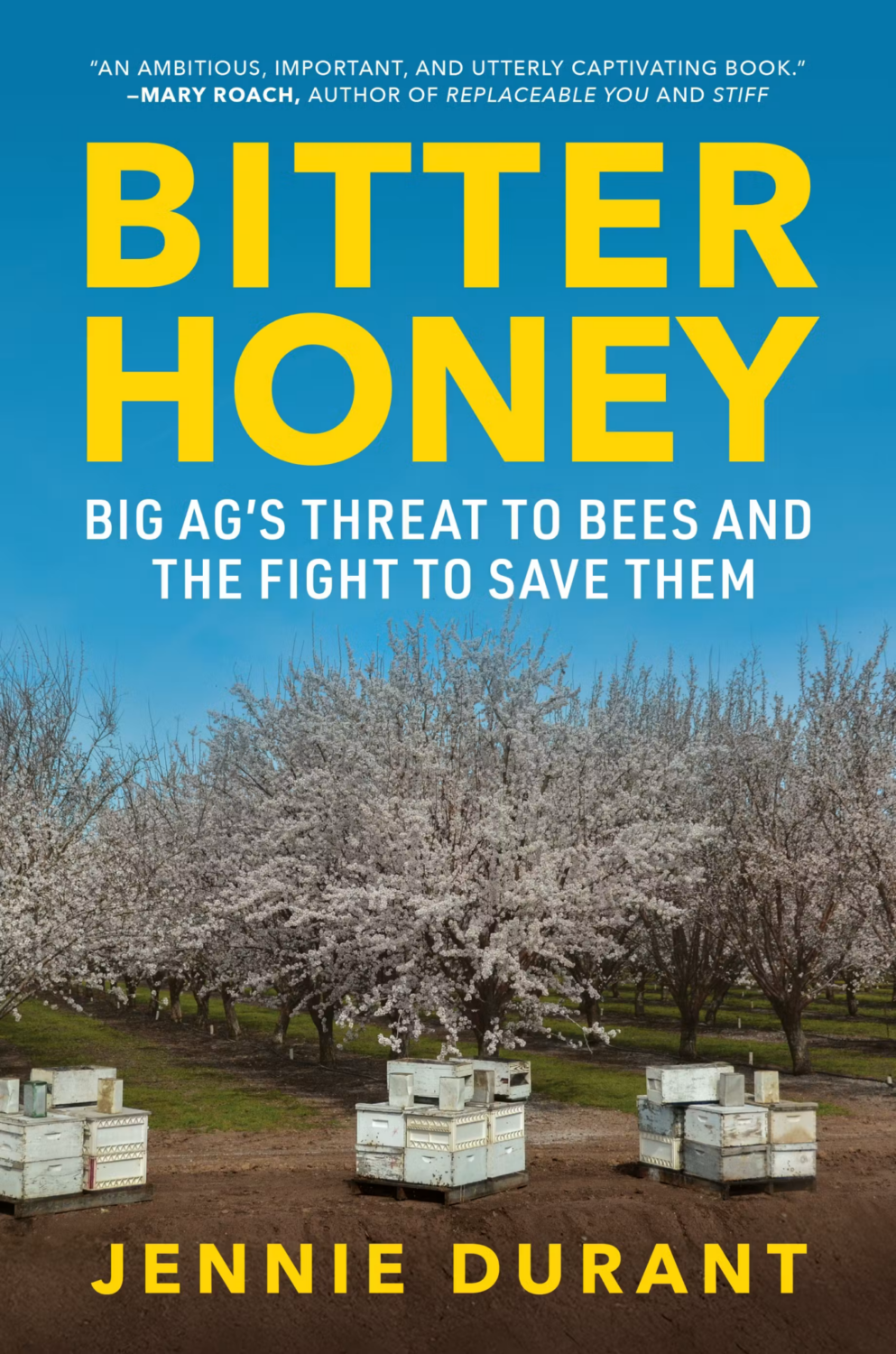
In Bitter Honey: Big Ag’s Threat to Bees and the Fight to Save Them, Jennie Durant traces the relationship between industrial agriculture and honey bees across more than a century. The book offers a deeply-reported examination of the stressors faced by beekeepers, what they do to stay in business despite them and how those decisions impact wild bees, domesticated honey bees and the environment. Through conversations with beekeepers, scientists and policymakers, the book paints an incisive picture of beekeeping as a large-scale livestock operation that has prioritized “productivity and efficiency above all else,” to the detriment of native bees and crops. Still, despite its subject matter, it does all this with a good dose of humor and hope for these buzzy creatures’ future.
The title, Durant explains, has a double meaning. “Literally, the title refers to the acrid honey that bees produce as they pollinate almonds, honey that beekeepers typically do not sell but let their bees consume instead,” Durant explains in the book. “Figuratively, however, it refers to the compromises beekeepers make to keep their operations afloat.”
To understand the current state of beekeeping in the United States, Durant takes the reader to its very beginning. Western honey bees were brought to the Americas by European settlers for their honey and the pollination of non-native fruit trees and clover, which were used as food for livestock and their communities. As colonists travelled west, so did their bees and crops. Bees became a symbol of colonization. “Like the settlers they traveled with, honey bees reshaped the land in Europe’s image, displacing native bees, changing plant communities, and mirroring the wider story of Indigenous loss.”
Eventually, Durant lands in the post-war era. This is the moment she identifies as a major shift in how bees are used. Farmers scaled up their operations, shifting to monoculture and commodity crops like corn, wheat and soy, and honey bees took on a new role as agricultural pollinators. Beekeepers started hauling their colonies to boost crop production, particularly alfalfa and clover seed, which are used to feed cattle. Durant puts this aptly: “bees went from wild foragers to shift workers, clocking in for bloom season as beekeepers hustled them from farm to farm.” With each shift, they reshaped the American landscape, driving out native pollinators and sustaining crops that might not have otherwise survived.
Durant spends much of the book on California almonds. As she explains how beekeepers maintain their colonies in the face of parasites, climate change and the agriculture industry’s growing demand, it’s hard not to draw parallels with modern factory farming. We learn how beekeepers began supplemental feeding by giving their bees “pollen substitute patties” to make sure their colonies could meet almond growers’ demands even though it can lead to overcrowding, and how they will create pesticide concoctions to fight deadly mites. When Durant asks one beekeeper why he won’t scale down his operation, he simply responds by saying that a good operation must keep growing.
The book isn’t only about the challenges faced by bees; it’s also about possibility. In the second half, Durant describes practices that can help both managed and wild bees. We meet Pete Berthelsen as he conducts a prescribed burn on his Nebraska ranch, one of several ways he’s bringing back pollinator habitats to the Midwest. Prescribed burns can help native grasses and wildflowers grow, while eliminating invasive flora that hinder flowering plants that attract pollinators.
We also visit an almond farmer who grows cover crops between her trees, a native plant and pollinator farmer in Oklahoma and a regenerative farmer in South Dakota who also keeps bees on his land. Here, the book doesn’t do enough to describe the limitations of regenerative agriculture. Studies have shown that it isn’t necessarily an effective climate solution, but Durant only offers the positives, like biodiversity and soil health.
“To help pollinators thrive — and maintain access to the nutritious, diverse food crops we depend on — we’ll need more than stopgaps and emergency measures,” Durant writes. “We’ll need a food system that works with nature, not against it; one that places the well-being of pollinators, wildlife, farmers, and the rest of us at its center.”
Here, Durant is touching on a longstanding debate about how best to protect nature — with farms that aim to integrate with nature or prioritizing efficient industrial operations while limiting their encroachment — without diving into arguments on either side.
Durant ends the book by offering a brief mantra on how to help bees: “Plant flowers. Limit Pesticides. Share the land.” After such a detailed look at how our food systems and bees are intertwined, one hopes that she would also suggest more transformative changes to the way we eat. Because, as she puts it, solutions will also need to come from the industries and agencies that support and rely on pollinators.
Clarification: this sentence was edited for clarity: The book offers a deeply-reported examination of the stressors faced by beekeepers, what they do to stay in business despite them and how those decisions impact wild bees, domesticated honey bees and the environment.
Sara Hashemi is an environmental journalist and fact-checker currently based in New York City. Her work has appeared in Sierra, Smithsonian, Maisonneuve and more
Feature
Fisheries & Aquaculture•9 min read
Investigation
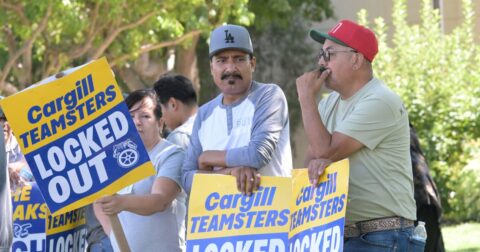
JBS and Cargill plants across the country are accused of pressuring unions into either accepting the same low wage structure, or mere nickels apart. The result? The largest meatpacking strikes…
Food•13 min read
Feature
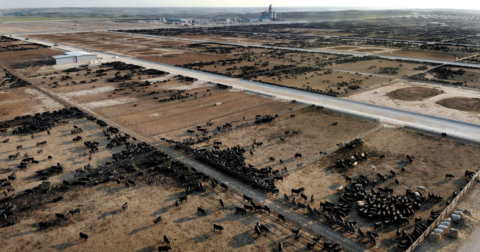
In Nebraska, Blackshirt Feeders LP is building the country’s largest feedlot for 200,000 beef cattle on a square-mile slab of concrete.
Food•31 min read