Explainer
A Handful of Cooperatives Control the US Milk Market
Food•1 min read
The popularity of bovine colostrum is surging. Can the supply keep up with the demand?


Words by Melina Walling
Egor Knyazev was a 16-year-old in Southern Ukraine who wanted two things. He wanted to improve his looks, his height and his health. And he wanted to become famous on the internet, famous enough to make money.
Those desires soon led him to a third quest. Colostrum.
Inspired by popular “healthmaxxing” and “looksmaxxing” social media influencers, many of them American and some cropping up in Europe, Knyazev befriended a local farmer on Facebook Marketplace who lives about 50 miles (80 kilometers) outside Odessa. Surprised and bemused, he agreed to sell Knyazev some of the salty, thick drink some call “liquid gold.” It’s the first form of milk produced by a mammal, in this case a cow — and increasingly also a rare and expensive ingredient pursued by the fitness-obsessed and health-conscious.
Sure enough, Knyazev, now 18, tells Sentient the video he made about colostrum “blew up” his Instagram page, where he goes by @smartbones21, gaining him about 600 followers (he has about 2,100 now). It got by far some of the most views of any of his videos: 186,000, per Instagram’s count.
But he hasn’t been able to find colostrum since. His local farmer’s cows won’t give birth again for another year, and convinced the raw form is the best, he doesn’t want to take the powder or capsule forms that have become popular enough to end up on mainstream store shelves. A small jar at Target, Amazon or Costco can run buyers in the U.S. anywhere from $15 to $100, depending on the brand. The colostrum that ends up on shelves can only be sourced from dairy farmers who have a surplus; farmers have to ensure their own baby animals have enough, because it’s essential for calves’ health. In other words, there’s a finite amount of this trendy substance for the colostrum-curious.
Knyazev fears the competition for colostrum will only grow more fierce. “The amount of animals that are giving birth will not increase, but not only that, I think that because more people are trying to buy it, it will be not in stock and pre-ordered more,” he says.
A shortage in rural Saskatchewan, Canada this past spring illustrated the growing demand among both livestock producers and consumers. Celebrities have promoted the product as part of a wellness regimen. A university medical researcher in Nebraska wants to study its possible applications for neurodegenerative diseases like Alzheimer’s and Parkinson’s. One Amish producer who doesn’t use the Internet is even bringing on someone to help with social media.
Colostrum supplement sales have jumped 3000% in the last two years, according to a February Bloomberg article, citing NielsenIQ data. But unlike other dairy-based trends like cottage cheese or whey protein powder, it’s harder to just ramp up production, because colostrum is so unique: it only gets produced at a specific time, after mother cows give birth, and so far research on synthetic colostrum is in such early stages that nearly all companies on the market today source from animals. And that raises questions about how exactly the industry plans to grow.
That might mean, like Knyazev suggests, that it gets more expensive. But it might also create new ethical dilemmas in a landscape of unregulated supplements, Corrie Whisner, an associate professor of nutrition in the College of Health Solutions at Arizona State University, tells Sentient.
“If bovine colostrum became really popular amongst humans for their consumption, what does that mean for the calving industry?” Whisner asks. “I don’t think that we really know the answers to that, and it’s something that we’d have to really think through if popularity continues to grow for these specific products.”
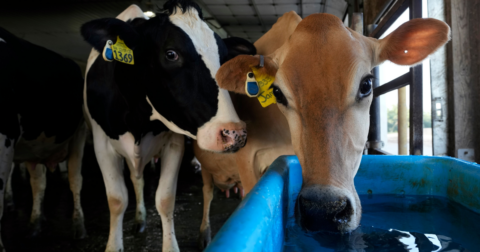
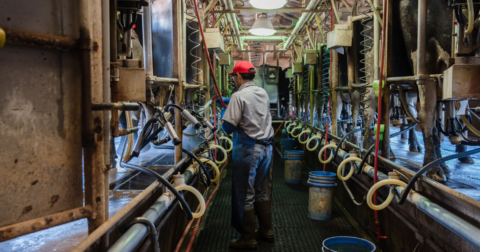
To keep up a steady supply of milk for the dairy industry, farmers breed cows so that they give birth about once a year. A mother cow produces milk for about 10 months of the year, with about two months off from milking before she calves again, says Matthew Lippert, a regional dairy educator with the University of Wisconsin-Madison extension, which connects agricultural researchers with farmers and the public. Many farms use artificial insemination, with some using hormones or embryo transfer to get the timing right and improve genetics. Lippert tells Sentient that artificial insemination can be safer for workers than keeping a bull around.
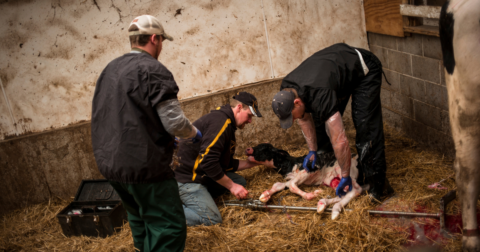
After giving birth, mother cows produce colostrum, but it’s different from regular milk. Calves urgently need colostrum in their first few hours, since their immune systems are still naive and they can’t get their immunity from the placenta like humans can, Dr. Michelle Schack, a dairy veterinarian based in Arizona, tells Sentient.
A colostrum surplus, can depend on factors like weather, time of year and whether the cow has twins, Schack says. Bigger farms, with more cows giving birth at any one time, often have more colostrum readily available. Some farmers prefer powdered colostrum replacer because it’s more consistent or because they don’t have enough cows to save much excess; others never use powdered colostrum, preferring milked colostrum from their own farm.
Schack doesn’t personally work with any farmers who sell their colostrum for human use. Many farmers prefer to feed extra colostrum to calves as they get older, she says, or to freeze and store the extra for the future since it’s so valuable on farms. Many keep colostrum on hand in case one of their cows doesn’t produce enough or a good enough quality, Schack says. “I have never encountered a farmer who is choosing to sell the colostrum at the risk of the health of the animals,” she says.
Schack adds that many farmers bottle feed colostrum and use blood tests to make sure the calves get precisely what they need, and that early access to colostrum is a requirement on most animal welfare audits. It’s included in one by the Farmers Assuring Responsible Management Animal Care Program, a voluntary program that 98% of U.S. dairies follow, according to 2019 research in the Journal of Dairy Science. Calves that don’t get enough colostrum can develop a condition that leaves them more vulnerable to sickness later in life.
Kendel Hofer, who runs a herd of about 150 beef cattle in northwestern North Dakota, tells Sentient she’s seen the price of colostrum go up over the years, but she’s never considered going without it. She pays on average $40 for a bag, and each calf needs about two bags.
“If you couldn’t access it,” she says, “it would kill calves. I mean, they would just die. So, I mean, that is kind of a scary idea, but I don’t know if we’ll ever get to that point.”
For some buyers in Canada this past spring, the surge in demand created a brief uproar. One farm store in Alberta, SR Feed & Farm Supply in Vegreville, wrote in a Facebook post in April that “There is a health fad going around and people are now taking colostrum and willing to pay premium dollar amounts for it from the human health companies, so that is the main cause of the shortage.”
Store staff declined an interview but wrote in a Facebook message to Sentient that the business has started receiving colostrum again.
Saskatoon Colostrum Company Ltd CEO Michael Chubb wrote in a May statement that the shortage was “due to increased demand and ongoing supply constraints impacting production timelines” and that the company would be expanding its production capacity.
And the demand for colostrum is growing in more areas than one.
Amy Slark, a territory manager in Illinois and Wisconsin with cow supplement company Tech Mix, tells Sentient that the colostrum market for animal health has grown alongside the human one. Her company now also uses colostrum in products like electrolyte mixes for treating diarrhea in calves or liquid products used to combat animals’ stress from transportation, she says.
Kaitlyn Keller, who owns animal health company KSX Performance LLC, tells Sentient she’s heard there are more people interested in taking colostrum, but that the growth she’s seen at her business has come from the animal side. She also says it’s easier to get colostrum in the U.S. than in Canada, which is why she has a lot of demand for her products there. She gets colostrum from large dairies in Idaho and Oregon, and isn’t too concerned about human cravings cutting off her supply. “The USA is very big on fads,” Keller says, and most fads fizzle.
She also thinks cattlemen are starting to talk more about the importance of colostrum for their animals on social media, adding to the demand. While it used to be taboo to talk publicly about what they did on the farm, “they got more social, I think,” Keller says. “It was an outlet that we could use to get correct information out.”
Aaron Fisher runs a farm called Golden Gallon Acres in Oxford, Pennsylvania, where he sells beef, pork, chicken and, per the terms of his Pennsylvania license, raw dairy products from his 110 cows. He also sells colostrum, which he tells Sentient is “a product you can never have enough of.”
Fisher is also Amish. He doesn’t have a computer or use social media. But he does know the Internet is where people keep finding out about his colostrum, and why he can’t seem to keep it in stock. So that’s why he has someone to take care of the website, answer questions and occasionally post on socials.
“I really do think after COVID people started digging into finding ways they could help themselves stay healthy and fuel a good immune system, and I think that increased demand on colostrum,” Fisher says.
Jesse Meerman owns Green Pastures farm in Michigan, where, under state laws permitting the distribution of unpasteurized milk, members of his herd share can pay to legally access raw milk every month. He tells Sentient that when he has a little extra colostrum, some of his herd share members sometimes ask him for that too. They usually fall into one of two categories, according to Meerman. They’re either looking for help with a medical condition, or they’re athletes.
There’s some overlap between buyers seeking raw milk and fresh colostrum, and it takes a similar amount of additional effort to get to a limited supply of the fresh product. Federal regulations in the U.S. require milk products intended for human consumption to be pasteurized if sold to consumers in another state, so some smaller sellers get around that by marketing their colostrum as pet food (which, incidentally, is also an area where colostrum is becoming a trendy ingredient, according to market research firm NielsenIQ).
But the supplement industry is regulated differently, and it’s unclear where many colostrum brands source their colostrum from or how it’s processed.
Prospective buyers of colostrum supplements have a range of options and formulas to consider. One company sends out a free milk frother with purchase of a “starter kit” that comes in chocolate and vanilla flavors. Another sells travel size sticks and colostrum sodas. Goop and Vogue have published interviews with colostrum supplement company founders or testimonials, and Jennifer Aniston and Kourtney Kardashian Barker have both promoted colostrum. On forums like Facebook, users (who are sometimes also sellers) tout a range of benefits. Hair, skin, nails. Gut health. Weight loss. Immunity. Muscle recovery. Cavities. Allergies.
Much of the research on colostrum’s potential benefits is in early stages, and some colostrum companies make health claims that lack credible evidence. In cases where the Food and Drug Administration has found colostrum marketed as a drug, it has issued warning letters.
While colostrum could have some potential upsides for humans, especially for people who are immunocompromised or with certain gastrointestinal conditions, more work needs to be done to understand the most effective formulations and doses, says Whisner, of ASU.
But many don’t want to wait, and they’re willing to pay to try it out sooner.
“In California, you go to Erewhon, and if you have money, you can buy the best quality food ever on this earth, or you can just find Amish farmers easily, easily,” said Knyazev, who dreams of traveling beyond Ukraine and living elsewhere, maybe in America someday. “In U.S., if you have money, you can be the healthiest man out there.”
John Oehlerking grew up raising dairy cattle in Nebraska. Now he has about 60 beef cattle in addition to row crops. He’d seen commercials for colostrum supplements on late-night TV, but never really thought about trying them or selling any from his herd.
Then his wife’s cousin reached out and asked if his family might be able to help with a research project at University of Nebraska. Dr. Howard Gendelman, a professor of infectious disease and internal medicine and director of the Neurodegenerative Disease Center at Nebraska, was looking for someone to get him fresh colostrum that he could study in a lab.
Oehlerking says as a farmer, he was naturally a skeptic. “I think people are looking for things to improve their lifestyles, right, and and they’re all looking for that miracle in a bottle,” Oehlerking tells Sentient. ”There are people out there willing to sell people that hope of a miracle in a bottle, no matter if it holds true or not,” he adds.
But after talking more with Gendelman, he started to think pharmacy applications for colostrum might be different. If Gendelman’s company takes off and the trials show promise, Oehlerking said he might consider raising more cows to supply the colostrum.
Gendelman, who is also a partial owner in two biopharmaceutical companies, says that if his product is successful, he’ll have a bridge to cross: where to get all that colostrum. “I’m worried that this is going to be successful, and one farm may not be enough,” he says.
It may be a while before they reach that bridge. The studies aren’t in clinical trials yet, and Jeffrey Kordower, founding director of Arizona State’s ASU-Banner Neurodegenerative Disease Research Center, tells Sentient by email that the early studies of colostrum and Parkinson’s use an outdated animal model that “limits the interest in this approach.”
Gendelman defends his use of the model but acknowledges it has some limitations. More broadly, he believes colostrum is worth studying more rigorously.
“To be honest, colostrum has, you know, recently, within the last couple years, has been a big product,” Gendelman tells Sentient. “What fascinated me is, it was totally uncontrolled, so people were taking colostrum and they were making powder out of it, putting it into a bottle and selling it for $100. It was really crazy, and the science was almost non-existent.”
He thinks it’s more than a trend. “From all the work that I’ve done and everything that I’ve read, this is not going away,” Gendelman says.
Melina Walling is a features and investigative reporter for Sentient. She reports on agriculture, climate change, science and environment and is passionate about understanding the nuances and intersections of food, labor, culture and planetary health. Her work has been published in The Associated Press, USA Today, Grist, The Arizona Republic and The Cincinnati Enquirer and other outlets. Walling is based in Chicago.

Feature
Fisheries & Aquaculture•4 min read

Solutions
While the country’s farms tend to have high animal welfare standards, Bhutan also imports most of its meat.
Farms•7 min read
Feature
Fewer than 15% of veterinary school graduates are opting to care for farm animals.
Food•6 min read