News
Farmed Salmon May Not Be as Nutritious as It Once Was, New Research Suggests
Health•5 min read
News
The outbreak has hit 31 states, with 184 infections and one death. About 30% of cases have been in children under 5.
News • Health • Public Health

Words by Seth Millstein
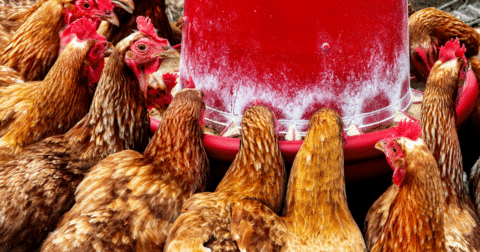
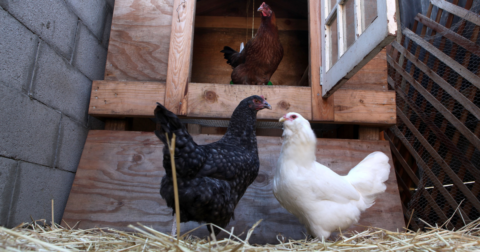
As if bird flu wasn’t enough, another disease is now making its way through chicken flocks in the United States. In the last 2 months, salmonella has broken out in no fewer than 31 states, and according to the Centers for Disease Control (CDC), it’s linked to backyard chicken flocks.
The outbreak began at the end of February and has infected 184 people across the country, the CDC says. Human cases have been detected in Maine, Vermont, New Hampshire, Massachusetts, New York, Pennsylvania, Maryland, West Virginia, Ohio, Indiana, Illinois, Michigan, Wisconsin, Kentucky, Tennessee, North Carolina, Georgia, Mississippi, Florida, Minnesota, Iowa, Missouri, Texas, Colorado, Montana, Idaho, Utah, Nevada, California, Oregon and Washington.
Fifty-three people have been hospitalized so far, and one has died. Nearly 30% of cases have been in children younger than 5 years old.
However, the CDC notes that “the true number of sick people is likely much higher” because many people who contract salmonella recover without medical attention.
But while the infection has hit everywhere from New York to California, some states in between haven’t reported any cases. Which raises the question: If this salmonella outbreak is coming from backyard chicken flocks, how has it been able to spread across non-contiguous states?
Salmonella is a bacteria that lives in the intestines of certain animals, humans included. Salmonellosis, or salmonella infection, occurs when a person swallows the bacteria; this typically happens by drinking contaminated water, eating contaminated food or handling feces without hygienic precautions.
Most salmonella infections result in diarrhea, with additional symptoms including headaches, vomiting, nausea and loss of appetite. Most people recover within a week without treatment, but occasionally the bacteria spreads to other parts of the body, which can be fatal. Even if it doesn’t, the diarrhea caused by salmonella can lead to severe dehydration, which is also life-threatening.
There are around 1.35 million human salmonella infections every year in the United States, according to the CDC, making it one of the leading causes of foodborne illness. Most cases are caused by eating contaminated food, about 20% of them from eating chicken in particular.
Statistically, the low number of deaths from the recent outbreak isn’t surprising: of the more than a million people infected with the bacteria every year, only 420 die from it, according to the Food Safety and Inspection Service.
But the source of the infections in backyard flocks is still a mystery, as is its presence in non-contiguous states. How and why has the outbreak spread to the specific states it has?
Maurice Pitesky, an associate professor and expert in poultry disease modeling at the UC Davis School of Veterinary Medicine, has thoughts on this. In an email to Sentient, Pitesky writes that there are “a few different possibilities” as to why the disease is popping up in such disparate places.
It’s possible that the initial infection occurred at a hatchery that shipped the infected chicks across the United States, Pitesky writes.
If this is the case, he says, the likelihood of it spreading to commercial flocks is fairly low, because they generally rely on different hatcheries than backyard chicken owners.
He also points out that the outbreak started after the molt; this is the time of year when chickens shed their feathers and hens temporarily stop laying eggs. When hens start laying again, Pitesky writes, this sudden uptick in production typically results in more people handling eggs and chickens, which could have helped spread the outbreak.
Moreover, it’s “likely” that this particular salmonella outbreak has spread to more states than the CDC has officially logged, Pitesky writes, as “reporting for most diseases is under-represented in the data.”
Pitesky also notes that many of the cases occurred in children under 5 — almost 30%, the CDC reports. This is an important reminder that even with backyard flocks, “kids should not be near chickens,” he writes, “since they touch their face and mouth a bunch.”
Salmonella isn’t the only potentially fatal zoonotic disease that’s spread from livestock animals to humans this year. In April, the CDC warned of a small outbreak of E.coli in three U.S. states that’s believed to have come from raw dairy products.
Seth Millstein is a writer and musician living in the Bay Area. He has helped launch several early-stage journalism startups, including Bustle and Timeline, and his work has been published in Bustle, Huffington Post, The Daily Dot and elsewhere.

News
Health•5 min read

Monona County officials and residents fear a repeat of the communication gaps and loopholes that left them caught off guard by a plan to import treated slaughterhouse manure.
Health•9 min read
News
The rapid growth of chickens — now, 31 billion globally — has sped up pathogen evolution, boosting persistence, antibiotic resistance and spillover to humans.
Health•3 min read