News
Farmed Salmon May Not Be as Nutritious as It Once Was, New Research Suggests
Health•5 min read
Feature
New research and local testing are raising community concerns about “forever chemicals” moving from contaminated biosolids into crops, livestock and the food supply.

Words by Gaea Cabico
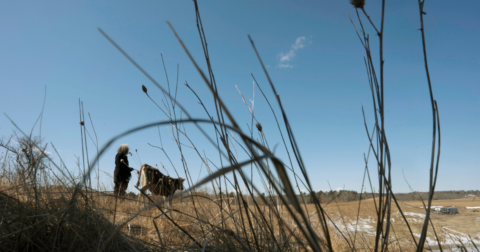
Milk is rarely found in Eva Turner’s refrigerator. The 74-year-old grandmother stopped keeping it regularly because of a question she can’t shake: “Am I poisoning them, my grandkids, by putting milk in their cereal?”
Turner has spent most of her life in Cameron Mills, a quiet rural community in New York’s Steuben County. It’s the kind of place where neighbors look after one another, she tells Sentient. But about 30 years ago, residents noticed something unusual being spread on nearby farmland. It was different from the traditional manure fertilizer they were used to, Turner says. The smell, she describes, was “ferocious.” Residents complained that they could not open their windows, hang clothes outside or simply enjoy being outdoors.
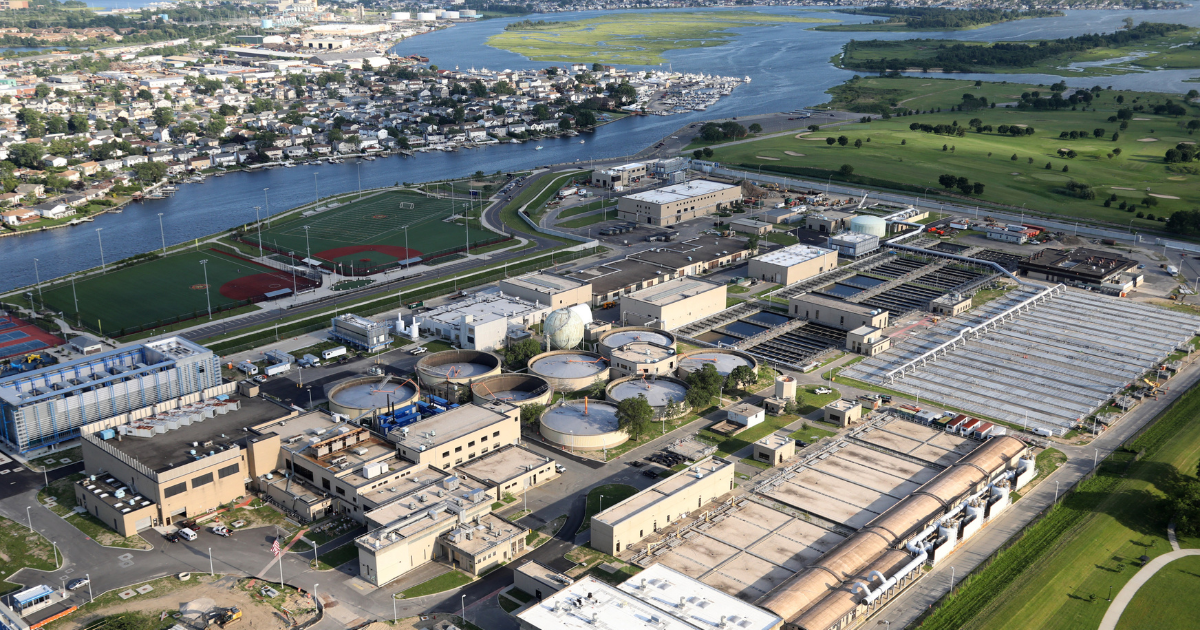
Eventually, the community learned the material was sewage sludge, a semi-solid and nutrient-rich byproduct left behind after wastewater treatment. Also known as “biosolids,” the material has long been used across the United States as fertilizer.
But concerns grew beyond the putrid odors when the contaminants known as per- and polyfluoroalkyl substances, or PFAS, were detected in water and sewage sludge in New York and across the country. Commonly known as “forever chemicals,” PFAS can persist in the environment for decades and remain in the human body for years. Exposure has been linked to kidney and testicular cancers, pregnancy complications, liver stress and weaker response to some vaccines.
In a 2025 draft risk assessment, the Environmental Protection Agency warned that even trace amounts of perfluorooctanoic acid (PFOA) and perfluorooctane sulfonic acid (PFOS) — two common PFAS types — in sewage sludge applied to land could pose health risks.
For Turner, sludge spreading has escalated from a neighborhood nuisance into a source of constant anxiety. She is especially worried about potential contamination in local meat and milk.
According to the EPA’s risk assessment models, just one application of PFAS-contaminated sludge to farmland may expose humans to unsafe levels of PFAS when they eat some foods produced at those sites, such as beef, eggs, milk, fish, fruits and vegetables. The agency notes that people who rely heavily on products from contaminated farms face the greatest risks. However, the Food and Drug Administration says it has not detected PFAS in over 95% of fresh and processed foods tested for 30 different types of PFAS using the Total Diet Study (TDS) since 2019. The agency also acknowledges that the number of samples for each food was small, but this method still informs which foods to prioritize and its future methods for monitoring PFAS in the food supply.
Rural residents of New York and environmental advocates argue that spreading sewage sludge onto farm fields allows PFAS to move from the contaminated wastewater treatment facilities into crops and livestock, and eventually into the food people eat. They are particularly concerned about milk and meat because dairy is central to the state’s agriculture sector, as New York is the nation’s fifth-largest dairy state.
New York is currently home to around 500 concentrated animal feeding operations, or CAFOs. The majority are dairy farms, and in 2024, the industry produced over 7% of the country’s milk, earning $3.8 billion in gross income.
“This has consequences — both for the milk you put in your cereal today and for the long-term impact to our agricultural sector and farmland,” says Claire Walsh Winsler, director of food, agriculture and land use at Environmental Advocates NY, one of the groups calling for a moratorium on the practice.
Each year, wastewater treatment plants across the U.S. generate millions of tons of treated sewage sludge, or biosolids. The material is typically applied to land as a soil additive or conditioner, or it’s disposed of through landfilling and incineration. In New York, 16% of biosolids produced each year are used as-is, or after composting, on agricultural land, forests, gardens and other land applications, according to the state’s Department of Environmental Conservation. But Winsler says the full extent of sewage sludge use in New York is unknown. She notes that since highly processed sewage sludge — known as Class A — is often sold to the public, it is difficult to track where it ends up.
Wastewater treatment plants are designed to remove pathogens and break down bulk organic matter, and some can remove detergents and excess nitrogen- and phosphorus-based nutrients. However, most of these facilities don’t have the ability to filter out small, long-lasting contaminants like many pharmaceuticals and most PFAS.
Forever chemicals are used as coatings that make many everyday products more convenient, such as waterproofing camping gear, repelling stains from clothing and keeping food from sticking to cookware. When PFAS-coated products are washed, the chemicals can enter wastewater. Humans are also exposed to PFAS wherever it might leach into food, explains Bridger Ruyle, an environmental engineer and assistant professor at New York University, who researches the impacts of PFAS and pharmaceuticals on water quality. Ruyle likens sewage sludge to a “sponge” for PFAS.
For decades, spreading sludge on farmland was promoted as a low-cost and environmentally friendly alternative to landfilling or incineration. The idea was that the nutrients in the waste could be recycled as a crop fertilizer or soil conditioner, and at the same time reduce air pollution emissions and reliance on synthetic fertilizers. It was even suggested in a 1989 EPA brochure promoting new regulations and the benefits of using sewage sludge that recycling the waste product at a Florida digestion facility is “expected to completely pay for itself” because the methane produced “has considerable value as a fuel source.”
“The problem is that the sludge has really high levels of PFAS. So although you sort of mitigate the climate change issue, you then introduce a chemical contamination issue to the soil. And that’s really problematic,” Ruyle says. “So once you put the sludge onto the field, you now have a farm system that is contaminated.”
PFAS can be taken up by crops grown in contaminated soil, leach into groundwater used for drinking and irrigation or accumulate in livestock when they eat feed grown from contaminated land and water. People are then exposed to the forever chemicals when they consume this meat, produce and water. Because the human body cannot metabolize, or break down, many PFAS compounds, they can persist and accumulate over time.
Understanding how PFAS moves from soil into crops and through the plant, and understanding how these compounds may affect food quality and safety, is a central focus of research by Weilan Zhang, an assistant professor at the University at Albany, State University of New York. His team has found that when plants take up PFAS from contaminated soils and biosolids, the chemicals do not spread evenly in the plant and accumulate more in different parts of the plant, depending on the type of PFAS.
Through a National Science Foundation-funded study, Zhang and his colleagues are growing radish, soybean and lettuce in soils mixed with biosolids to better understand how PFAS move through plants. The research is ongoing, but preliminary results suggest that smaller, more water-soluble PFAS compounds can accumulate in soybean seeds. Soybeans are used in a wide range of products, including soy milk, tofu and livestock feed. Over 90% of U.S. soybean production is used as a protein source for animal feed, creating a potential pathway for PFAS to move through the food chain.
At the center of the PFAS controversy in Steuben County, New York is a stretch of agricultural land around the towns of Bath, Cameron and Thurston. For decades, the Dickson family operated a dairy farm, Leo Dickson & Sons, while also storing and applying biosolids and food waste to agricultural fields under a state permit. After selling its dairy herd in 2021, the family continued growing alfalfa, corn and soybeans, which are commonly used for livestock feed.
In 2022, Vermont-based waste management company Casella acquired 110 acres and obtained leases for more than 2,200 acres of land used for spreading sewage sludge from Leo Dickson & Sons. Casella also leases a similar amount of acreage for biosolids application in Bath, Cameron and Thurston.
Casella has not applied sewage sludge to the farm since acquiring it and has no plans to restart those operations, Jeff Weld, Casella’s vice president of communications, tells Sentient in an email. “Casella has worked to revitalize the facility since its acquisition, including the closure of existing lagoons, removal of old infrastructure, and other improvements. We’re proud of the work we have accomplished in improving the site and bringing the facility up to modern standards,” he writes.
Residents remain concerned about the legacy of the land.
“We don’t have the smell. We don’t have it in the road. But you’re living with the after effects,” Turner says. “A lot of it is unknown. We don’t know about the meat. We don’t know about the milk,” she adds, noting that no testing has been conducted on those products. The Department of Environmental Conservation says on its website that it is partnering with the State University of New York to analyze PFAS in biosolids and study how much PFAS can be absorbed in crops grown on soil mixed with biosolids.
Cases in Maine show how devastating the consequences can be when PFAS-contaminated sewage sludge is spread on agricultural land. Several farms discovered unsafe PFAS levels in milk and beef after spreading biosolids on fields, forcing farmers to dump milk, cull herds and, in some cases, shut down their operations. The Maine Department of Agriculture, Conservation and Forestry has identified 101 farms with PFAS concentrations exceeding the state’s interim drinking water standard or soil screening level.
Maine became the first state to ban the land application of PFAS-contaminated sludge, followed by Connecticut.
In New York, concerns about contamination intensified after a 2023 investigation by the Sierra Club. The environmental group tested 83 water samples from private wells, ponds and streams in Bath, Cameron and Thurston. It found that water sources adjacent to fields where sewage sludge had been spread contained, on average, PFAS concentrations of nine times higher than samples that were not adjacent to land application sites.
The group also reported that one in eight private water wells located near sludge-spreading sites contained PFAS levels exceeding federal drinking water standards.
The results helped spur a wave of local action. In 2023, Thurston enacted a law banning the land application of sewage sludge in the town. Casella and the Dicksons sued the town, arguing that the local law conflicts with New York’s Right-to-Farm protections, but they eventually withdrew the case.
In 2025, the counties of Albany and Schoharie approved moratoriums on the land application of sewage sludge. Just last month, Steuben County legislators unanimously approved a six-month moratorium on issuing new permits to spread sewage sludge on farmland. The measure, however, does not affect permits that have already been issued to Casella and the city of Hornell.
But concerns persist elsewhere in New York. In Franklin County, near the Canadian border, residents have raised alarms about Casella’s Grasslands processing plant, which turns sewage sludge into fertilizer. Weld says that Casella has strict limits on the PFAS levels it accepts at facilities that produce biosolids for land application. He adds that the company’s Class A biosolids meet current and proposed PFAS standards and are not used on food crops for human consumption.
In Washington County, where Sierra Club volunteer Tracy Frisch lives, the county continues to compost sewage sludge and farms continue to apply sludge-derived products.
As part of a national Sierra Club volunteer committee focused on PFAS, Frisch tells Sentient that she and other volunteers used grant-funded test kits to sample drinking water near a farm where sewage sludge had been spread. While the home’s reverse osmosis system removed PFAS from tap water, a sample taken before filtration contained 104 parts per trillion of PFOS — 10 times higher than New York’s PFAS limits.
What advocates and residents want is a statewide moratorium on sludge application as well as expanded testing.
On June 4, the New York State Senate passed a bill proposing a five-year moratorium on the sale and land application of biosolids, as well as testing of soil where biosolids have been applied and of nearby water wells. The proposed legislation also seeks to require wastewater treatment facilities to test biosolids for PFAS and establish a publicly accessible database of PFAS test results.
Even the New York Farm Bureau, an agricultural lobbying group with a history of resisting tighter environmental regulations on behalf of CAFOs and rural farms, says it opposes biosolid use on farmland if the sludge contains detectable amounts of PFAS. The group also wants testing of both biosolids and land before sludge application, as well as federal and state funding to aid farmers who might lose farmland if PFAS levels are too high.
“Unfortunately, the more we continue to test, the more we are likely to find contaminations,” says Winsler of Environmental Advocates NY.
For Casella, PFAS is a source control issue, where wastewater plants, landfills and compost facilities are “passive receivers,” and not sources, of these chemicals. “The solutions to the PFAS issue remain upstream of disposal and most people experience exposure to PFAS chemicals through day-to-day activities, not due to the land application of biosolids,” Weld argues. He adds that banning land application of biosolids could increase planet-warming emissions from producing synthetic fertilizer and transporting biosolids to landfills, as well as raise costs for farmers.
New York continues to promote the beneficial use of sewage sludge as part of its state’s solid waste management strategy and climate goals. State officials have also set a goal to increase the use of recycling biosolids from 22% in 2018 to 57% by 2050.
“But like any recycling practice, it needs to be controlled,” Molly Trembley, an environmental engineer with the Department of Environmental Conservation, said in a stakeholders meeting in February.
While permanent regulations are being developed, the Department of Environmental Conservation has established interim criteria for PFAS levels allowed in biosolid samples and compost, and the agency is also considering mandatory PFAS testing for biosolids sources and products. Other proposals under consideration include prohibiting livestock grazing on land treated with Class B biosolids — sewage sludge that has been treated to significantly reduce pathogens but not fully eliminate them — and restricting the cultivation of food crops on treated fields.
For advocates, however, these measures are not enough. They argue that regulators are trying to manage contamination rather than prevent it. “We’re asking that sewage sludge not be land applied or used as a fertilizer, not sold as bag compost, not mixed with topsoil, not given away, sold and not allowed to be used on farms, gardens and landscapes because of the toxicity,” Frisch says.
Some also question the logic of allowing feed crops to be grown on biosolids-treated land while considering restrictions on food crops and livestock grazing.
“We need to ultimately pause the process and do a better investigation of what safety standards look like, instead of kind of moving ahead and figuring out safety standards as they come,” Winsler says.
Turner, for her part, fears PFAS sludge contamination will become a nationwide food crisis if regulators fail to act. For nearly three decades, she has attended meetings, spoken with officials and pushed for action.
Asked what keeps her going after all these years, Turner pointed to her 15 grandchildren and eight grandkids. “I go for them. It’s too late for me,” she says.
Gaea Cabico is Sentient's editorial fellow, and an award-winning journalist from the Philippines who reports on climate change, environmental issues and energy through a social justice lens. She holds a master's degree in science journalism from New York University.

News
Health•5 min read
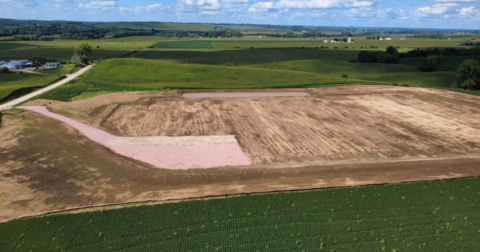
Monona County officials and residents fear a repeat of the communication gaps and loopholes that left them caught off guard by a plan to import treated slaughterhouse manure.
Health•9 min read
News
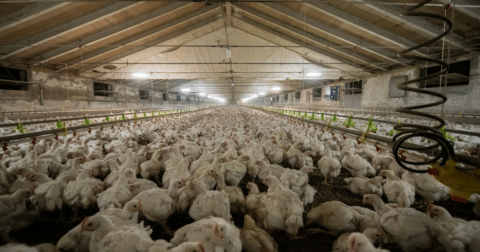
The rapid growth of chickens — now, 31 billion globally — has sped up pathogen evolution, boosting persistence, antibiotic resistance and spillover to humans.
Health•3 min read