News
Farmed Salmon May Not Be as Nutritious as It Once Was, New Research Suggests
Health•5 min read
Explainer
Research links hurricanes and drought with increasing risks of antibiotic resistance genes, which are concentrated in manure.

Words by Pragathi Ravi
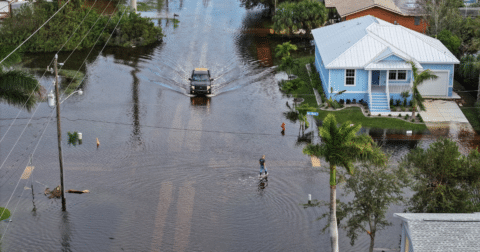
In early October of 2024, Hurricane Milton made landfall near Siesta Key, Florida. At least 19 tornadoes tore through 5.7 million acres of agricultural land, tossing up neatly laid pastures while swollen rivers and creeks flooded cattle ranches and poultry farms across the state.
Chamteut Oh, an assistant professor at the University of Florida, studies microbes in the environment. While federal and state governments dispatched emergency responders to deal with the immediate aftermath of the hurricane, Oh was thinking about a mounting public health threat lurking in the waters winding through hurricane-damaged farms: antimicrobial resistance.
Antimicrobial-resistant infections cause 1.27 million deaths per year globally. Manure from livestock farms contains high levels of antimicrobial resistance genes, and when hurricanes and floods spread that manure around, it can carry these genes to new bacteria that can infect people.
As the 2026 hurricane season picks up, microbiologists are increasingly concerned that extreme weather events such as hurricanes and floods may be spreading these genes through waste from factory farms and other sources. For instance, Oh’s team found that Hurricane Milton transported antibiotic-resistant genes from land-based bacteria to coastal environments, research they published in a recent preprint.
This urgent public health challenge is only poised to intensify, says Sid Thakur, a veterinarian and executive director at North Carolina State University’s Global One Health Academy. Meanwhile, global warming is increasing the frequency and intensity of extreme weather events.
Antibiotic resistance genes are the segments of a bacterium’s genetic code that allow it to resist effective antibiotic treatments, which would otherwise kill or inhibit the bacterium’s growth.
Bacteria that have one of these genes can share it with nearby bacteria, making them resistant too. Think of it as a shield against antibiotics, Oh says. If a person is infected by bacteria carrying these genes, antibiotics don’t work as well, or at all. This means a mild infection that was easily treatable can be difficult or impossible to treat. Antimicrobial-resistant infections kill more than 35,000 people each year in the United States alone.
Research has linked climate change to a 10% global increase in antibiotic resistance genes in Salmonella bacteria, signalling that global warming could increase the dissemination of these genes.
The places where antibiotics are used the most, such as livestock farms and hospitals, become hotspots for these antibiotic-resistant genes, Oh says.
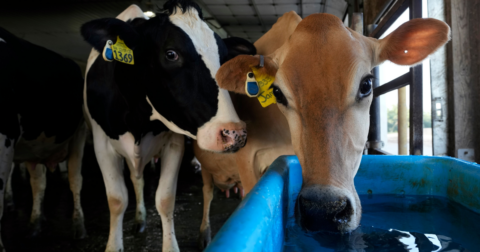
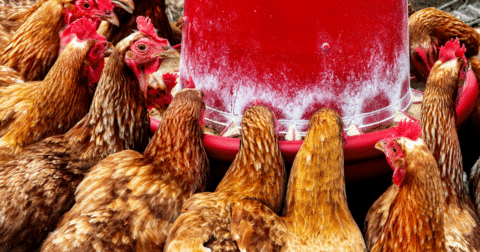
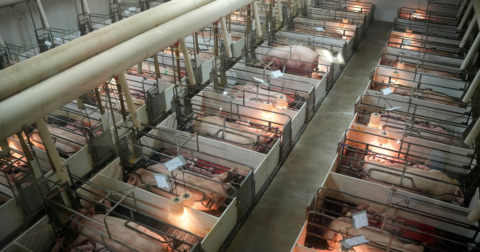
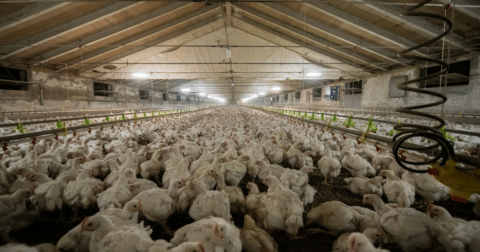
The vast majority of U.S. livestock are raised under crowded factory farm conditions that facilitate the spread of disease, and antibiotics are commonly given both to sick animals and to healthy animals to prevent disease. For livestock in the U.S., the sale and distribution of medically important antibiotics — drugs that are also used in human medicine — rose by 16% from 2023 through 2024, according to the FDA.
Manure from these factory farms is a significant vector for antimicrobial resistance genes, according to a 2025 study. The animals also don’t fully metabolize most of the antibiotics they are given, so when the antibiotics are excreted in manure, they enter the environment.
When these antibiotic resistance genes spread to new areas, the bacteria there that are not yet resistant can pick them up and become resistant. And when the antibiotics excreted in manure are present in the environment, that creates high selection pressures, where the environment favors bacteria that evolve or acquire antibiotic-resistance genes. High selection pressures make microbes without these genes even more likely to pick them up when they are exposed to them.
Extreme weather events can move these genes over long distances. Wastewater or the discharge from livestock farms or cattle ranches contain high levels of antibiotic resistance genes. Hurricanes or heavy rainfall can transport them into waterways that people rely on for drinking water, like creeks and rivers, Thakur says.
Under normal circumstances, drinking water treatment technology can often reduce the risk of microbial transfer of antibiotic-resistant genes by killing microbes with chlorination, Oh says. But hurricanes and storms overwhelm these treatment systems, meaning untreated water combined with floodwater can gush through streets and homes, sickening people.
In these cases, the downstream communities who rely on the river to fulfill their drinking water needs may be at risk of infections, says James Tiedje, a microbiologist at Michigan State University.
In the aftermath of Hurricane Milton, Oh and his team collected water samples along Florida’s Gulf Coast to see if the hurricane had spread antibiotic resistance genes to new places. This research shows that these genes can move significantly in a hurricane, a potential risk for communities near factory farms.
Inland bacteria contain higher levels of certain antibiotic-resistant genes than coastal bacteria, Oh says. Because severe weather conditions like heavy rain can overwhelm sewage treatment plants, the resistance genes “can be transferred to the coastal environment before being properly treated,” he says.
The team took samples at three time points from one week to seven months after Hurricane Milton across 30 sites and tested them for both antimicrobial resistance genes and bacteria. After the hurricane, the team confirmed that inland bacteria transported antibiotic-resistant genes to coastal environments.
In a separate pre-print research paper, Oh and his colleagues were also able to prove that inland bacteria carrying these genes, transported on particles such as microplastics, persisted for weeks to months in the coastal environment after Hurricane Milton.
In addition to fueling stronger hurricanes, climate change is also increasing the frequency and intensity of droughts, and this can also increase antibiotic resistance. In a March 2026 study, a team of researchers found that drought drives antibiotic resistance in soil bacteria. They used data on soils across the United States, Europe and China. “We have pretty solid evidence that drought can drive resistance,” says first author Xiaoyu Shan, a postdoctoral scholar at the Newman Lab at the California Institute of Technology.
The reason for this may be counterintuitive: many antibiotics, including streptomycin and tetracycline, were originally isolated from soil bacteria. This means that the compounds naturally exist in soil moisture. During a drought, some of the soil moisture evaporates, increasing the concentration of natural antibiotics, Shan says, thus increasing the selection pressure. The bacteria that are sensitive to antibiotics die off, increasing the proportion of bacteria that are resistant.
Shan says the study reiterates how human and environmental health are inextricably linked.
The growing public health threats of extreme weather and antimicrobial resistance are interconnected. Down the line, this could have grave implications. For Oh, “I believe we don’t have any other prevention except for reducing the misuse and overuse of antibiotics.”
Correction: This story has been updated to clarify which information is attributed to an interview with Sid Thakur.
Pragathi Ravi is an independent science journalist whose stories have appeared in Wired, Grist, the Christian Science Monitor and others. She lives in New York.

News
Health•5 min read
Monona County officials and residents fear a repeat of the communication gaps and loopholes that left them caught off guard by a plan to import treated slaughterhouse manure.
Health•9 min read
News
The rapid growth of chickens — now, 31 billion globally — has sped up pathogen evolution, boosting persistence, antibiotic resistance and spillover to humans.
Health•3 min read