News
Farmed Salmon May Not Be as Nutritious as It Once Was, New Research Suggests
Health•5 min read
News
New World screwworm’s long-dreaded arrival in the U.S. jeopardizes a 40-year-old agricultural victory.
News • Health • Public Health

Words by Seth Millstein
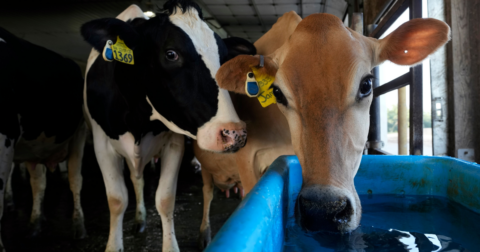
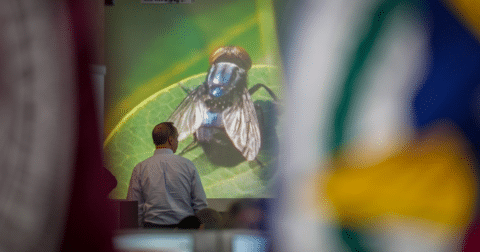
It’s back: For the first time since 1982, the New World screwworm has been found in U.S. cattle. The flesh-eating parasitic fly, which was eradicated from American cattle herds almost 50 years ago, has been detected in three cows, one dog and a goat, prompting Canada to restrict cattle imports from the United States and raising the specter of a wider outbreak.
The New World screwworm was a massive problem in U.S. cattle herds for much of the 20th century, killing countless cows and costing the industry hundreds of millions of dollars. One screwworm outbreak in Texas in 1935 is estimated to have killed 180,000 cattle. It was mostly eradicated from the United States by 1966 via releasing sterile insects that could not reproduce.
The screwworm’s long-dreaded arrival in the United States comes at a particularly fraught time for the country’s beef industry. Beef prices are at a record high: ground beef is a whopping $6.90 per pound, up 24% since Trump began his second term in January 2025. This is partly because the number of cattle in the U.S. is at a 75-year low, and screwworm could push those numbers still lower. Efforts to contain the fly could be costly for producers and further drive up beef prices — and if a screwworm outbreak becomes widespread, it could be catastrophic for the industry. An outbreak could kill calves and make adult cattle unhealthier, leaving less meat that is fit for sale.
Elon Musk and the Trump Administration cut funding for a national screwworm monitoring program in March of 2025, according to Agri-Pulse.
“The parasite’s capacity to devastate the cattle industry cannot be overstated,” Dr. Tyler Evans, epidemiologist and former Chief Medical Officer for New York City, told Sentient in an email last September.
The USDA confirmed on June 3 that the screwworm had been found in a three-week-old baby calf in Texas. Two days later, the agency confirmed that a second case had been detected in a one-month-old calf in the same Texas county. By June 8, screwworm infections had been confirmed in a third calf, a goat and a dog, bringing the total number of cases to five.
The first two cases were detected less than six miles away from one another in Zavala County. But the third was found around 80 miles north in La Salle County, and the goat with screwworm was located 170 miles away from the first two cases. Perhaps most concerningly, the dog who contracted screwworm lives a state away in Lea County, New Mexico.
Authorities haven’t disclosed where the dog, described as a “small-breed male,” contracted screwworm. He lives in New Mexico, but the veterinarian who reported the case did so from Andrews County, Texas, which is more than 400 miles away from the first two cases. According to the USDA, the dog’s travel history is currently being investigated.
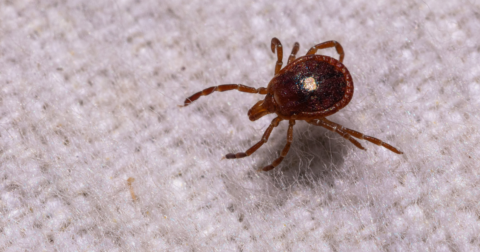
When female screwworms find a mammal with a scratch or other open wound, they lay hundreds of eggs in the wound. This typically leads to a secondary infection known as myiasis, which can kill the animal in 7-14 days. Myiasis is treatable with larvicides, insecticides and daily cleaning of the wounds, but only if it’s detected in time, which can be difficult in large herds of livestock. Screwworm infections in humans are very rare.
The sterile insect technique involves sterilizing large amounts of male screwworms and releasing them into screwworm hotspots. Because female screwworms only mate once in their lives, flooding a population with sterile males gradually reduces its numbers over time.
The United States and Panama together maintain a sterile screwworm facility in Panama, which releases around 100 million sterile flies per week. Currently, this is the only operational sterile fly facility in the world; two others are under construction in Mexico and Texas, but they haven’t started dispersing flies yet.
The sterile fly technique was effective at ending the screwworm’s decades-long reign of terror in the United States, although there were some short-lived outbreaks in the following decades. The last time the fly was detected in a U.S. cow was 1982; there was a brief outbreak in the Florida Keys in 2016-2017, but it only infected deer.
In 2023, however, there was a major screwworm outbreak in Panama, and for reasons that are still unclear, the fly was able to break through the buffer zone and move north. Two years later, when the fly was detected in a Mexican cow, the USDA announced a complete moratorium on all cattle imports through the southern border in attempts to prevent it from reaching the United States.
Now, the tables have turned: Canada has banned all livestock that was in Texas at any point over the last 21 days from entering its borders.
Canada’s climate is cold enough that screwworms can’t gain a foothold there in the long term, but “they can survive shorter periods of time in the summer months,” the Canadian Inspection Agency said in a press release.
Efforts to fight the screwworm could be complicated by the Farm Bill, which has passed the House but not yet the Senate. The House version of the bill contained a provision called the Save Our Bacon Act that, if passed into law, could invalidate hundreds of state laws and regulations regarding livestock.
After news broke that the screwworm had reached Texas, the Animal Law & Policy Program at Harvard Law warned in a press release that the provision could significantly hinder state efforts to fight screwworm. The Save Our Bacon Act “could nullify over 600 existing state laws, including biosecurity provisions that create state-based protections against various diseases and parasites,” the press release stated.
Early reports indicate that the Senate is likely to strip the Save Our Bacon Act from the final version of the Farm Bill, but even if this happens, it could be added back in as an amendment. The Senate isn’t expected to consider the bill in full until July.
In a press conference Monday, USDA Secretary Brooke Rollins said the Trump administration is increasing surveillance on the U.S.-Mexican border and working to increase sterile fly production in an attempt to prevent the fly from spreading further. In the meantime, Texas Agriculture Commissioner Sid Miller said in a press release, “every day we delay gives this pest another opportunity to spread.”
Correction: An earlier version of this story stated beef prices are at a 75-year high but USDA economic research records date back only to 1970.
Seth Millstein is a writer and musician living in the Bay Area. He has helped launch several early-stage journalism startups, including Bustle and Timeline, and his work has been published in Bustle, Huffington Post, The Daily Dot and elsewhere.

News
Health•5 min read
Monona County officials and residents fear a repeat of the communication gaps and loopholes that left them caught off guard by a plan to import treated slaughterhouse manure.
Health•9 min read
News
The rapid growth of chickens — now, 31 billion globally — has sped up pathogen evolution, boosting persistence, antibiotic resistance and spillover to humans.
Health•3 min read