Feature
What the History of Blue Baby Syndrome Tells Us About Today’s Fight for Clean Water
Factory Farms•14 min read
Feature
How water, cancer and factory farming are fueling a grassroots political campaign in Iowa for Chris Jones.
Feature • Elections • Inside Iowa • Policy • Politics

Words by John McCracken
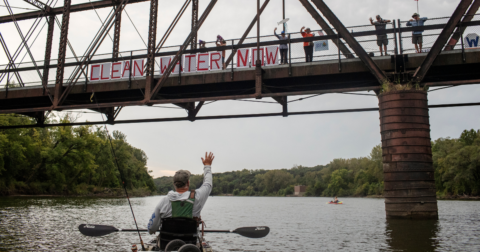
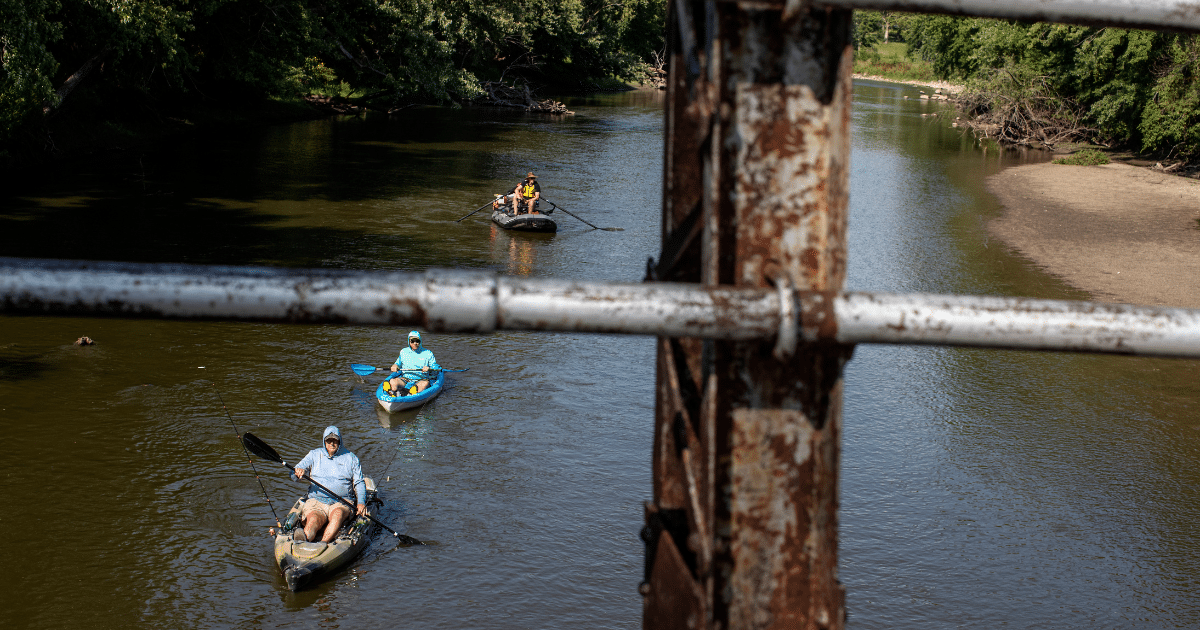
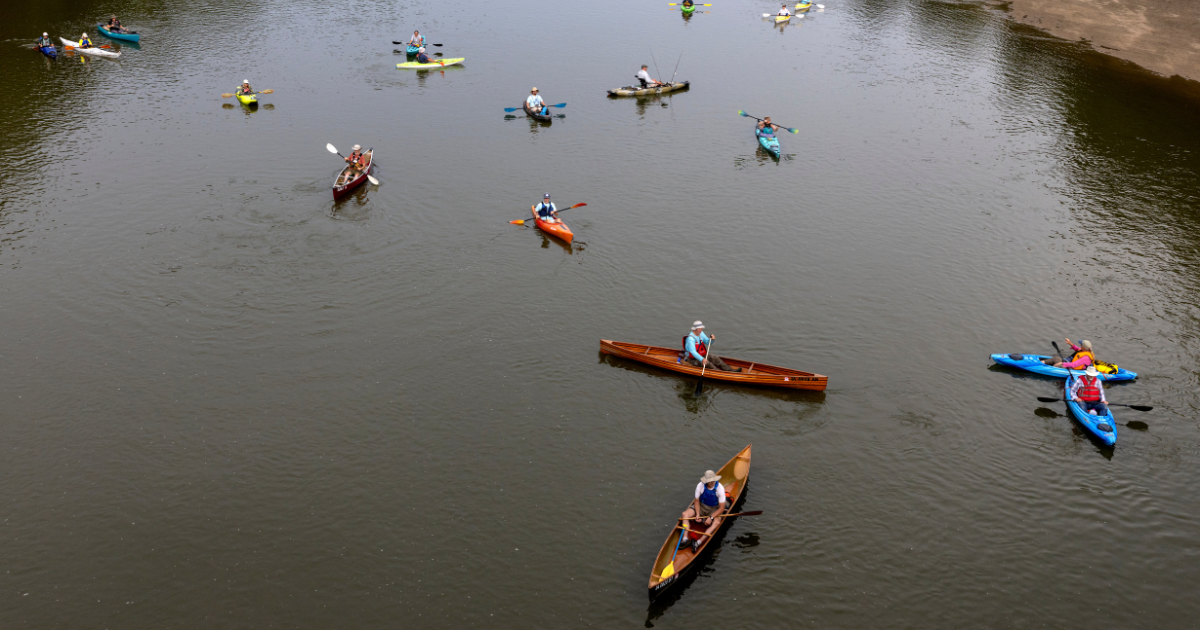
Paddlers skim along the water to the sound of gulls. Small waves splash against driftwood and the banks of the Des Moines River. A flotilla of experienced kayakers, canoers who built their own boats and infrequent recreators expands and contracts, making its way downstream.
On and off the water, the conversations are the same — Iowans talk about an Iowa that doesn’t exist anymore.
Older kayakers lament how they grew up seeing small farms all across the state. Young families express fear for the future of the state’s water, once a place to recreate and fish, now a source of pain and frustration for rural communities and metro areas alike.
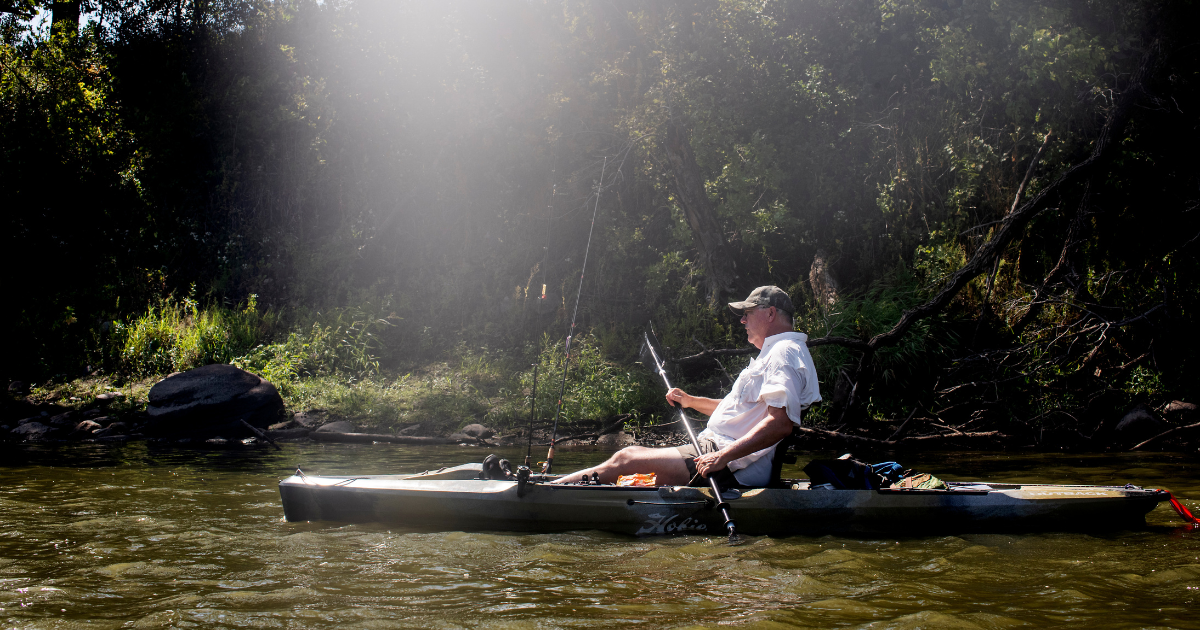
Chris Jones brings up the back of the flotilla. He points out the occasional drainage ditch or tile and discoloration of the river. While paddlers converse about the wildlife, pointing out kingfishers skimming the water or eagles flying overhead, he moves at a slower pace, casting a fishing line from the side of his grey camouflage kayak.
Jones is focused on what’s in the water.
Jones, the 65-year-old Democratic nominee for Iowa Secretary of Agriculture, says he’s running for office out of a sense of civic responsibility rather than a desire for politicking.
“I’m retired, and I had a life that I had created and that I enjoyed,” Jones tells Sentient. “For me to leave that is a big decision for me, and it’s painful. I feel like I’m doing this out of a sense of duty.”
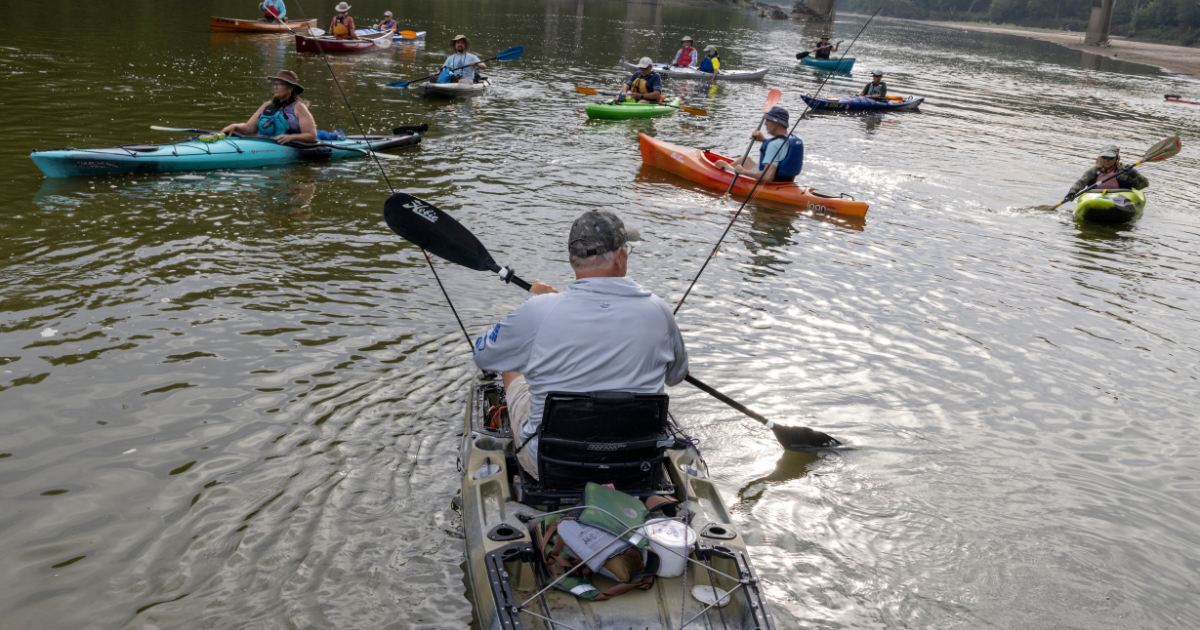
For six days in early September, the Jones campaign kayaked 100 miles down the Des Moines River. The campaign stopped in county park pavilions, small-town bars and trailheads connected to the state’s biggest river. The kayak tour launched in Emmetsburg, the hometown of Jones’s opponent, in a county with some of the state’s highest cancer rates, and made its way to the capital city of Des Moines.
“This is a campaign where we’re not going to have a lot of money for TV commercials,” Jones says. “So this has been a week-long commercial for us to help highlight the condition of Iowa’s water.”
Jones isn’t new to addressing the state’s water crisis. He’s spent years advocating for agricultural reform, sometimes at a steep cost. A former University of Iowa researcher, he resigned after members of the state’s legislature criticized his work and threatened to remove funding for water quality monitoring. Jones authored “The Swine Republic: Struggles with the Truth about Agriculture and Water Quality” in 2023.
His campaign has been focused on water quality since day one. Nearly a year into the process, he says his grassroots campaign has forced other Iowa races to address the state’s water crisis and what it means for Iowans.
And he’s right.
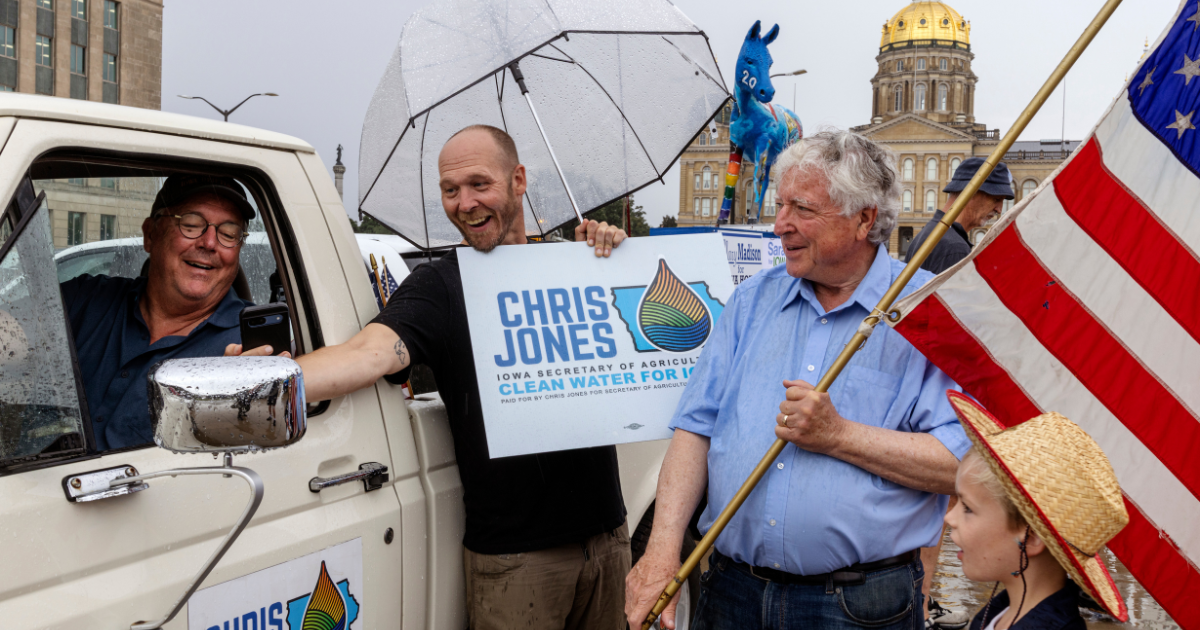
The state’s water quality has become a focal point for Iowa’s contested governor’s race between Democrat Rob Sand and Republican Zach Lahn. And two recent polls show that Iowa voters in contested congressional districts prioritize candidates who focus on water pollution and reforming industrial agriculture.
The secretary of agriculture in Iowa is unique. The state’s voters elect this position, whereas in most other states it is appointed by the governor. The secretary is responsible for guiding policy and budget recommendations for the second-highest agriculture-producing state in the country, with an estimated agricultural GDP that outranks the entire national economy of Iceland.
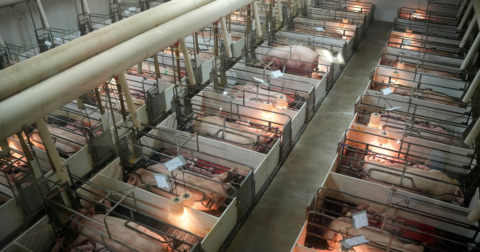
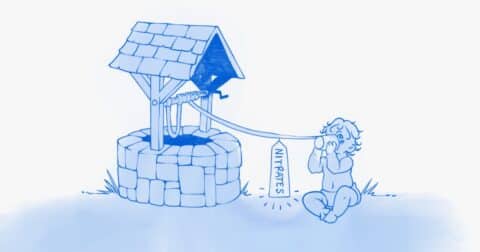
The scale of Iowa agriculture can’t be overstated. The state is home to nearly 11,000 factory farms, the most in the nation. These operations produce an estimated 170 billion pounds of manure each year, with nitrates from livestock waste being a major source of pollution for the state’s waterways and drinking sources. Nitrate pollution is linked to a higher risk of multiple types of cancer, and Iowa’s cancer rate is the fastest-growing in the nation.
“This is an existential problem for the state,” Jones says.
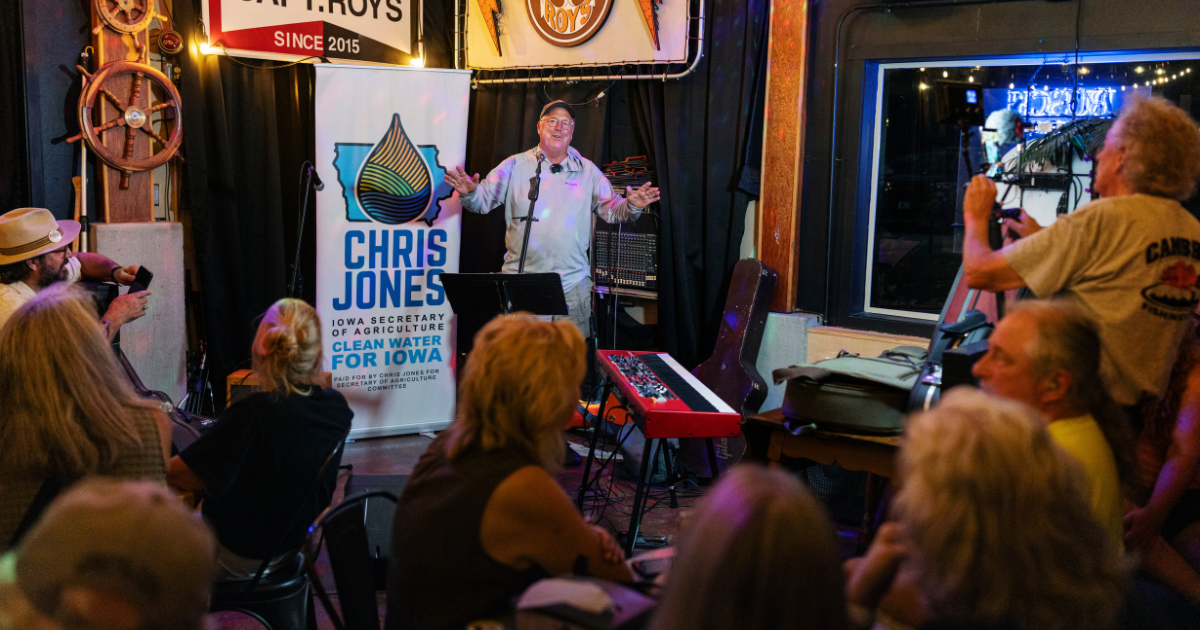
“Back in November, I signed up to be a sacrificial lamb,” Jones said to a crowd of supporters at Captain Roy’s bar in Des Moines.
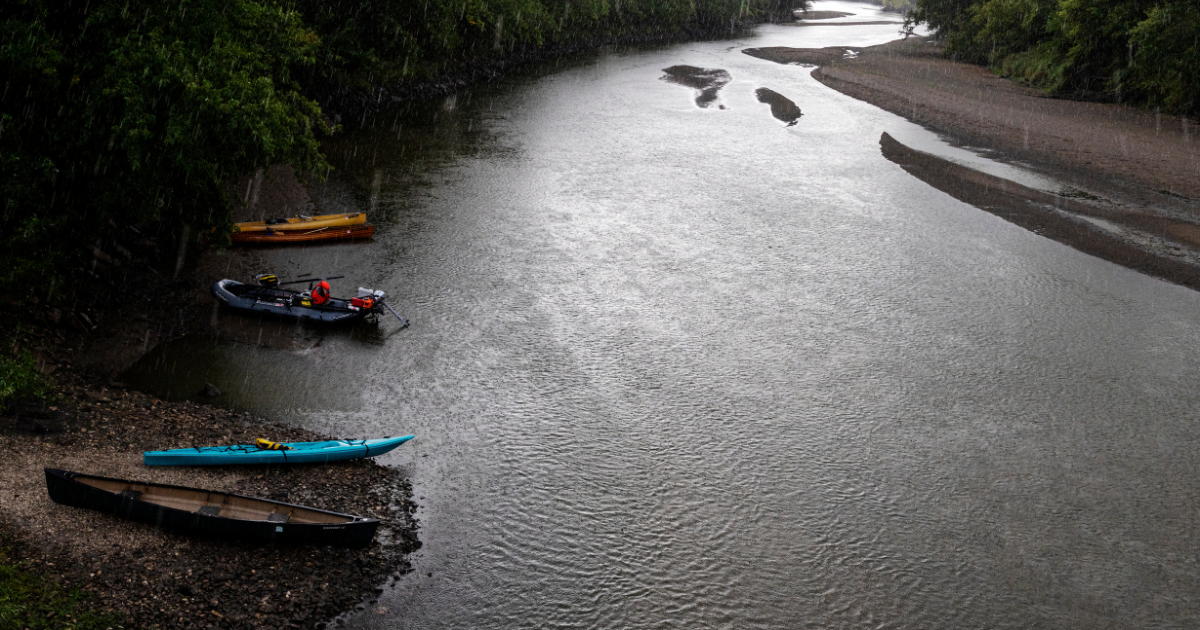
Just as Jones arrives at the last stop on his kayak tour, a strong rainstorm strikes the marina watering hole and forces over 100 supporters inside the small bar. He takes the impromptu stage tucked in the corner of the bar, addressing the crowd between the acoustic guitar chugs and graceful piano notes of Iowa folk music acts Dave Moore and Brother Trucker.
Jones’s campaign is widely seen as the underdog in the race, but as election day draws near, a growing stream of supporters could reverse the state’s recent history. The bellwether state hasn’t had a Democrat in the office of agriculture secretary in nearly two decades.
“And then something happened — I don’t really even know what — and now it looks like we actually might win,” he says.
Despite his campaign’s growing energy, they still lag behind, financially speaking. The Jones campaign is a grassroots effort that has raised over $255,000 this year as of July 2026, with major donations coming from Iowa lawyers, environmentalists and conservationists. He’s going up against an incumbent with professional and political ties to corporate agriculture.
Iowa’s incumbent agriculture secretary, Mike Naig, formerly worked as the manager of state and local government affairs for Monsanto, the largest agrochemical and seed company in the country, now owned by Bayer. His campaign, which has raised $400,000 this year as of July, has received major donations from CEOs of ethanol companies and egg production facilities in the state. The Naig campaign did not respond to a request for comment.
If Iowa voters elect Jones, he says his focus will be on the future of Iowa agriculture. The state can’t continue on the way it has been, he says, citing the state’s large exodus of young people.
“We don’t have clean water to drink or clean water to recreate in,” Jones says. “We are really risking the future of our state if we stay on this current path.”
He says he will help revitalize the state’s agriculture by introducing off-ramps for industrial-scale farmers and new avenues for young farmers to gain access to what has been some of the most expensive farmland in the country. “We have the loan programs with the Department of Agriculture now, but they’re clearly inadequate,” he says. “They have not helped young farmers en masse get access to the career.”
Along the campaign trail, Jones has been a staunch advocate for farms having multiple sources of revenue and mixed crops, from fruit orchards to oats. Iowa farmers need access to new, diversified markets to get away from the vast monocultures of corn, soy and hogs that cause pollution and line the pockets of out-of-state corporations, he says. He reminisces about a time when rural towns had small butchers, local feed mills and farmer-owned creameries.
Today, rural Iowa has been hollowed out. Over the past nearly four decades, the number of large factory farms in Iowa has increased five-fold. Roughly 60% of the state’s farm businesses are based in rural Iowa, but the number of these operations has been in decline since 2013, according to the Iowa State University Center for Agricultural and Rural Development. Rural Iowa continues to lose access to healthcare, and school-age children and working adults are leaving in droves.
“Our small towns are shells of their former selves,” he says. “They lost their grocery store, they lost their post office and their school, and all that’s left is the tavern. And with all that stuff leaving town, the dignity has left town too. Small-scale livestock production and small-scale meat processing is the way back for these small towns.”
Jan Libbey kayaked alongside the campaign through rain, low water levels and heat all six days. An avid kayaker, she helped more novice paddlers to avoid crashing into river banks and other attendees. This did not stop an intrepid Sentient reporter from colliding with her kayak on the last day of the tour.
Libbey, a food systems advocate and organic farmer from Hancock County, says the campaign’s focus on changing the state’s relationship with agriculture has drawn her to their message.
The water “is the lifeblood of the land,” she tells Sentient.
The ongoing attention to cancer and its relation to the water quality conversation — be it from the Jones campaign, media coverage or residents — has changed the way Iowans are taking notice of the state’s agriculture industry, Libbey believes.
“We need to tell the truth about what’s going on with the water quality, and [Jones] is talking about the interconnections between agriculture, water quality, rural economic development and health,” Libbey says. “That intersectionality is huge.”
A Friday night in Lehigh, Iowa, population 394, is quiet save for the patrons inside Riverside Tavern. A stone’s throw from the Des Moines River, the tavern is an unassuming single-story building with a small wooden patio out front and a line of Harley-Davidsons parked outside.
Dollar bills are taped to the ceiling, accompanied by a motorcycle mural, American flags and the occasional Trump bumper sticker lining the walls. A muted television mounted on the wall shuffles between local news stations and back-to-back state and national political ads for Iowa candidates, a common sight during a pivotal election year.
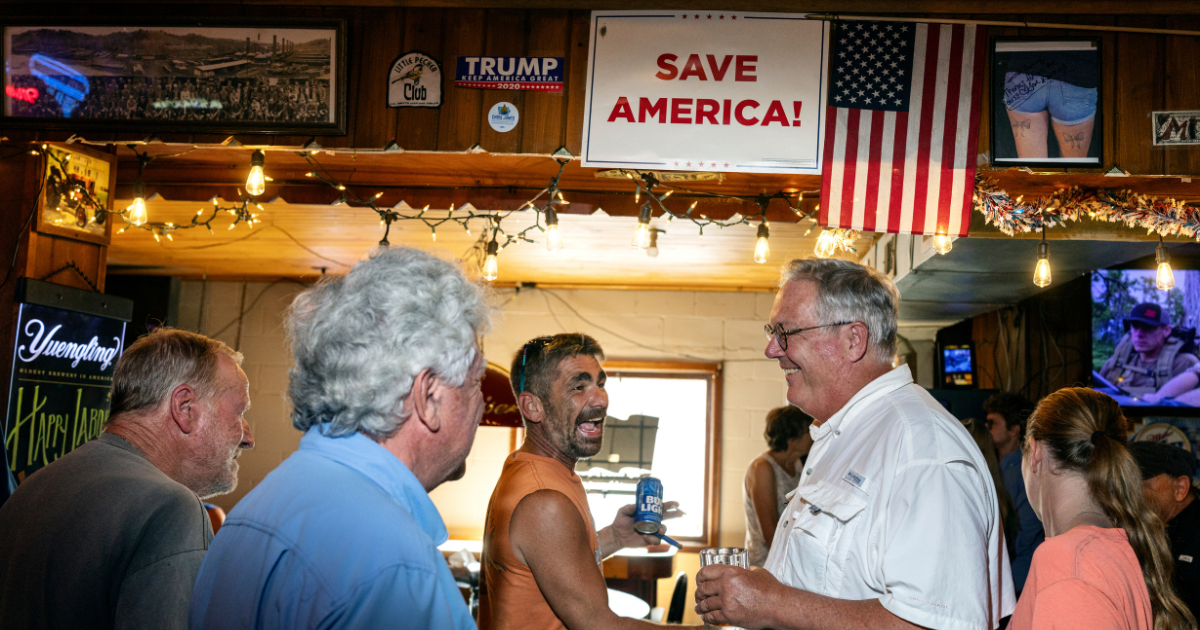
“I know out here in the hinterlands this is territory the Democrats don’t like to come very often, but clean water is something that affects every Iowan,” Jones says to a crowd of a dozen supporters and a bar of local regulars and passersby. “I think what’s wrong with our politics here in America is that both political parties no longer focus on common good issues.”
Jones is straightforward in his approach to politics. He speaks unabashedly about the water and air pollution linked to hog factory farms in Iowa to a bar full of rural Iowans. But he doesn’t cast blame on the people in the room; he directs his ire to the businesses and politicians who stand to benefit from the system.
“The non-farming people don’t get the outcomes they want with the water quality, the farmers aren’t getting the outcomes they want with the economy. If nobody’s getting what they want, it begs the question: why are we doing this? Why are we doing this system of corn, soy and CAFOs?” he asks the bar in Lehigh.
“It’s because someone does get the outcome they want, and it’s these big corporate agribusinesses. They come in here, they extract wealth from our state, and they leave us with the pollution and the cancer.”
Jones suggests a return to cattle on pasture, rather than massive confinements and feedlots, as an avenue to engage young or new Iowan farmers and combat rising beef prices. For the first time that night, the room applauds.
As the night goes on, he mingles with patrons, talking about the three channel catfish he caught during the day’s trek and answering questions from the audience about the delayed Farm Bill and specific ways to address water quality. Someone turns on Lee Greenwood’s 1984 patriotic anthem “God Bless the USA” on the bar’s TouchTunes.
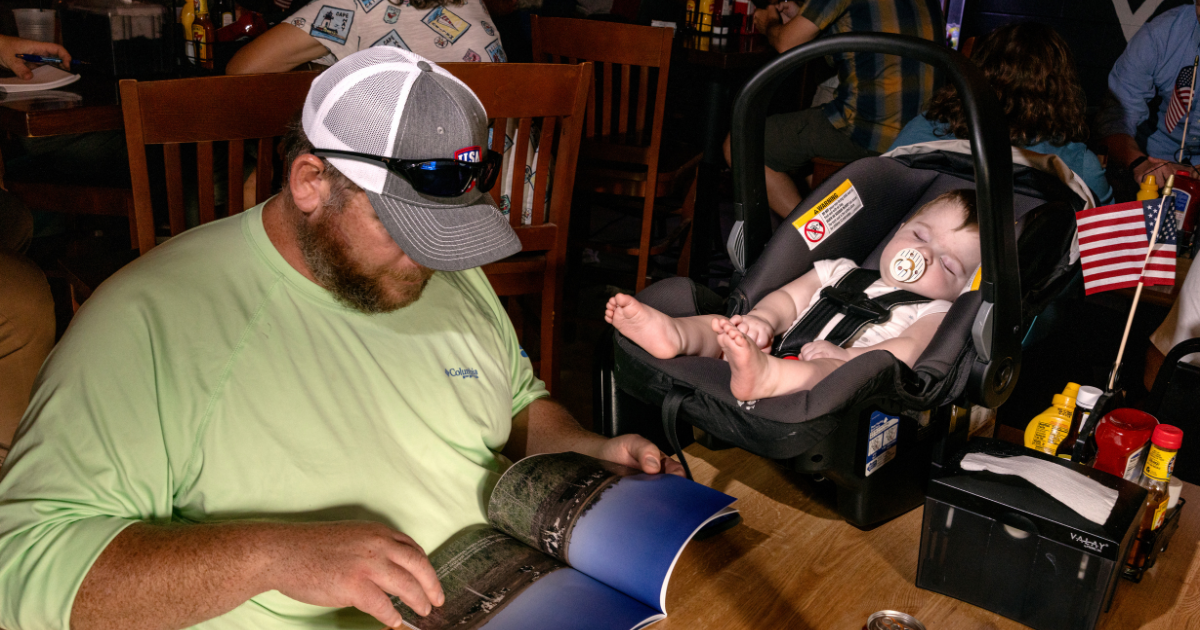
Matt Sogard, an Iowa native and father of three, is accompanied for the night by his baby son Simon. An outdoorsman and a municipal wastewater employee, he’s still wearing high-visibility clothing at a bar table, his son resting in a baby carrier. Sogard, who made a stop at the event after work and before reconvening with the rest of his family, says he took notice of the campaign because of the focus on policies that “affect me as a father, hunter, fisher and in my profession.”
Clean water in Iowa is common ground for both metro areas like Des Moines and the largely rural places that Jones’s campaign makes a point of stopping at, even with their strong ties to agriculture. Sogard likens it to “kicking the hornet’s nest,” but says farmers in these areas know there is a problem and are often on the frontline of harms caused by a consolidated food system.
“Obviously, we need change,” Sogard says. “This has been going on far too long. Hopefully the damage is reversible, but we need to start somewhere.”
On the river, many of those kayaking alongside Jones share this roll-up-your-sleeves energy. Jennifer Clark, a veteran nurse, carries trash bags with her whenever she paddles to clean up whatever river she is on. A native Iowan, she is a longtime recreational kayaker who has spent time on rivers across the globe. Clark paddled with the Jones campaign for several days, her first time exploring the Des Moines River. She logged 20 miles with a group of two dozen supporters in Boone, Iowa on the Saturday of the trip.
She says there’s a reckoning happening in Iowa right now: practically everyone in the state has some connection to agriculture, but at the same time, everyone knows there is a water quality problem.
“There’s some things that we need to do as a collective to ensure that we have our basic needs protected, like clean water,” Clark tells Sentient.
She says the issue can feel polarizing when there’s an assumption that if you are for clean water, you are against farmers.
This sentiment looms large over the Jones campaign. His opponent, Naig, has run attack ads claiming Jones is casting farmers in a bad light.
Jones disputes this, saying the choice between a prosperous rural Iowa and clean water has been forced upon the public.
“Let’s look at trying to devise an agricultural production system that’s not going to pollute in the first place,” he says. “The one we have now, we’re constantly trying to patch it up with taxpayer money, and I just don’t think that’s a sustainable approach going forward.”
“We shouldn’t have to make a choice between agriculture and clean water,” Jones says.
Apart from his own race, another statewide contest is top of mind for the Jones campaign: the race for the governor’s office.
The position of agriculture secretary interacts closely with the governor, advocating for budget decisions. Jones will have to work with both a legislature that criticized his work in the past (currently both houses are Republican-controlled), as well as whoever voters select as governor, which could be one of two different approaches to addressing the state’s water crisis.
Two candidates are vying for the office that Republican Kim Reynolds has held for the last eight years. Democratic candidate Rob Sand is the current state auditor of Iowa. Republican candidate Zach Lahn is a political lobbyist and operative who has worked on Republican campaigns and for conservative political groups. His campaign has strong ties to the Make America Healthy Again movement.
Both have addressed the state’s water and cancer crisis along the campaign trail. They’ve talked about funding for water sensor monitoring, providing incentives for farmers to create buffer strips and other forms of pollution mitigation.
But Jones says politicians are good at speaking in the abstract and making promises.
“You don’t see many scientists in politics because not many of us have a tolerance for that,” he says. “I constantly have to bite my tongue about things, which I do. I’m a Democrat, and I want Democrats to win, and so sometimes I can’t say what I might want to say about the Democratic Party, right?”
He says he is willing to work with whoever gets elected and has common ground with both candidates. But neither candidate has been willing to talk about reining in and transitioning away from the systems that got the state to this point in the first place.
“The avoidance of regulation and the insistence on ethanol and the insistence on CAFOs and insistence on only the two crops; the establishment proceeds along like it makes total sense to do this stuff,” Jones says. “The public clearly sees that it doesn’t, and that provides the energy for my campaign.”
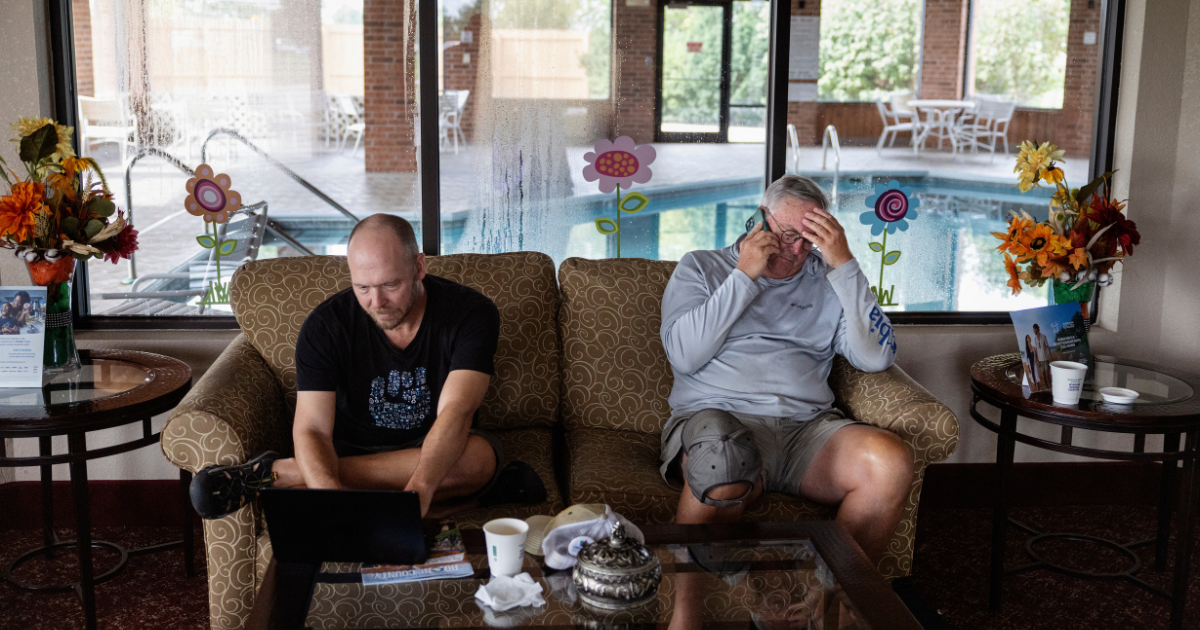
Early Sunday morning, Jones is tired, but looking forward to his final day of kayaking the river. He stops in the hotel lobby to talk about the past few decades of spending on, as he calls it, Band-Aid approaches to fixing the water quality problem.
“The incumbent says we’re spending $100 million a year on water quality. Well, over his tenure, that would be almost a billion dollars,” Jones says. “Does the water look a billion dollars better to anybody?”
John McCracken is an investigative reporter whose work examining the nation's consolidated meat industry, industrial agriculture and climate change has received awards and recognition from the Chicago Book Club, North American Agricultural Journalists, Wisconsin Newspaper Association, Iowa Newspaper Association and more. He has been invited to speak about his reporting at the Society for Environmental Journalists, NICAR and more.
Explainer
Climate•10 min read

Feature
A survey taken this past spring shows a majority of Iowans say they have experienced negative environmental impacts from industrial animal operations. But plenty are also ambivalent, or ignorant, about…
Elections•11 min read
Here’s what the data reveal about the country’s factory farm hotbed.
Inside Iowa•8 min read