Investigation
‘You Feel Like You’re Marked’: Salvadoran Workers at Tyson Foods Face Risks Due to Work Permit Delays
Policy•9 min read
Solutions
As industrial agriculture expands in Brazil, India, Mexico and Zimbabwe, cases framed around pollution and health — plus working with agencies to enforce the law — succeed more than arguments centered on animal welfare.

Words by Grace Hussain
The world is on track to eat a lot more meat — beef consumption alone is predicted to rise 80 percent between 2010 and 2050, according to the World Resources Institute.
As a result, agriculture production — especially livestock farming — is also on the rise, but some activists are pushing back. A new legal analysis outlines how animal advocates and concerned citizens in four low- and middle-income countries — Brazil, India, Mexico and Zimbabwe — are leveraging the legal system to uphold and even expand livestock’s legal protections.
There are a number of factors contributing to this expansion. The Organisation for Economic Co-operation and Development cites rising incomes in middle-income countries and growing populations in low-income countries as two factors driving increased demand for meat and dairy.
“The richer people get…the more they want to consume meat, because meat is considered the symbol of wealth and luxury,” says Hira Jaleel, visiting assistant professor at Lewis & Clark Law School and the editor of the analysis.
The resulting rise in meat and dairy production threatens to increase planet-warming emissions and other forms of environmental pollution. While smallholder farms are still prominent across the Global South, the intensification of factory farming causes local water and air pollution, health issues and poses a significant global climate threat.
“If the low-income countries in the Global South follow the industrial growth models of wealthier nations, their livestock sectors could become locked into decades of high emissions, undermining global climate goals such as those of the Paris Agreement,” Divya Narain, an independent researcher in food systems finance, told Sentient in an email.
Another area of impact is animal welfare, despite the legal protections built into some countries’ legal codes. Increasing meat and dairy production means increasing the number of farm animals raised. The amount of meat produced has tripled in the last 50 years due to growing demand, with the majority of farm animals today raised on factory farms.
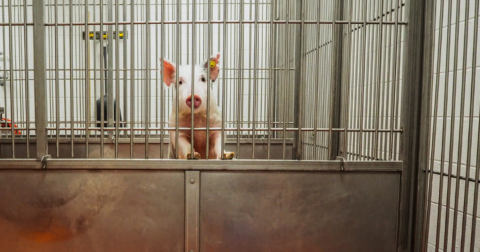
Animals raised on factory farms, especially pigs and chickens, tend to experience poor welfare, generally living in cramped, crowded conditions. These living conditions and the treatment of animals on such operations have been investigated in numerous cases, from cattle mistreatment by staff at slaughterhouses to rabbits slaughtered without prior stunning.
Demand from wealthier countries for cheaper imported meat is also driving the expansion of animal agriculture in some low- and middle-income countries. In Mexico, FAO data show that beef herds increased by nearly 1.3 million animals, and beef and veal exports to the United States also increased between 2020 and 2024.
In the report, the researchers make the case that the expansion of factory farming should be stopped now before it becomes the norm. They write that it is “increasingly important for advocates to try and combat industrial animal agriculture in these countries before the system is completely and inextricably entrenched in their cultural and political fabric,” with litigation being an important tool for advocates to leverage.
Advocates have had greater success in the courts when they leverage environmental or public health concerns over making solely animal rights or welfare arguments, Jaleel says. She also says that judges tend to find these subjects more compelling.
In Mexico, a Mayan community secured a legal injunction to prevent a factory farm from operating by arguing that the facility threatened their water supply and a right to a healthy environment.
It’s a tactic that advocates in the U.S. also lean into, says Amanda Hitt, Director of Strategic Initiatives at Vermont Law and Graduate School’s Animal Law and Policy Institute. She points specifically to the Westland-Hallmark Meat case, which leveraged food safety laws to secure a $497 million judgment against the now-defunct meat processor. Video footage showed that the meat processor was including potentially sick cows in their ground beef supply in violation of existing food safety laws.
By contrast, cases that rest on establishing animal personhood or implementing constitutional protections for animals are more likely to face backlash, especially when they challenge cultural norms, Jaleel says. She points to an example in India, where, in 2023, the Supreme Court overturned an earlier decision that had outlawed Jallikattu — a sport in which bulls are often drugged, released into a crowd and then grabbed and held by human participants — after public outcry.
The legal protections for farm animals vary across the four countries. India, Brazil and Mexico grant them constitutional protections, while Zimbabwe includes livestock within its broad animal protection law. Each country also has its own legal approach to the environment and public health.
The report found that all four jurisdictions struggle to enforce their animal protection laws. Jaleel argues that the livestock industry’s size is a major reason why.
In Brazil, for example, livestock production was valued at over $23 billion in 2023. The same year, a court ruled to prohibit live export of cattle on the grounds that the practice was cruel and violated the animals’ rights, a decision that was overturned just two years later. The live export industry is a big one for Brazil, Jaleel says. It’s a fact that “courts are aware of when they’re issuing decisions.”
One way advocates have made progress is by using a ‘carrot-and-stick’ approach. They bring cases to compel agencies to enforce the law, then work with those agencies to find ways to make sure they do so, Jaleel says.
This tactic has been successful in India in increasing compliance with rules governing slaughterhouse operations, including those protecting animal welfare during transport. As a result of the litigation, states were required to strengthen the committees that oversee processors’ compliance with environmental, public health and animal welfare laws.
In the United States, that kind of working relationship is highly dependent on the presidential administration currently in office, says Hitt. The Biden Administration was involved in all kinds of conversations with different groups, including on animal production issues. Now, however, the Trump Administration isn’t necessarily interested in having those conversations about animal agriculture, she says.
Clarification: a sentence has been revised to clarify that investigations documented operations, including farms and slaughterhouses and another to clarify that Hira Jaleel is a visiting assistant professor.
Grace is Sentient's Solutions Correspondent, reporting on alternatives to factory farms and ways to fix the problems they cause. She is a member of the 2024 Solutions Journalism Network climate cohort. Her work has been published by Truthdig and The Guardian and translated into radio coverage by the BBC and Public News Service, reaching millions of listeners. Grace holds her MS in Animals and Public Policy from Tufts University and is currently working on her PhD in Environmental Science and Policy at the University of Miami.
News
Factory Farms•6 min read
News
In a new poll, 82% of Iowa voters want their elected official to protect clean water and cut pollution from industrial agriculture.
Elections•5 min read
News
But the bill faces steep odds of passage in a sharply-divided Congress
Policy•8 min read