News
Bird Flu Cases Are Surging in 2026. What Does It Mean?
Health•9 min read
Perspective
If industrialized processing is a marker for ‘not real’ food, how can industrialized meat fall under the designation of ‘real’?

Perspective • Diet • Health

Words by Jessica Scott-Reid
“Processed Food Kills” flashes across the screen. Then, as boxer Mike Tyson bites into an apple with a rich ASMR crunch, the words “Eat Real Food” appear. The MAHA-sponsored Super Bowl commercial with a nod to the new nutritional guidelines was viewed by 125.6 million people on February 8.
Reactions to the campaign and guidelines have been mixed. In a recent interview with Stephen Colbert, author Michael Pollan praised efforts to get ultraprocessed food out of school lunches, while pointing out that other aspects of RFK, Jr.’s policy agenda, like his vaccine policies, are a threat to public health.
Sentient spoke with Caitlin Dow, a nutrition scientist with The Center for Science in the Public Interest, who expressed concern about the vague designation of “real” food and the elevation of meat, even if only visually. “There’s no definition of what ‘eat real food’ means,” says Dow. “Different people will have different interpretations of that, and that’s not how you make sound food policy — which is what the purpose of the dietary guidelines are.”
After years of mounting focus on “natural” foods, especially in opposition to products deemed “unnatural,” such as processed foods and synthetic food dyes, Secretary of Health and Human Services Robert F. Kennedy, Jr. has helped elevate “real” as the latest buzzword. But what does it actually mean?
The messaging “calls to mind this idea that anything ‘natural’ is healthy, and anything even remotely processed is unhealthy. And that’s just simply not true,” says Dow. Much like “natural,” the connotation behind the term “real” is that such foods are intrinsically healthy and nutritious, while other foods, in particular processed products, are bad for you. These implications are often not backed by science.
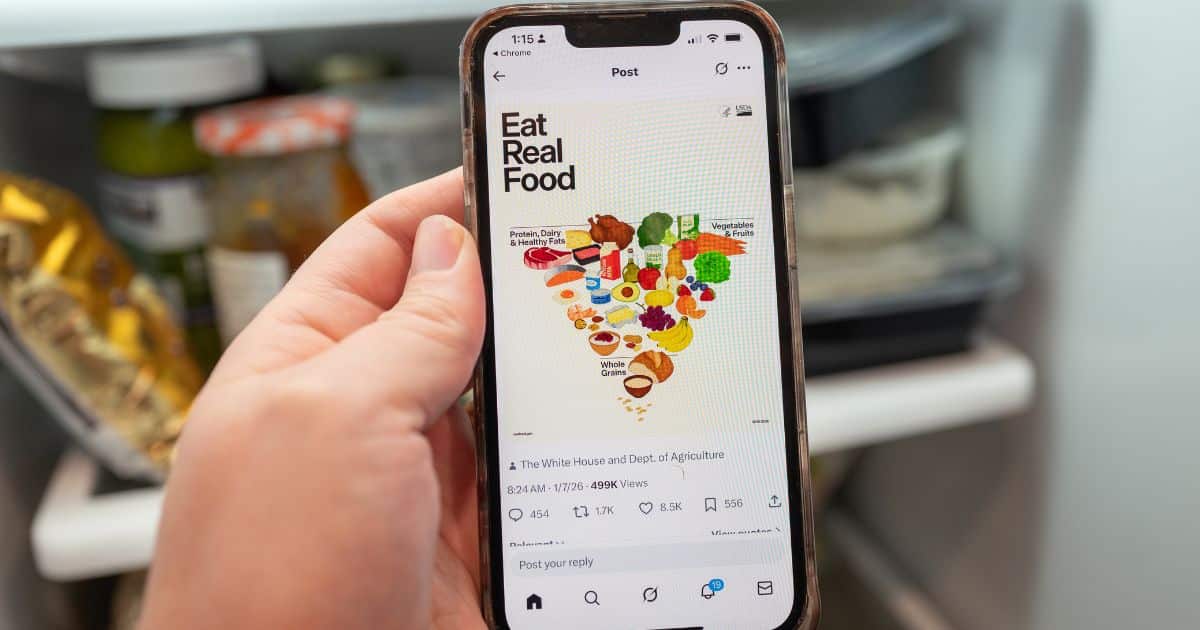
According to realfood.gov, “eating real food means choosing foods that are whole or minimally processed and recognizable as food.” This has the potential to solve the country’s chronic disease crisis, the site argues. The new dietary guidelines prioritize protein, dairy and healthy fats, fruits and vegetables, with whole grains last, urging Americans “to avoid highly processed food.”
Kennedy has long been concerned about processed foods and America’s industrialized food system. In an August 2024 speech announcing the end of his presidential campaign and subsequent endorsement of Donald Trump, he stated, “About 70% of American children’s diet is ultra-processed” and that it is industrially “manufactured in factories.”
A growing number of studies do suggest that eating a diet high in junk food, whether strictly defined as ultra-processed or not, is bad for our health. But the message from RFK, Jr. is that all industrialized food is bad. If industrialized processing is a marker for ‘not real’ food, how can industrialized meat fall under the designation of ‘real’?
Kennedy has been vocal against factory farming for many years and often now promotes regenerative and organic farming as alternatives. However, according to experts, such a transition is not plausible unless Americans eat much less meat. In contradiction to this position, Kennedy has put meat, dairy and eggs at the top of the pyramid, calling them “real food” and encouraging Americans to eat even more of them.
Paradoxically, the nutritional guidelines depict meat as “real” and unprocessed — ignoring the industrial processing required to produce the nearly 215 pounds of meat consumed by each American annually.
The majority of meat, dairy and eggs sold in the United States today are produced by massive industrial operations relying on industrial breeding and growth technologies, including artificial insemination and genetic selection for accelerated growth.
The animals at U.S. factory farms are also given feed produced in industrial feed mills. This includes lots of corn grown for feed, as well as soybean meal and other processed ingredients including surplus candy and added vitamins and minerals.
While debates continue over the government’s definition of “real food” and the controversial promotion of meat, dairy and eggs in the guidelines, there remains plenty of scientific evidence about the health benefits of eating more fruits, vegetables and legumes.
“We really should be prioritizing plant-based foods,” says Dow. “They’re lower in saturated fats, they’re higher in fiber, there’s lots of phytonutrients, so you get a more well-rounded package with a plant-based protein.” And despite it being a processed food, she adds, “there’s no reason to be scared of tofu.”
These were also the findings of the original Dietary Guideline Advisory Committee, which Kennedy largely rejected in favor of working with advisors with financial ties to the meat industry. The Center for Science in the Public Interest has now created its own Uncompromised Dietary Guidelines, which Dow says are based on those original advisory committee recommendations. “If these [government] guidelines had been evidence-based, this is what they would look like,” she says. The core message? Eat nutrient-dense food, mostly plants.
Jessica Scott-Reid is Sentient's Disinformation Correspondent covering disinformation, misinformation and the impact of both on culture. A freelance journalist based in Canada, Jessica has covered animals, the environment and food systems for major media in Canada and beyond, for the last decade. Jessica has been a contributor to Sentient since 2019, and her work also appears regularly in The Globe and Mail, Toronto Star, Winnipeg Free Press and Corporate Knights Magazine.

Analysis
Health•3 min read

News
The sharp one-year increase is raising concerns among public health experts.
Health•4 min read
News
Cattle with drug-resistant tuberculosis lead researchers to call for better monitoring of cross-species transmission of TB.
Health•5 min read