News
Farmed Salmon May Not Be as Nutritious as It Once Was, New Research Suggests
Health•5 min read
News
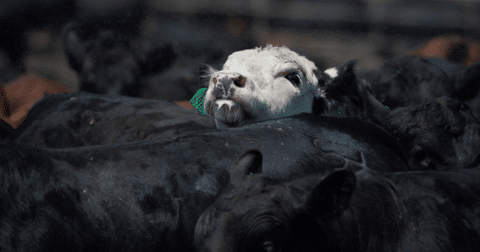
Elanco Animal Health reported $1.14 billion in quarterly revenue, and its farm animal sector increased 17% year-over-year.
News • Health • Public Health

Words by Jessica Scott-Reid
Pharmaceutical giant Elanco Animal Health posted $1.14 billion in revenue in the final quarter of 2025, boosted in part by sales of Pradalex, an antibiotic used to treat respiratory disease in cattle and pigs. Though the company posted a net loss for the period due to additional expenses, including restructuring costs and debt payments, its U.S. farm animal sector increased 17% year‑over‑year. Its stock also climbed — at one point rising about 5.7% — as investors reacted favorably to the company’s earnings call on February 24.
These financial gains were achieved amid persistent concerns raised by public health experts about antimicrobial resistance (AMR), which is the ability of bacteria to survive drugs designed to kill them. A leading driver of antimicrobial resistance is the misuse and overuse of medically important antibiotics in livestock, which creates more opportunities for resistant bacteria to develop and spread to people through food, the environment or direct contact.
Pradalex (pradofloxacin injection) was approved by the Food and Drug Administration in 2024, and is considered to be low risk for contributing to antibiotic resistance in bacteria that cause foodborne illness and are linked to meat from cattle and pigs. Still, in announcing the drug’s approval, the FDA provided guidance for using Pradalex in a way that is consistent with good “antimicrobial stewardship” — in other words, to minimize the potential for antimicrobial resistance. There are different steps farmers and agricultural producers can take to minimize this risk, including keeping animals in clean and uncrowded spaces.
Antimicrobial resistance as a global health threat extends beyond any one antibiotic. In 2021, drug-resistant infections were linked to an estimated 4.71 million deaths worldwide, according to a 2024 systematic analysis published in The Lancet. That analysis also warned that without stronger intervention, 8.22 million annual deaths could be attributed to antimicrobial resistance by 2050. A 2016 review by World Bank warned that unchecked antimicrobial resistance could cost up to 3.8% of global GDP and push 28 million more people into extreme poverty.
Back in 2016, Elanco had positioned itself as an industry leader in efforts to cut back on antibiotic use in farming. The company joined a global coalition of market leaders to outline strategies for combating antimicrobial resistance, emphasizing responsible use, innovation and better animal health practices to reduce dependence on drugs. The initiative brought together veterinarians, producers, pharmaceutical companies and policymakers to set global standards, improve monitoring and reporting of antibiotic use, and explore alternatives to protect both animal and human health. At the time, Elanco positioned itself as a forward-looking advocate for sustainable livestock practices.
In 2018, Elanco Animal Health branched off from its parent multinational company Eli Lilly, and quickly expanded by acquiring Bayer Animal Health in 2020 for nearly $7 billion. This broadened the company’s portfolio of livestock and companion animal products, including vaccines, parasiticides and antibiotics. Today, Elanco ranks among the largest animal pharmaceutical companies in the world, controlling many of the drugs used in factory farming.
One such drug, Pradalex, is used to treat swine respiratory disease and bovine respiratory disease, more commonly called shipping fever, as it typically strikes a few days after transport.
While Pradalex is considered low risk for contributing to antimicrobial resistance in foodborne bacteria from treated cattle and pigs, there are other strategies to reduce the spread of antimicrobial resistance. The European Food Safety Authority Panel on Biological Hazards published a scientific opinion that says this can be achieved by shortening transport times, improving cleaning and disinfection, ensuring animals are healthy enough to withstand transport and improving their comfort and welfare.
Based on similar strategies, in 2024, the Animal Welfare Institute petitioned the United States Department of Agriculture to set rules that would require farm animals to be healthy enough to withstand long trips, veterinary inspection for interstate travel of vulnerable animals and penalties for violations. They argued that lengthy travel times, densely stocked animals, inadequate bedding and animals shipped in poor health can all increase the risk of disease spread.
Instead, antibiotic sales have been on the rise. U.S. federal data shows that sales of medically important antibiotics for food‑producing animals increased by about 16% from 2023 to 2024. And today, Elanco and its investors are looking forward with optimism as the company’s stock continues to rise. “On the farm animal side,” Robert M. VanHimbergen, Elanco’s executive vice president and chief financial officer, said during the recent earnings call, “we see a clear runway for growth driven by new cattle products, favorable producer economics and accelerating animal protein consumption.”
Jessica Scott-Reid is Sentient's Disinformation Correspondent covering disinformation, misinformation and the impact of both on culture. A freelance journalist based in Canada, Jessica has covered animals, the environment and food systems for major media in Canada and beyond, for the last decade. Jessica has been a contributor to Sentient since 2019, and her work also appears regularly in The Globe and Mail, Toronto Star, Winnipeg Free Press and Corporate Knights Magazine.

News
Health•5 min read

Monona County officials and residents fear a repeat of the communication gaps and loopholes that left them caught off guard by a plan to import treated slaughterhouse manure.
Health•9 min read
News
The rapid growth of chickens — now, 31 billion globally — has sped up pathogen evolution, boosting persistence, antibiotic resistance and spillover to humans.
Health•3 min read