News
Farmed Salmon May Not Be as Nutritious as It Once Was, New Research Suggests
Health•5 min read
News
In California, Texas and Iowa, cancer rates are 4-8% higher in areas with more industrial animal agriculture.
News • Health • Public Health

Words by Emily Payne
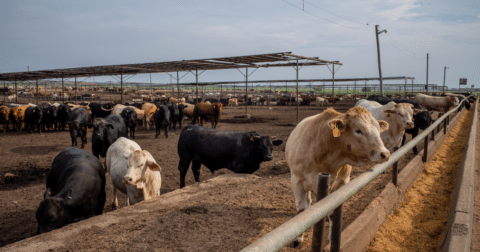
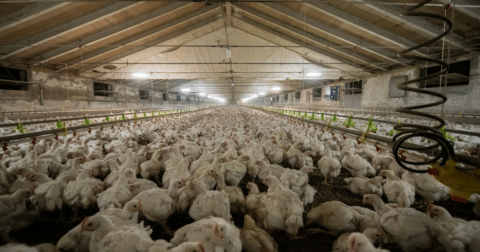
People living near higher densities of factory farms may face increased cancer risk, a new study finds. While the public health and environmental impacts of concentrated animal feeding operations, or CAFOs, are well documented, the investigation is among the first to examine links to cancer across multiple U.S. regions and cancer types.
Researchers at Yale University analyzed county-level cancer rates from 2000 to 2021 in Iowa, Texas and California, comparing areas with high concentrations of factory farms to similar counties with few. They found that overall cancer incidence rates were “significantly elevated” in counties with more animal feeding operations.
Factory farms produce massive amounts of manure. Iowa’s hogs alone produce an estimated 110 billion pounds of manure each year — at least 100 times the amount of fecal waste created by Iowa’s entire human population. Nearly all of the hogs in Iowa are raised in CAFOs. Typically stored in large outdoor ponds called lagoons, CAFO manure generates harmful amounts of air pollutants, including ammonia, hydrogen sulfide and particulate matter, and contaminated runoff leads to pathogens and nitrates leaching into local waterways.
A recent report from the Iowa Environmental Council and the Harkin Institute found that high levels of environmental contaminants, including nitrates, are linked to cancer risk and are ubiquitous across Iowa. The state has the second-highest and fastest-rising cancer rate in the United States. Iowa oncologist Dr. Richard Deming, a co-author of the report, says that it aligns with the Yale study. “When you know the relationship between CAFOs and nitrates that get into the water, it doesn’t surprise me that it’s another study that supports the data,” he says.
The Yale study researchers found positive associations between animal feeding operation density and rates of almost all cancers. Counties with many industrial farms had a higher overall cancer incidence rate than control counties: 4% higher in California and 8% higher in both Iowa and Texas.
Some cancer types showed stronger correlations than others, but Deming explains that this variability is expected when looking at environmental risk factors. Cancers might not appear for decades after environmental exposures, and these exposures also interact with genetics and known risk factors like tobacco use, diet, exercise levels and alcohol consumption.
“It would be easier to explain the data if nitrates only cause one cancer, and that you could just track that, and there were a parallel association between nitrates and one cancer,” says Deming. “The way cancer develops, it doesn’t happen that way.”
There are also complex socioeconomic factors at play that make it difficult to directly link cancer cases to CAFO pollution, says Anne Schechinger, senior director of agriculture and climate research at the advocacy nonprofit Environmental Working Group.
“It’s especially tricky in rural counties to tie something specific to increased rates of cancer, because we know rural counties oftentimes have less preventative health care access, lower incomes, higher age,” says Schechinger.
The Yale study researchers ran statistical analysis to pair similar counties based on factors including race and ethnicity, education level, income, age, smoking and urban versus rural status.
They used the U.S. Environmental Protection Agency definition of animal feeding operations: facilities where animals are kept and fed in a confined area for at least 45 days within a 12-month period without any crops or vegetation growing there. CAFOs are animal feeding operations that meet a certain size threshold, such as at least 700 dairy cattle, 2,500 swine or 100,000 laying hens.
The EPA requires large CAFOs to hold a permit to regulate their water pollution. But in 2024, fewer than one-third of the nation’s CAFOs held these permits. All other facilities that don’t require this permit, which represent the vast majority of animal feeding operations in the U.S., may or may not be regulated at the state level, depending on their location.
Because of this, Schechinger says that looking at permitting data alone does not capture the full scale of animal feeding operations in the U.S.
“Especially in a state like Iowa, the data that they got from the DNR [Iowa Department of Natural Resources] is not going to represent all of the animal facilities,” says Schechinger of the Yale study. She notes that identifying smaller facilities, which can still house thousands of animals, and regulating them at the state level could help mitigate the public health impact of animal feeding operations.
For Deming, the study’s results are a call for investment in data collection at a time when researchers are facing reduced funding.
“Collecting data, like on nitrates in the water, that requires some real field work… and as we understand that we need to be doing more of that, the state of Iowa is starting to not fund the collection of that data,” says Deming.
In 2023, the Iowa legislature cut funding for the Iowa Nutrient Research Center, which tracks real-time water quality data, including nitrate levels in the state’s waterways.
State and local public health officials also need to be empowered to look at the impacts of factory farming, says Dr. Naman Shah, an epidemiologist at the Los Angeles County Department of Public Health. Factory farms are typically not under the purview of public health departments, despite their documented public health impacts.
“The more and more we learn about the health impacts of these businesses, we need a change in regulatory code that really centers the public health responsibility, which is about protecting the population in nearby communities,” says Shah. “Compared to where it’s traditionally been with the department of agriculture, which has just a very different mandate, including promotion of the industry.”
Emily Payne is a journalist covering the intersection of food, agriculture, health and climate. Currently based in Denver, Colorado.

News
Health•5 min read
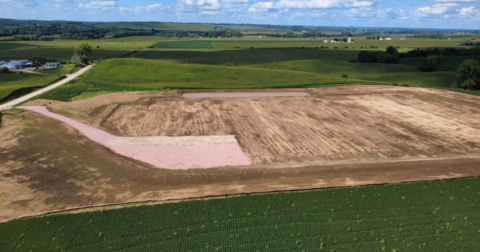
Monona County officials and residents fear a repeat of the communication gaps and loopholes that left them caught off guard by a plan to import treated slaughterhouse manure.
Health•9 min read
News
The rapid growth of chickens — now, 31 billion globally — has sped up pathogen evolution, boosting persistence, antibiotic resistance and spillover to humans.
Health•3 min read