Explainer
A Handful of Cooperatives Control the U.S. Milk Market
Food•1 min read
Investigation
Wild Fork Foods, owned by the largest meatpacker in the world, is the latest manifestation of industry consolidation.
Words by Nina B. Elkadi
Farmer Garth Brown first heard about Wild Fork Foods from an ad on the internet. If he had to guess, it’s because a lot of his internet activity revolves around looking at meat producers online, since he is one himself. Brown co-owns Cairncrest Farm in central New York, where he raises grass-fed beef and lamb and pastured pork. The goal of the farm, he says, is to connect people with the food they eat.
“I want to be honest with anyone who wants to truly understand where their meat comes from,” he says. This includes the good parts, like animals grazing on the land, and the “sad” parts, like slaughter.
After doing some digging, Brown discovered Wild Fork Foods is actually owned by JBS, the largest meatpacker in the world. This didn’t sit right with him.
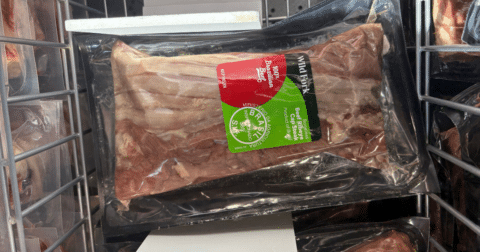
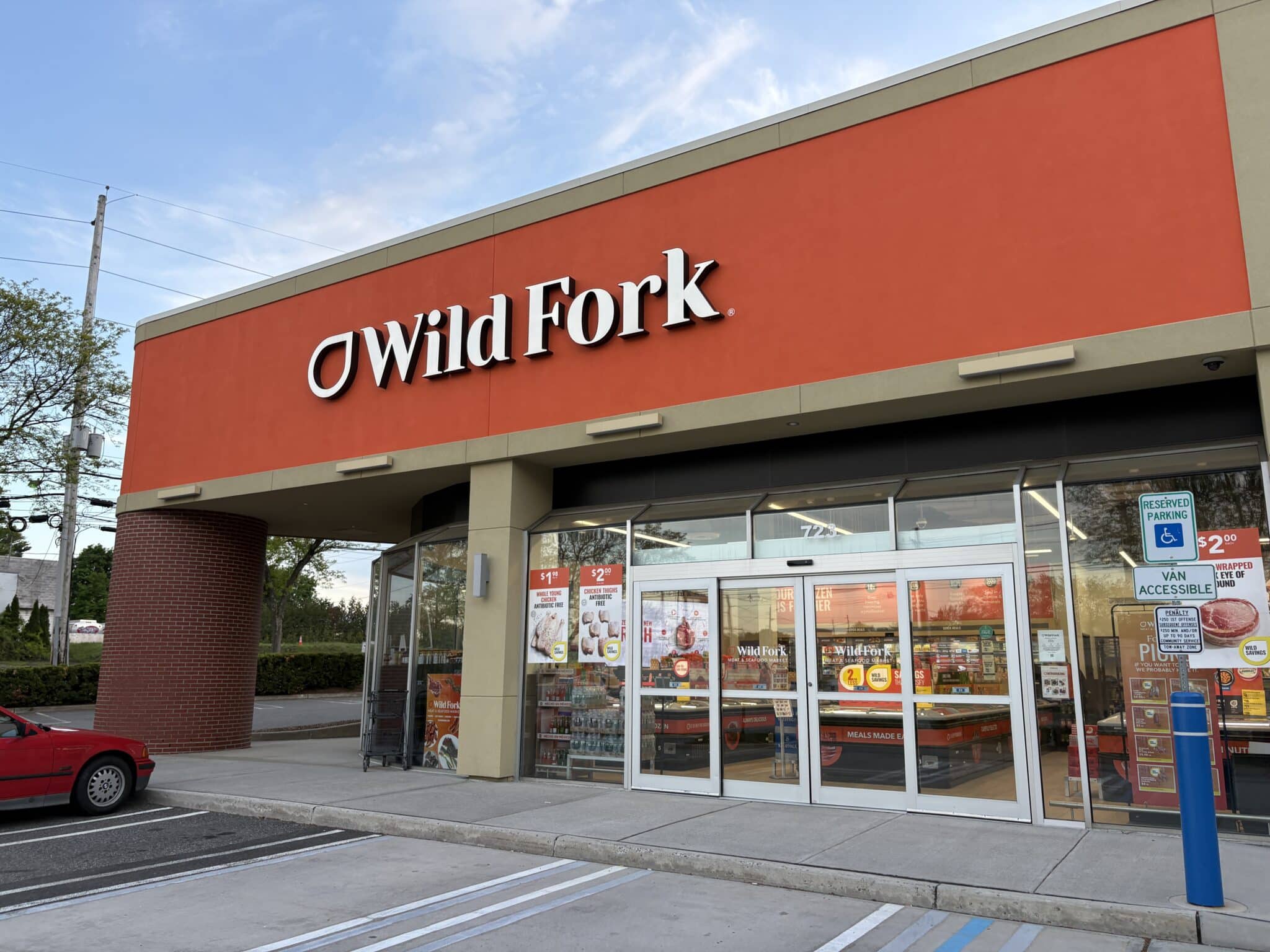
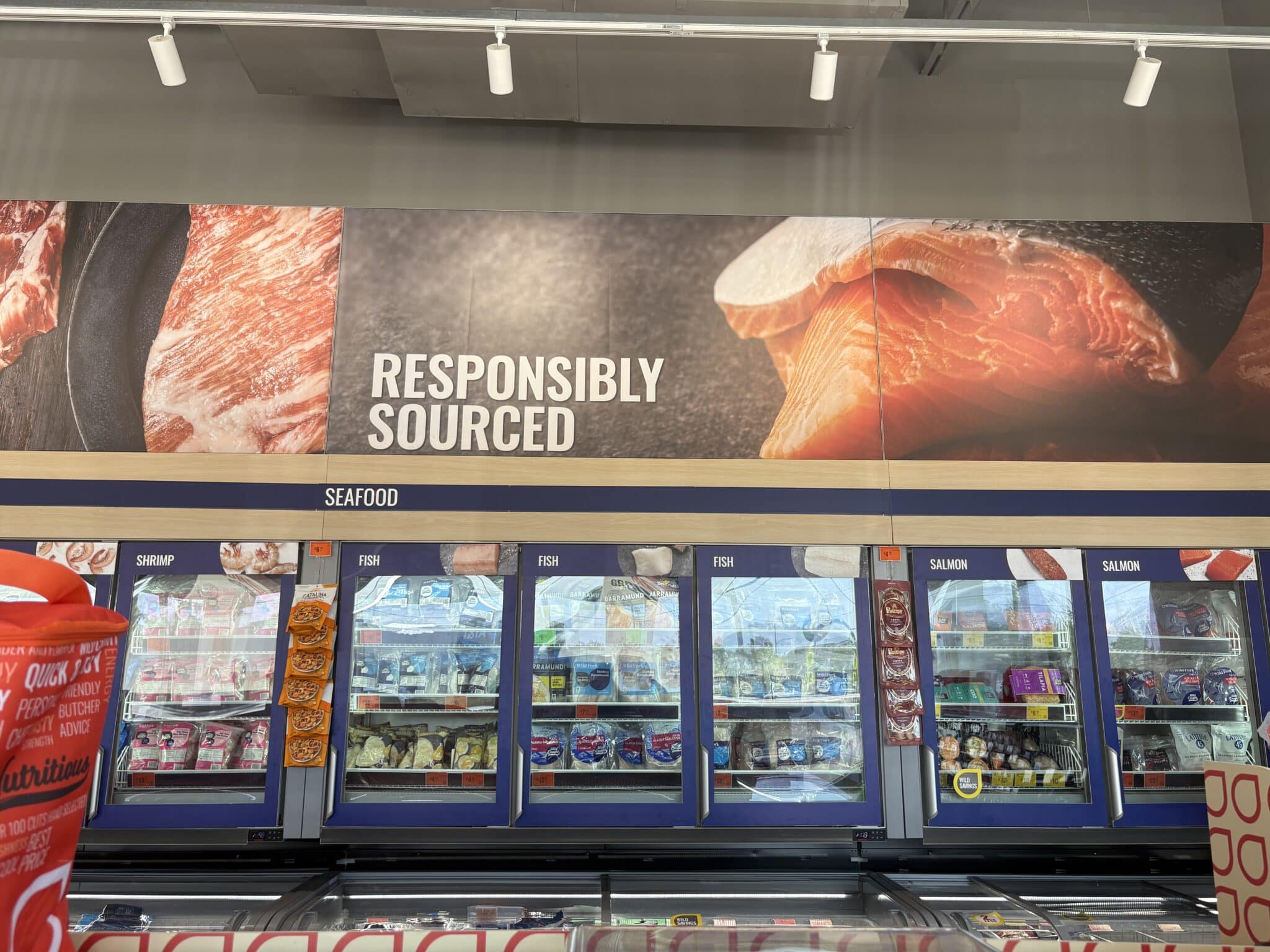
According to its website, Wild Fork is a “modern-day meat and seafood market on a mission to change the way people shop for and eat protein.” Their website boasts of “butchers” and “in-house chefs” who “hand-select and taste-test” every product they source. The meat comes from the “lush grasslands” of Nebraska and Colorado and is “blast-frozen” for freshness.
“There’s something about the largest meatpacker in the world reaching down into communities and setting up these stores where they are portraying themselves as representatives of all the things that I try to do,” he says. “Even though it really is just a front for the same industrial meat that you could get anywhere else.”
JBS — the namesake of the founder of the company, José Batista Sobrinho — is one of four companies that control approximately 80-85% of the total U.S. beef market. JBS USA is a subsidiary of JBS S.A., the world’s largest meatpacking company.
The company has come under fire for deforestation in the Amazon, avoidance of up to $442 million in U.S. taxes, child labor, bribery of government officials, price fixing and slavery-like work conditions. JBS’s global revenue exceeded $86 billion in 2025. It owns land, feedlots and meat processing facilities. Now, it has branched into direct storefronts, further squeezing small producers who are trying to get by on tight margins.
“It’s literally the largest meatpacker in the world, pretending to be a small, upstart, quality-first sort of socially-minded company, and it’s tough to see how farms like mine beat them at that game,” Brown says.
Wild Fork’s store locator lists 60 U.S. storefronts from New Jersey to southern California, often in affluent suburbs of metropolitan areas — Buffalo Grove outside of Chicago, Ahwatukee outside of Phoenix, Encinitas in Southern California — catering to a market of consumers who can spend more for “premium” and “exotic” meats.
Rebecca Thistlethwaite, director of the Niche Meat Processor Assistance Network, a national network of small meat processors based at Oregon State University, sees the branding as an attempt to appeal to “the shoppers that want better than Walmart but aren’t going to drive into the city to go to this tiny little butcher shop that’s open for four hours a day,” she says. “I’m sure there’s a lot of processors as well as farmers who would like to be able to tap into that market as well, but don’t have the marketing budgets and certainly don’t have the capital to build a midsize retail shop.”
That Wild Fork Foods is owned by JBS is by no means a secret. The careers page on the Wild Fork Foods website takes users to the JBS website. But it’s also not outwardly advertised to consumers. What it represents is something deeper about the meat industry, rancher and antitrust advocate Mike Callicrate explains. JBS, he says, is so vertically integrated that it controls every step from the feedlot to the slaughterhouse, and Wild Fork Foods extends its reach directly to the consumer. In the United States alone, JBS operates production facilities, prepared food facilities, feedlots, live hog operations and transportation terminals.
“They’re just so damn greedy that they want that retail margin,” Callicrate says. “JBS wants those dollars, and they’re going to go after them.”
By capturing part of the retail market, he explains, they are cutting out the middleman: grocery stores. In the grocery store business, net profit margins are typically a slim 1-3%, but for a multi-billion-dollar corporation like JBS, that’s still significant. Meatpacking corporations such as JBS and Tyson Foods have been financially strained recently. In March, JBS reported a $617 million adjusted operating loss, driven in part by U.S. cattle shortages, the company said.
Errol Schweizer worked as a grocery store executive at Whole Foods for over a decade. Now he is an industry analyst and author of “The Checkout Grocery Update,” a grocery-focused newsletter. He tells Sentient that he first heard about Wild Fork Foods when he saw a location in Chicago.
Schweizer explains that by having a retail space, JBS can control “an additional portion of the supply chain,” where they are the ones setting prices and controlling profit margins.
Many of JBS’s brands — such as Pilgrim’s Pride and Swift — slaughter millions of animals a day. Over 99% of animals raised for consumption in the U.S. are raised in concentrated animal feeding operations (CAFOs), often with contracting models, such as the case in poultry, where producers raise the animals for the company, which owns the animals and the feed. One Environmental Protection Agency report from 2022 confirms that at one Swift processing plant, which slaughters 2,200 cattle per day, the majority of animals are raised in CAFOs. It is unclear where, exactly, most Wild Fork meat is sourced. While the website displays the country of origin, it does not tell consumers the exact farm or production facility.
As far as Schweizer knows, this is one of the first attempts by a consolidated meat company to own and operate mass-market retail storefronts.
And for a conscious consumer, Wild Fork fits that niche. It also hits the buzzwords — free-range, grass-fed, pastured — that a subset of shoppers is attuned to. Both Brown and Schweizer noted the quality of Wild Fork’s branding.
“They’ve got teams of people working on marketing that’s much quicker than anything I can ever do,” says Brown. “It’s a real threat, because they’ve got ad budget I’ll never have.”
In the meantime, farmers like Brown and Callicrate are trying to maintain their niche market share.
After being “blackballed” by the big meatpackers in the ’90s for his outspoken views on monopoly power in the industry, which left him unable to sell them his cattle, Callicrate started his own company, Ranch Foods Direct. His new venture allows him to sell meat directly to consumers, leaving behind the “battle of trying to sell cattle and fighting the meatpacker monopoly.” Buying meat from a local producer gives buyers the chance to know where their food is coming from, he says.
Wild Fork, with its medium-pricing structure, may be trying to appeal to a similarly conscious crowd. But the money is not staying local.
Callicrate believes that if the average consumer knew who was behind Wild Fork — a company involved, he argues, in the “pillaging and plundering of the American rancher,” “animal suffering,” “human exploitation” and “child labor” — they wouldn’t want to shop there. “Everything that is wrong in our food system can be purchased from Wild Fork Foods,” he says.
Some proponents of factory farming and large-scale industrialized agriculture argue that the benefit of the system is cheap food. But there are costs not included in the sticker price, such as environmental and health impacts, Schweizer says.
“That archipelago of hog manure lagoons in Iowa and North Carolina? Not in the retail price. Who’s paying for that? The taxpayer. Down the line, our children, our grandchildren,” he says.
And farmers like Brown face higher production costs because of their less efficient methods, such as working with a slaughterhouse that may not be as fast as a large-scale plant, but treats and pays workers well.
JBS line speeds, like line speeds in many meat processing plants, are fast. In their Greeley, Colorado plant, workers process 420 to 430 cattle an hour. On March 16, 3,800 employees at the plant began a strike against unfair labor practices, which they said included increased line speeds while JBS cut workers’ hours. This was the first major strike in the U.S. meatpacking industry in 40 years. On April 12, JBS reached an agreement with United Food and Commercial Workers Local 7, the union representing the workers.
Tracing the origins of Wild Fork meat is tricky. What consumers see is clever marketing, clean storefronts and labels. Many consumers may be looking for grass-fed meat because of the purported benefits to the environment, human health and animal welfare. But Thistlethwaite tells Sentient that a lot of these labels, like grass-fed, come down to paperwork.
“No one actually goes out to visit the farm unless it’s certified organic or some other third-party certification that requires an on-site inspection,” she says.
This is generally true of farms that market their meat as grass-fed, regardless of size.
JBS also owns stakes in multiple other brands, like Just Bare Chicken and Grass Run Farms. The latter is a 100% grass-fed operation (though their cattle do eat soy hulls, according to their website) and Wild Fork carries their beef.
Schweizer explains that the meaning of the label “grass-fed” can vary by producer.
In 2016, the U.S. Department of Agriculture (USDA) withdrew its formal definition of grass-fed, which previously required animals to eat grass or forage as 99% or more of their diet. Since the revocation, there is no standard; this means an animal could primarily eat corn and soybeans, with grass intermixed at some point. Other descriptors at Wild Fork include “sustainably farm raised,” and “slow-fed,” which also do not have USDA definitions.
“The industrial food system is built on obfuscation,” Brown says. “It’s built on creating an illusion of much more choice than there actually is, and it’s built on a sort of appeal to nice-sounding language to mask the reality of the production.”
In 2022, Brown wrote a blog post on the Cairncrest Farm website, “Watch out for Wild Fork Foods.” In it, he writes, “Dodging all JBS products won’t be possible for anyone who ever buys meat at a store or eats meat in a restaurant. But not buying from Wild Fork Foods at least avoids sending every last penny of your food dollar to JBS. And that, I think, is worth it.”
JBS and Wild Fork Foods did not respond to Sentient’s requests for interviews or comment.
Nina B. Elkadi is a former Editor-at-Large for Sentient. Her investigative reporting explores corporate influence within the agricultural industry, the environmental impacts of factory farming and how negligence impacts consumers and workers. Her work also appears in National Geographic, Inside Climate News, Civil Eats, High Country News, Ambrook Research, JSTOR Daily, Barn Raiser and more. She splits her time between Washington D.C. and her hometown of Iowa City.
Feature
Fisheries & Aquaculture•4 min read
Solutions
While the country’s farms tend to have high animal welfare standards, Bhutan also imports most of its meat.
Farms•7 min read
Feature
Fewer than 15% of veterinary school graduates are opting to care for farm animals.
Food•6 min read