News
Bird Flu Detected in Iowa Backyard Chicken Flocks as Migration Raises Risk
Health•5 min read
News
The new analysis combines science on environmental risk factors with the lived experiences of Iowans battling cancer.

News • Health • Public Health

Words by Nina B. Elkadi
When Iowa resident Chris Henning was diagnosed with cancer in 2019, her youngest sister and brother-in-law had already died of cancer 13 years earlier and her father had been treated for lung cancer. Since her diagnosis, another one of her sisters died of cancer and two more women in her family have received cancer diagnoses. But testing indicated that the sisters’ breast cancers are not due to family genetics, she tells Sentient.
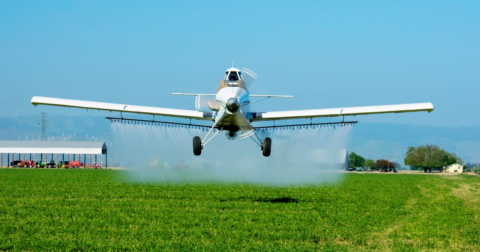
After stints in Des Moines and Arizona, Henning now lives on a farm in Greene County, Iowa, just half a mile from the family farm where she grew up. Over the past 25 years or so of familial cancer diagnoses, Henning has ruminated on what her family shares besides genes. As a kid, she remembers carrying little jugs of herbicide to spray the milkweeds and glancing up as planes carrying fungicides sprayed overhead.
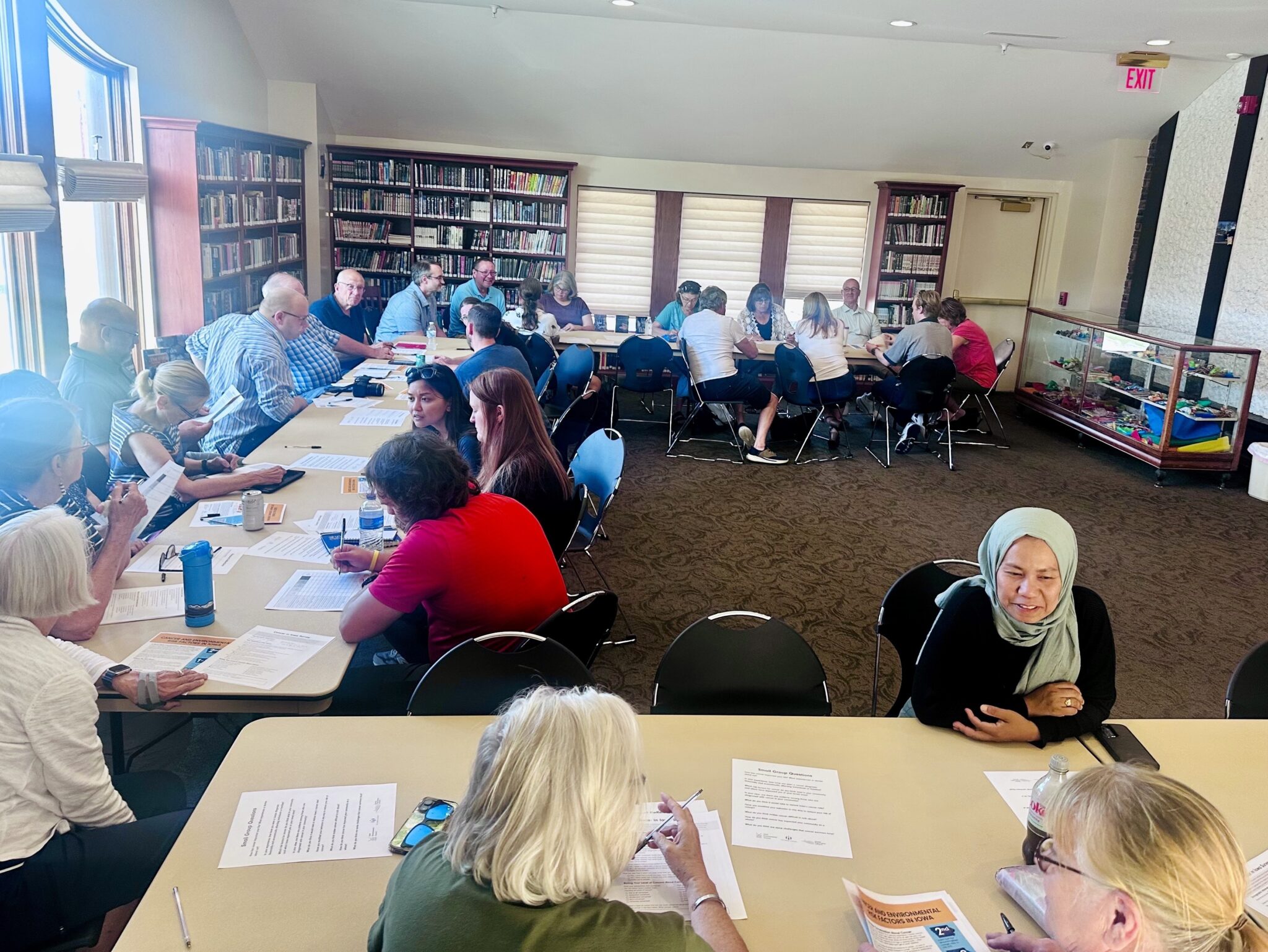
Like Henning, many Iowans are personally affected by — and have questions about — rising cancer rates in the state. Today, the Iowa Environmental Council and The Harkin Institute released a report addressing the issue, the result of painstaking work and 16 cancer listening sessions in all corners of the state. “Iowans deserve to know what risks we are facing,” the authors of the report write.
High levels of four major exposures — pesticides, nitrate, PFAS or ‘forever chemicals’ and radon — are all linked to cancer risk and are ubiquitous across the state, the report found.
The authors of the report go on to call for stronger environmental oversight of risk factors such as manure pollution and pesticides. The authors urge “that we comply with current laws and enforce current laws in a way that is not really being done in Iowa,” Kerri Johannsen tells Sentient. Johannsen is the Senior Director of Policy and Programs with the Iowa Environmental Council, which co-authored the report.
In 2025, Henning drove to Caroll, Iowa, to share her story at one of the listening sessions on cancer. Iowa is one of the only U.S. states where cancer incidence is increasing and has the second-highest rate of cancer incidence in the country. The state’s cancer crisis prompted the Iowa Environmental Council, The Harkin Institute and the Iowa Farmers Union to host these listening sessions across the state.
The new report pairs the voices of Iowans from the listening sessions with an analysis of peer-reviewed scientific studies on four major environmental risk factors linked to Iowa’s cancer crisis. Contributors included 29 experts ranging from epidemiologists to environmental health professionals.
The report documents a “toxic mix” in Iowa, whereby risk factors are present in the air, water, soil and even in homes.
A higher risk for each of the most common cancers in Iowa — breast, prostate, lung and bronchus, colorectal and skin melanoma — is associated with nitrate, pesticides, PFAS or radon in the scientific literature, the report finds. The existing research on pesticide exposure and cancer risk mostly focuses on pesticide applicators and their families. The pesticides that the authors examined were the top three applied in Iowa: the herbicides glyphosate (the active ingredient in Roundup), acetochlor and atrazine.
Among Iowans under age 50, six of the ten cancer types that are associated with nitrate, PFAS, radon or pesticides have been increasing.
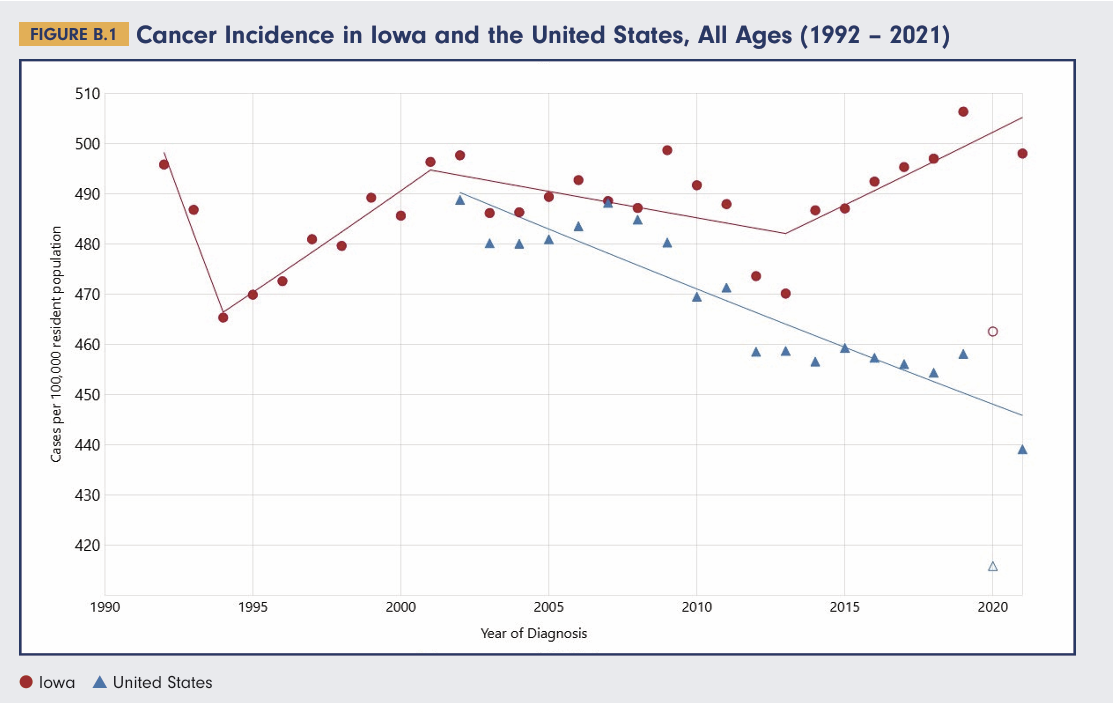
Iowa’s cancer rate is unusual in many ways, Johannsen tells Sentient. The state’s cancer rate was more than 10% higher than the national average for the most recent five-year period measured, 2017-2021. Iowa’s cancer rate for people under the age of 50 is also higher than the national average.
Iowans are also disproportionately exposed to agricultural activity: 85% of the land is devoted to animal agriculture or crops. Iowa also has two and a half times as many concentrated animal feeding operations, commonly described as factory farms, as the next highest state, Johannsen says. The manure from these factory farms contains nitrogen, and when sprayed on fields as fertilizer or illegally discharged into waterways, this nitrogen can end up as nitrate pollution in the water supply. “We are an outlier for the sheer concentration of the amount of nitrogen that is going onto our land that is ending up in our water.”
Henning says that many political leaders in Iowa seem to be “intent on absolving agriculture from its effects,” and thus “the public is paying the price for many of the things that we do in farming.”
She remembers how the massive flood of 1993 tore through her own farm and carried the soil, fertilizer and “everything with it downstream,” she says, to the towns and cities beyond. “The gullies were deep enough that you could hide a John Deere tractor.” To her, it was a wake-up call that “what we do on our farms really makes a difference in urban areas.”
The report authors argue that Iowans need to be exposed to fewer environmental contaminants. They recommend strengthening enforcement of existing environmental laws, especially when it comes to polluters such as factory farms. They recommend stricter oversight of manure application as well as improved monitoring of agricultural runoff and water quality.
Personal behavior changes alone are not enough to adequately reduce Iowans’ risk of cancer, the authors say.
“We’ve built sort of a skyscraper of risk factors” for cancer, Johannsen says of Iowa. Each person has their own individual behavioral risk factors for cancer — say, alcohol use or a diet high in processed meat — as well as individual genetic risk factors. But Iowans also have shared environmental risk factors.
“Even if we are able to eliminate all of those behavioral risk factors, which is not realistic, several floors of this skyscraper are made up of these environmental risk factors that individuals cannot control,” she says.
When addressing cancer risk, which manifests over the course of lifetimes, it’ll take years to see the results of action, the authors say. “We have to act with urgency to address those risk factors now, because the outcomes could still be years in the future,” she says.
Johannsen envisions the future of Iowa with her kids in mind. “If we do not act with urgency, the future we’re facing and that our kids are facing is very troubling.”
Nina B. Elkadi is an Editor-at-Large for Sentient. Her investigative reporting explores corporate influence within the agricultural industry, the environmental impacts of factory farming, and how negligence impacts consumers and workers. Her work also appears in National Geographic, Inside Climate News, Civil Eats, High Country News, Ambrook Research, JSTOR Daily, Barn Raiser, and more. She splits her time between Washington D.C. and her hometown of Iowa City.
News
Health•5 min read
News
Elanco Animal Health reported $1.14 billion in quarterly revenue, and its farm animal sector increased 17% year-over-year.
Health•4 min read

Perspective
If industrialized processing is a marker for ‘not real’ food, how can industrialized meat fall under the designation of ‘real’?
Diet•4 min read