News
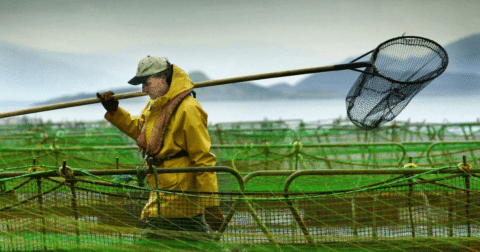
Farmed Salmon May Not Be as Nutritious as It Once Was, New Research Suggests
Health•5 min read
News
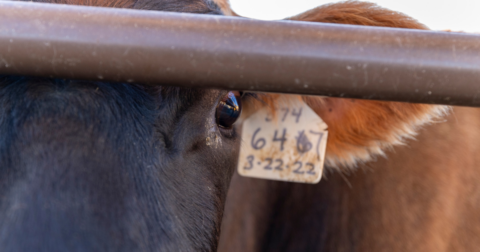
A new bovine tuberculosis case shows that the disease, long thought largely eradicated, persists despite years of statewide efforts.
News • Health • Public Health

Words by Gabriella Sotelo
In Michigan, a cow infected with bovine tuberculosis (M. bovis) was discovered at a processing plant during routine testing in February by the USDA Food Safety and Inspection Service. According to a statement from the state veterinarian to MLive, a lymph node on one carcass appeared suspicious and was sent for testing. Results came back positive for bovine tuberculosis, and officials traced the animal back to its origin, a herd in Charlevoix County.
This was the first case ever identified in the county, and was confirmed via email with Dr. Nora Wineland, state veterinarian for the Michigan Department of Agriculture and Rural Development (MDARD). Further testing revealed additional cases in the herd, and the entire herd was placed in quarantine.
“This latest detection of bovine TB highlights two important realities,” said Wineland in a state press release. “How challenging the disease is to address;, and why it is so crucial to use all of our tools for detection to swiftly identify cases and take actions to limit disease spread.”
“The area of highest risk for bovine TB, and where most TB-infected cattle herds and wild deer have been identified, is in the Modified Accredited Zone (MAZ) of Michigan’s northeastern Lower Peninsula,” Wineland tells Sentient in an email. This zone does not include Charlevoix County, where the new case was identified.
Outliers located beyond the high-risk zone raise concerns across the state for farming operations, animals and public health. The February detection follows a November 2025 case in Presque Isle County, bordering but just outside the high-risk zone, identified during routine surveillance. These are the 84th and 85th cases in Michigan to test positive for M. bovis since 1998.
Michigan’s history with M. bovis mirrors trends across the United States. The disease was widespread in domestic cattle during the early 20th century, prompting a nationwide eradication campaign that combined herd testing, quarantines and the slaughter of infected animals. This effort was part of the National Tuberculosis Eradication Program, which aimed to protect both the livestock industry and public health.
By 1979, M. bovis in domestic cattle was officially considered eradicated in Michigan, and the rest of the country achieved similar success. This accomplishment drastically reduced the risk of bovine tuberculosis spreading to humans, particularly through milk, and set a precedent for modern livestock disease control nationwide.
However, Michigan’s northern Lower Peninsula presents a unique challenge. White-tailed deer in certain counties serve as a wildlife reservoir for M. bovis, derailing eradication efforts. Spillover from infected cattle into deer populations was first identified in 1975 and again in 1994, showing that the disease can persist in wildlife even when domestic herds are free of infection.
Today, managing a case of M. bovis in Michigan requires coordinated surveillance of both livestock and wildlife. Programs in the Modified Accredited Zone focus on a test-and-removal strategy for cattle herds, monitoring deer populations and implementing measures to prevent transmission between the two species.
“Controlling bovine TB and protecting Michigan’s cattle industry is a top priority for MDARD,” Wineland writes. “The department is continuing its surveillance and biosecurity requirements for producers within the MAZ and the surrounding buffer county area to protect animal and public health and to help maintain market access for Michigan’s cattle, meat, and milk products.”
Any outbreaks of bovine tuberculosis can have serious consequences for dairy farms. Dr. James Sunstrum, TB clinic director at the Wayne County Health Department in Westland, Michigan, tells Sentient that while they are retesting the entire Charlevoix herd, they also “lock down that cattle producer for up to six months.” This means that the producer can’t sell any products from the herd — even from uninfected animals — during that time.
These quarantines cause dairy farmers to pause milk deliveries while decisions about culling are made. Even a single detected case can have ripple effects throughout a farm’s operations.
“This means tracing all purchases and sales in the last five years, completing additional herd testing, and examining the genetics of the bovine TB bacteria to see if it is closely related to any other bacteria previously isolated from cattle or deer,” Wineland writes.
“This is a major event for the cattle producer because it locks down his herd,” Sunstrum says. “So it’s very economically painful for this operation.”
Bovine tuberculosis can affect all mammals — humans and cattle included. People can become infected through close contact with infected cows or by consuming unpasteurized milk.
“These are rare events in the United States, but they’re still quite important,” notes Sunstrum. Currently, bovine tuberculosis accounts for less than 2% of TB cases found in humans in the United States. Sunstrum says Michigan records about 120- to 160 tuberculosis cases in people each year, with only one or two of those involving bovine tuberculosis, usually acquired overseas. From 2002 to 2022, seven people were reported to have contracted bovine tuberculosis from deer or cattle.
“Tuberculosis was one of the main drivers for passing laws to pasteurize milk across the country,” Sunstrum tells Sentient. Before pasteurization became widespread, the bacteria sometimes spread to humans through raw milk, causing illness and even death. Any bacteria that do enter the food supply are effectively killed by pasteurization or properly cooking beef.
Yet the movement to consume raw milk persists in some communities. Advocates, including high-profile figures such as U.S. Secretary of Health and Human Services Robert F. Kennedy Jr., promote raw milk consumption despite public health warnings.
Gabriella is Sentient's Fact Checker, steering the outlet's fact check process and team. Prior to this, she was an Editorial Fellow at Sentient. Her journalism background is in both environmental and science reporting, and her work has appeared in The Guardian, Gizmodo and National Audubon Society. She holds her MSc in Science Communication from Imperial College London.

News
Health•5 min read
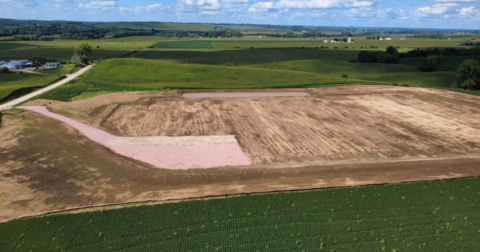
Monona County officials and residents fear a repeat of the communication gaps and loopholes that left them caught off guard by a plan to import treated slaughterhouse manure.
Health•9 min read
News
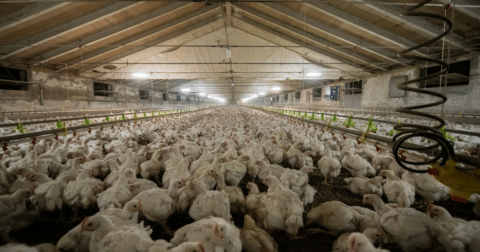
The rapid growth of chickens — now, 31 billion globally — has sped up pathogen evolution, boosting persistence, antibiotic resistance and spillover to humans.
Health•3 min read