News
Trump’s ‘New Era of Animal Welfare’ Excludes Almost All Farm Animals
Policy•5 min read
News
Democrats and Republicans are pointing fingers at each other, but the truth is murkier.

Words by Seth Millstein
Earlier this month, the parasitic New World screwworm was detected in U.S. cattle for the first time since 1982. Since then, Democrats and Republicans have been pointing fingers, with politicians in each camp blaming the others’ policies for the screwworm’s reemergence. Is either side right, and if so, which one?
The truth is that we don’t know, at least not entirely. The series of events that resulted in screwworm landing on a cow in the U.S. played out over several years across multiple continents, and many of the most crucial details as to how that happened are — and will perhaps always be — unknown. It’s simply not possible to draw a causal connection between any given policy and the fly’s arrival in the US.
However, we can at least examine the various claims being made about how the screwworm was able to return to U.S. cattle four decades after its eradication. Because while none of these claims are demonstrably true, some have more merit than others.
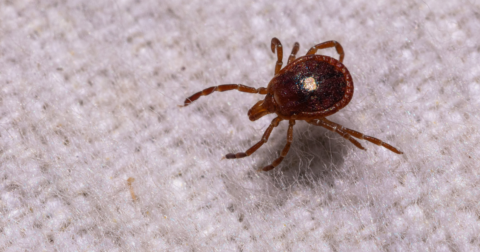
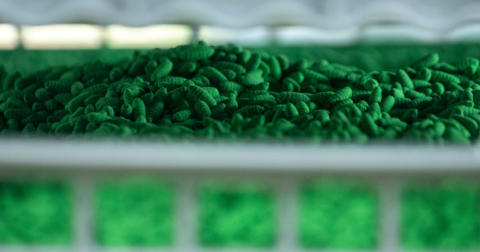
To recap, the screwworm is a parasitic fly that lays its eggs in the open wounds of mammals. It was a serious problem in the U.S. for most of the 20th century, killing countless cows and devastating the domestic cattle industry. Since the 1960s, the screwworm has been mostly kept out of North America using something called the sterile fly technique, which involves releasing sterilized screwworms into population hotspots in order to stop its ability to reproduce.
In the decades that followed, the U.S. and Panama have jointly maintained a sterile fly facility in Panama, effectively creating a barrier preventing the fly from reaching the US. In 2022, however, that barrier was breached. The fly slowly made its way north over the years, and in June, it was detected in a calf in the U.S. — the first time screwworm was found in U.S. cattle since 1982. As of June 26, there have now been 25 documented cases of screwworm in the U.S. since the beginning of June, according to the USDA.
Unsurprisingly, this kicked off a blame game between Democrats and Republicans in Washington. Let’s take a look at what each side said, and which — if any — of their claims hold up to scrutiny.
In a press conference on June 8th, USDA Secretary Brooke Rollins gave an overview of the screwworm outbreak, and blamed the Biden administration for facilitating it.
“This does trace back to the last administration and the open-border policy, and the movement of millions of people and their animals up from South America through Central America,” Rollins said. Later, while testifying before Congress, she claimed that the Panama barrier “crumbled under the last administration, with open borders and the proliferation of the Mexican cartels and their illicit cattle trafficking.”
It’s true that the Panama barrier was breached under the Biden administration. Exactly how it was breached is still a complete mystery, however.
“I don’t think we really know why the border failed, but it was probably a combination of factors,” North Carolina State University entomologist Maxwell Scott, who’s helped to develop sterile strains of screwworm, tells Sentient. “Hopefully, at some point, there’ll be an inquiry into that.”
COPEG is the name of the joint commission that manufactures sterile flies and maintains the barrier in Panama. While information about the commission’s managerial decisions isn’t publicly available, there’s no evidence that the Biden administration implemented any changes to how the facility is run.
The primary accusation from the Trump administration is that Biden’s “open borders” policy paved the way for the screwworm’s return. But there are a number of problems with this claim.
To begin with, the Biden administration did not have an “open borders” policy. The Trump administration has made many false claims about Biden’s immigration policies, and this is one of them: Biden deported around the same number of undocumented immigrants as Donald Trump did during his first term.
More to the point, there’s no evidence that screwworm’s arrival in the U.S. has anything to do with immigration. To speculate that someone in Mexico brought a cow that had been infected with screwworm across the border is just that: speculation. If there’s any proof that this is the case, the Trump administration hasn’t presented it.
“Have you seen any evidence for that?,” Scott asks. “I haven’t.”
It’s also not clear how, even in theory, undocumented immigrants coming into the U.S. from Mexico could have caused an outbreak of screwworm in Panama.
It’s worth stressing that the screwworm crossed the U.S.-Mexico border on the Trump administration’s watch. Trump had been in control of U.S. immigration policy for over a year when the fly made its way across the border, and while that doesn’t necessarily mean it’s Trump’s fault, it does make it a bit more difficult to argue that it was Biden’s fault.
But this raises the question: Is there anything the Trump administration did that could have paved the way for the screwworm’s return? Democrats say the answer is yes.
“Trump & Elon Musk got rid of the USAID program that helped contain screwworms to Central America,” Democratic Rep. George McGovern of Massachusetts posted on X after the screwworm’s return was confirmed. “Now, thanks to them, our beef is being infected with parasites.”
To be clear, screwworm has not been found in U.S. beef, and the Animal and Plant Health Inspection Service (APHIS) has stressed that screwworm isn’t a food safety issue, thanks to the federal food inspection policies. But what about the other claim?
McGovern is referring to funding cuts that the Trump administration made to the UN’s Food and Agricultural Organization (FAO). The administration cut FAO funding by around $382 million, and according to reporting by Agri-Pulse, this resulted in the elimination of programs dedicated to “monitoring and containing avian flu and the New World screwworm in Central America.”
That certainly sounds damning. But at least according to Snopes, it’s “not possible based on the available evidence to conclude that the canceled grant directly caused the outbreak in the U.S.”
Still, this isn’t the only Trump action that’s now catching blame for the screwworm outbreak. When the second Trump administration took power, it initiated a legally-questionable freeze on billions of dollars of federal money that had already been allocated to a wide swath of programs.
According to reporting by Politico, this freeze delayed two crucial screwworm-related projects: the construction of a new sterile fly facility in Texas, and a $100 million research grant aimed at developing new tools to stop the fly’s spread.
Again, it’s impossible to definitively say that either of these moves caused the screwworm outbreak. That’s doubly true for the research grant, as there’s no assurance that said grant would have resulted in the development of tools that would have stopped screwworm from arriving in the US.
But unlike Rollins’ unfounded attempts to link the screwworm outbreak to immigrants, these claims do have at least a little bit of meat on the bone. During the last month of his administration, Biden allocated $165 million in emergency funding to expand the U.S response to screwworm, including construction of new sterile fly facilities in Mexico.
According to Politico, however, the Trump administration didn’t immediately authorize the construction of this facility, and instead spent four months reviewing the plan. Trump ultimately did approve it, and Rollins told the Senate Ag Committee that it’s expected to become operational this week. But three former USDA officials told Politico that if the administration had approved the facility immediately, it would have been up and running last spring, before screwworm reached the US.
Finally, some Democrats have blamed the screwworm outbreak on Trump’s decision to cut the staff of APHIS, which funds the COPEG facility and is responsible for protecting U.S. agriculture from pests. Trump did indeed cut APHIS staffing by 25%, in part by offering employees severance packages to compel them to resign. But it’s again unclear if these staff cuts affected the movement of the screwworm.
“I know there were a number of APHIS people that took that offer,” Scott says. “I don’t know if any of the scientists that took that deal were somehow connected to the screwworm program.”
The truth is that we may never know exactly how the screwworm was able to breach the Panama barrier and land on American cattle. But it’s here, and even if the outbreak is contained early on, it couldn’t come at a worse time for the embattled U.S. cattle industry, which is already facing sky-high beef prices amidst the lowest domestic cattle supply in 75 years.
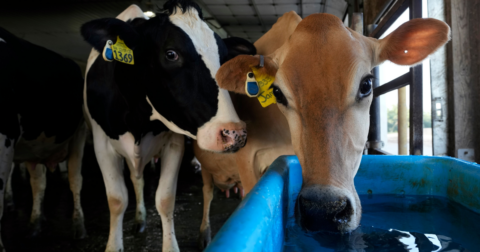
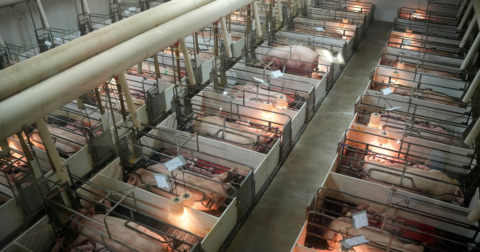
The cattle that remain live and die in a system that houses them in conditions seemingly tailor-made to facilitate the spread of screwworm and other contagions. Cramming large commercial herds together in dirty, poorly-maintained sheds might save money, but it also creates the conditions for the screwworm to thrive.
This isn’t to say U.S. beef producers are to blame for the outbreak, of course. But the industry hasn’t exactly set itself up for success, either.
Seth Millstein is a writer and musician living in the Bay Area. He has helped launch several early-stage journalism startups, including Bustle and Timeline, and his work has been published in Bustle, Huffington Post, The Daily Dot and elsewhere.

Explainer
Climate•10 min read

Feature
A survey taken this past spring shows a majority of Iowans say they have experienced negative environmental impacts from industrial animal operations. But plenty are also ambivalent, or ignorant, about…
Elections•11 min read
News
Mama Bear allegedly uses misleading branding on Atlantic salmon cubes sourced by Australis Foods, an aquaculture operation accused of harming Chile’s sensitive marine environment.
Legal Action•6 min read