News
Antibiotic-Resistant Genes Found in Homes Near Factory Farms
Health•4 min read
News
Millions of birds have been infected in the past month alone, yet the USDA has loosened testing rules for dairy cattle and the CDC has lost nearly a third of its staff.
News • Health • Public Health

Words by Seth Millstein
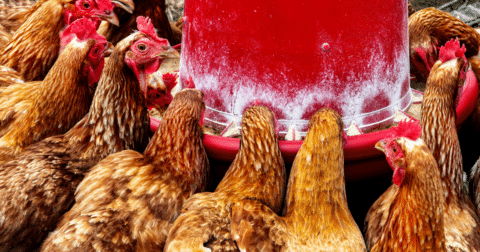
Bird flu is back in the news. According to the USDA, over 2.7 million birds have been infected with the virus in the last 30 days, and a recent outbreak at the second-largest egg-laying facility in the country resulted in almost one million chickens being killed in Illinois.
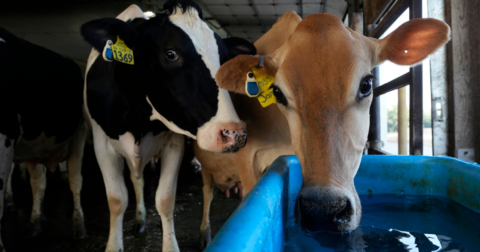
But the virus also continues to hit non-avian species, including humans. According to the CDC, 74 people in the U.S. have contracted bird flu since 2024, mostly from dairy farms. A Washington state dairy worker died from “severe illness” in November shortly after contracting the disease, and in a particularly worrisome development, the virus has been spreading through a mink farm in Utah for months, prompting worries that the virus could soon mutate into a pathogen that can be spread from human to human.
Despite all of this, the Trump administration has scaled back testing for bird flu in dairy herds and cut staffing at departments tasked with fighting and monitoring the disease. Is this form of bird flu simply the new normal — and if so, will it eventually mutate into a more dangerous virus?
The current outbreak of highly pathogenic avian influenza hit the U.S. in February 2022. Since then, over 211 million birds in the U.S. have been affected by the virus, which has been detected in commercial and backyard flocks in all 50 states.
This is, in a certain sense, old news. The outbreak has been raging for almost five years, and it’s still raging now. So far, it’s not a serious risk to humans — but that may change.
In October, ProPublica reported on a mink farm in Utah that’s been fighting a bird flu infection for over two months, seemingly with no success.
When bird flu is detected on a poultry farm, the protocol is clear: Kill all of the chickens. That’s what U.S. chicken farmers have been doing for the last few years; they’re required to do so by law, and the government subsidizes them for their losses when they do.
But there’s no such federal policy for addressing bird flu on mink or dairy farms, leaving the decision in the hands of Utah state officials. Amanda Price, state veterinarian at the Utah Department of Agriculture, has been handling the state’s response to the mink farm outbreak — but by her own admission, there hasn’t been much of a response to speak of.
“There’s just not a lot of options out there other than kind of sitting and waiting and seeing what happens,” Price told ProPublica.
Price urged sympathy for the owner of the mink farm, saying that the outbreak has been “devastating” to him.
“This is his life’s work that he’s seeing be destroyed,” Price told ProPublica. “I really hope that you understand the humanity behind this situation.”
But several flu experts expressed alarm that the mink weren’t immediately culled out of an abundance of caution.
“Every other country that I’m aware of that has had H5N1 in fur farms, depopulation has happened pretty quickly,” Tom Peacock, an avian influenza researcher at the Pirbright Institute, told ProPublica. “The fact that the first instinct wasn’t just to depopulate and figure stuff out later is very concerning to me.”
Maurice Pitesky, faculty member and researcher at the UC Davis School of Veterinary Medicine, is “really concerned” about the possibility of the virus mutating. Mink are a “mixing bowl” type of species, he tells Sentient, that can facilitate the mutation of the virus into a more dangerous form.
“It’s been in mink before,” Pitesky says. “But the more the virus persists in the environment, the more animals that are infected, the more potential for the virus to continue to evolve, and ultimately move on to something that not only infects humans — because we already have that scenario happening — but facilitates human-to-human transmission.”
If that happened, Pitesky says, the mutated strain would fit “the criteria that’s typically associated with pandemics.”
The prospect of workers contracting bird flu, not only from mink but chickens, cows and other animals as well, is high on Pitesky’s list of concerns. While protective gear has been provided to many farm operators, Pitesky tells Sentient that in his observations, workers aren’t using them.
“When you go into poultry facilities and dairies, people aren’t wearing face shields and face masks,” he says. “In part because it’s cultural. In part because it’s just really hot. I mean, if you’re in the Central Valley of California in the summer, and they’re telling you to wear a face mask and a Tyvek suit and things like that, you know that’s that’s a big ask.” He says dehydration is a legitimate concern for said workers.
Nevertheless, he says that we shouldn’t let the “perfect be the enemy of the good,” and even half-measures like face shields instead of face masks would be better than nothing.
Another factor in bird flu’s spread, Pitesky says, is insufficient monitoring of the spaces in which the virus thrives. He’s a big proponent of what he calls outward-facing biosecurity: monitoring the streams, lakes and other natural environments that surround animal facilities, as opposed to only monitoring what goes on inside the facilities.
But by and large, he says, that isn’t happening. The USDA and its state-level equivalents are focused on monitoring “everything from the fence line inward,” Pitesky says, as opposed to looking at what’s happening just outside the farms.
“If you have a poultry facility, and within a four-kilometer radii of that facility, you’ve got dairies, or you have wetlands, or you have drainage ditches that are feeding into these facilities, those are all risks that aren’t really captured [with existing monitoring],” Pitesky says. “That outward-facing element is still really important. It’s still understudied and under leveraged as far as understanding risk.”
According to ProPublica’s reporting, Utah officials haven’t even been monitoring mink farm workers for the virus — a worrying fact, given that mink are feisty creatures prone to scratching and biting their human handlers.
“If we started seeing people actively dying from this, obviously that would change how we respond to this,” Price told ProPublica.
This lackadaisical approach to monitoring the virus has played out at the federal level too, as the USDA has reduced testing requirements for the virus in cattle. Producers no longer have to test lactating cows for avian flu while transferring them between states, so long as the original state is considered “unaffected” by the virus (36 states are classified as “unaffected” by the federal government). A similar requirement for testing cows being transferred within states to fairs and exhibitions has also been removed.
All of this is in addition to massive staffing cuts at the agencies and departments that monitor bird flu. According to the New York Times, the CDC’s staff has been cut by 30%since 2025, including a 17% reduction at the Center for Emerging and Zoonotic Diseases and the Respiratory Disease Center.
It’s still too soon to say whether bird flu will mutate into a more dangerous version that can pass from human to human. But even if it doesn’t, will the perpetual presence of bird flu on American farms become the new normal?
“If we keep on approaching it from this perspective, yeah, it’s going to be,” Pitesky says. “The powers that be are still using the same approach they used five years ago…It hasn’t really changed.”
Seth Millstein is a writer and musician living in the Bay Area. He has helped launch several early-stage journalism startups, including Bustle and Timeline, and his work has been published in Bustle, Huffington Post, The Daily Dot and elsewhere.
News
Health•5 min read

News
The fast food giants are silent on whether they’re still pursuing targets set a decade ago.
Health•5 min read

Monona County officials and residents fear a repeat of the communication gaps and loopholes that left them caught off guard by a plan to import treated slaughterhouse manure.
Health•9 min read