Feature
What Is Animal Welfare Worth? Economists Have a New Way to Calculate It
Research•7 min read
Feature
Critics tell Sentient that directing animals’ minds through neuromodulation raises serious questions about regulation and animal welfare.

Words by Cristian Salazar
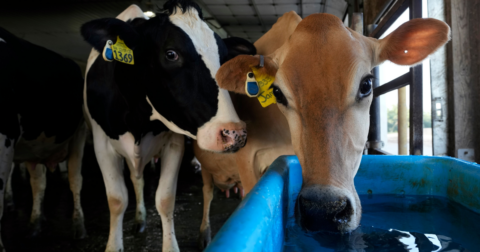
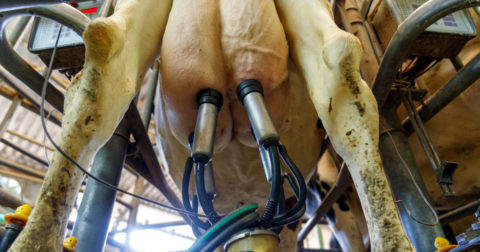
Technologies like artificial insemination and robotic milking machines have made modern dairy farms engines of efficiency. Yet dairy farms face immense pressures from increased operational costs, rising land costs and competition from milk alternatives. Some tech leaders and funders believe the solution lies with neurotech — devices designed to monitor neural activity and modulate the brain — to get as much value out of cows as possible. But there has been very little research on neurotech in animals, and ethics experts worry what it could mean for animal welfare.
Although much of the technology remains speculative, the Russian company Neiry claims to have directly implanted neural devices in the brains of dairy cows to stimulate lactation on demand.
“When a cow’s appetite decreases, the system automatically adjusts the neuromodulation mode to restore it,” the company said in a September 2025 announcement that it had surgically placed electrodes into five cows. “The stimulator’s electronic unit is attached to the back of the animal’s head, with electrodes reaching deep into specific brain regions — including those responsible for reproductive functions.”
The effects of Neiry’s neurotech have not been independently verified.
Neuroethicists, animal rights activists and neurotechnology researchers tell Sentient that directing animals’ minds through neuromodulation raises serious questions about regulation and animal welfare.
“It’s just morally wrong,” Lori Marino, a neuroscientist and co-director of the Animal Law and Science Project at George Washington University, tells Sentient. “We already take away a lot of the animals’ autonomy by factory farming them,” but with Neiry’s brain implants, she adds, “you’re trying to basically control their mind, their brain, and not give them any choice about what they’re doing.”
Marino, who has studied the evolution of the brain and intelligence in farm animals, says cows have “very strong emotions,” and inducing cows to lactate through neuromodulation could affect their mental state. “It’s a real process that involves the mind, emotions, behavior,” she says, adding that this process has been shaped over millions of years. “If you change that, you’re going to have an impact upon their welfare.”
Neiry is “treating [cows] like these biological machines,” L. Syd M. Johnson, a human and animal neuroethicist at SUNY Upstate Medical University, tells Sentient. The sole purpose of the tech is to optimize milk production for human consumption, she adds. “It does nothing to enhance the well-being of a cow,” she says.
Neurotech implantation is an invasive surgery and could directly endanger cows’ health. Although Neiry claims that the implantation has a 100% survival rate, animal brain chip trials from similar companies, including Elon Musk’s company Neuralink, have led to around 1,500 animal deaths and cases of paralysis.
Neiry didn’t respond to requests for comment. The company said in its announcement that the cows that received the initial neurostimulation devices “remained conscious, felt well, experienced no discomfort, and have already returned to their normal production cycles on the farm.” It did not detail how the devices were implanted, what research went into designing them or what animal welfare precautions were taken.
Stimulating the brains of animals to influence their behavior has been a decades-long pursuit. The CIA failed to transform dogs into assassins during the Cold War. In 2002, a U.S.-based research team announced a “Robo-Rat” whose movements could be compelled by using electrodes to mimic sensation to the whiskers, then rewarding specific movements by triggering the brain’s reward center. Some researchers in Texas and China have demonstrated that cockroaches can be “mind-controlled” with similar techniques.
Neiry itself generated international headlines in December 2025 when it announced it had developed pigeon “biodrones” using brain neurochips to control the animals’ behavior, hailing the tech as a cheaper and more maneuverable alternative to traditional unmanned aerial vehicles. The company released a video of the pigeon biodrones, but its claims have yet to be independently verified.
Animal experimentation has been foundational to the development of neurotechnology. In 2023, WIRED obtained veterinary records that showed about a dozen monkeys died in “gruesome” fashion during exploratory trials at Neuralink, Elon Musk’s brain-computer interface company, which claims to be seeking to restore motor function in humans with paralysis. Musk posted on X that “No monkey has died because of a Neuralink implant” and that only “terminally ill” monkeys had been experimented on.
Despite these projects, none of the researchers Sentient spoke to were aware of any studies investigating the safety or effectiveness of using brain chips to control the behavior of large animals. It’s unclear how Neiry has used animal experimentation to refine its neural devices for cows.
The question of suffering is core to the problem of neurotech in animals, Johnson says. She wonders how many cows would have to die before scientists could locate where to implant the neural devices. If they don’t die during the brain surgery, the animals are often euthanized at the end of the experiment for post-mortem study. “How much do we care about how many things go wrong for the cows in order to create this technology?” she asks.
Johnson says one of her biggest concerns about using neurotech in animals is what it means to control the minds of another sentient being. “What does it feel like to have your freedom of movement impaired in that way? To be thinking, ‘I’m gonna go this way’ and suddenly you’re going the other way because somebody has flipped a switch,” she says.
It’s impossible to know how the cows interpret signals from the brain implant, says Adam Shriver, a biomedical and agricultural ethicist. “It could be something where it actually feels like it’s being controlled by some external force, which presumably would be stressful,” he says. “Or it might sort of be tricked into thinking it’s making a decision itself.”
Research on brain implants in humans has shown that people “sometimes experience a sense of not being in control of their bodies and minds…and this is very distressing for these individuals,” Johnson adds.
Studies in people have mainly involved deep brain stimulation (DBS), in which electrodes deliver pulses generated by a device just below the skin on the chest. DBS is approved for a small number of neurological and psychiatric disorders and is most commonly used for patients with Parkinson’s disease whose motor symptoms are not adequately controlled by medication.
How or whether DBS affects the psychological states of patients is a subject of rigorous investigation. One study of 17 patients with Parkinson’s disease who received DBS found that some felt their identities had shifted. One patient developed medically diagnosed mania and increased impulsivity, while others described a feeling of “self-estrangement” and sense of loss of control. Notably, the study found that some patients felt their identities had been “restored.”
Amanda Merner, a research scientist at the Brain Bioethics Lab at the Department of Neurosurgery of Massachusetts General Hospital, tells Sentient that many studies of DBS have been “sensationalized” and were based on a small number of patients. She helped develop a study of personality change in Parkinson’s disease patients after receiving DBS. It found the “implants are restorative to not only their functions from a movement perspective — so their Parkinson’s symptoms get better — but also in the terms of the things that they identify as part of themselves. Those things are also being restored through DBS.”
Implanting neural devices in cows to control them is more alarming because it’s possible to ask human patients how they are feeling and what changes they’ve noticed. “We can’t ask that of an animal,” Merner says. Human patients can also give consent, she adds, while animals cannot. “In patients, we’re asking for consent to restore functions for their benefit. In these animals, we’re enhancing a function for the benefit of humans, without consent,” Merner tells Sentient in a follow-up email.
Shriver worries whether there is meaningful oversight of Neiry’s brain implant technology and whether economic demands will be prioritized over the cows’ welfare. “The idea that they would take the animals’ welfare seriously is very unlikely,” he says.
Cristian Salazar is an independent journalist based in Philadelphia, PA. He has published widely with The Associated Press, The Guardian and Sentient Media.

Feature
Culture•7 min read
Perspective
If you’re looking to reduce your water impact, eating less meat is a great place to start.
Culture•8 min read
Feature
New technology can detect pain in farm animals, but critics say it may do more to bolster the system than improve it.
Science•7 min read