News
There’s a Complicated Gap Between Our Values and What We Actually Eat, Research Shows
Research•6 min read
News
Most life-cycle assessments of meat, dairy and fish leave out the minerals added to feed.

Words by Emily Payne
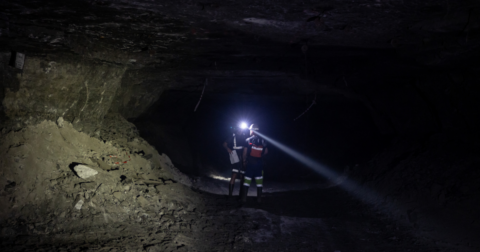
The crops we feed farm animals like soy and corn are a big part of the meat industry’s massive environmental footprint. Producing these crops accounts for more than two-thirds of agricultural land use, fertilizer-driven pollution and a large share of related greenhouse gas emissions. But another, often-overlooked part of animal feed hides farther up the supply chain — in the mines that supply minerals to boost farm animal diets.
When we factor in the environmental costs of sourcing these minerals, both emissions and also harms to wildlife and biodiversity, meat’s impact is even greater. And it’s not just meat, according to researchers, it’s also fish, dairy and other animal-sourced foods.
A new study in Nature analyzed data from 109 peer-reviewed life cycle assessments for farm animals. These are basically estimates of the environmental footprints of farmed animals over their entire lifecycle. The authors looked at literature that included cattle, pigs, chickens, fish and crustaceans and found that 64% of these assessments excluded minerals entirely. Only one-eighth of studies accurately modeled the impact of mineral supplements used.
“We think a lot about the biotic ingredients, the wheat or maize or forage fish, whatever it is,” study author Beth Penrose tells Sentient. Penrose is an associate professor of pastoral systems and sustainability at Charles Darwin University in Australia. “Quite rightly so, because that’s a large percentage of a lot of these kinds of feeds, but we don’t really think about the mineral bit.”
Producers use minerals to help optimize farm animal growth and productivity, but they also play a critical role in health and welfare. Feed crops don’t always provide animals with the nutrition they need, and supplements help fill the gaps: calcium and phosphorus to build and maintain bones; potassium, sodium and magnesium for muscles and disease prevention; manganese for metabolic support and zinc, copper, selenium and iron for immune defense.
These supplements typically make up small amounts of feed, less than 5% for salmon and less than 3% for cattle. While not all animal agriculture systems use supplements, the authors note that even small amounts of minerals added to feeds for billions of farm animals worldwide can add up to millions of tons consumed per year — a potentially significant blind spot in current environmental assessments.
The omission of minerals from lifecycle assessments is even more apparent when broken down by species: 84% of fish and crustacean studies omitted mineral supplements, compared to 73% for cattle, 50% for chicken and 48% for pigs.
Penrose explains that this disparity is likely because farmed fish are given feed pellets with proprietary mineral formulations, while livestock are typically fed direct mineral supplements. This makes it more difficult for researchers to model their impact: “in that industry, the balance of micronutrient stuff is the secret sauce in a way that’s not true for pigs and cattle.”
For example, in 2020, Norwegian salmon were fed almost 2 million metric tons of feed. Assuming phosphorus makes up 0.94% of feed, the authors estimate associated emissions could reach 163,700 metric tons of carbon dioxide equivalent — equal to more than 400 million miles driven by an average gas-powered car.
The authors also note that minerals in aquaculture feed are particularly important to investigate, because companies are increasing levels as they transition away from fishmeal and oil toward plant-based feed. Climate change may also play a role: As ocean temperatures rise, farmed fish may need more supplementation to maintain healthy mineral levels.
Mining is responsible for a range of health and environmental impacts. Mines threaten thousands of endangered species globally and are linked to severe air pollution, deforestation, water depletion and contamination and environmental damage from waste-management failures.
But Penrose says connecting those impacts to animal feed is challenging.
Many feed companies don’t know where and how the minerals they purchase are sourced. This likely explains why, among the 36.5% of life cycle assessments that accounted for mineral supplements, two-thirds used a proxy mineral in their calculations, such as calcium carbonate, rather than modeling the impact of specific feed formulas.
But the precise impacts of minerals vary depending on factors like mining methods, geology, chemicals used for extraction, processing requirements and the distance they travel to the end customer. While a proxy is better than ignoring minerals altogether, Penrose says, in terms of sustainability, “it makes much more difference about where you get it from than what you’re actually buying.”
Minerals also tend to have longer supply chains: Producers buy feed from feed companies, which buy minerals from mineral companies, which buy minerals from mining companies. And “the longer chain you have, the less easy it is to follow these things through for the information to flow,” Penrose explains.
Even if the information were available, Marty Matlock, a professor of biological and agricultural engineering at the University of Arkansas, suspects many life cycle assessments omit minerals because of what’s called the 1% rule, a commonly used cutoff for the scope of a life cycle assessment. If the material makes up less than 1% of the product, analysts typically exclude it from the analysis.
“The 1% rule is abused all the time. Sure, it may be below 1% for the particular system being analyzed, but cumulatively, it’s significant,” Matlock tells Sentient. He thinks many of the studied life cycle assessments “missed impacts because of assumptions made in their methodologies.”
Mining is deeply embedded in the global agricultural system: Phosphorus and potassium are key ingredients in the estimated $290 billion commercial fertilizer industry, in addition to minerals in feed additives.
“When it comes down to it, we dig stuff up out of the ground and we either burn it or you eat it. That’s what we do. We’ve been doing this for 10,000-plus years,” says Matlock. “Ain’t nothing free in this world;” this is just part of the “cost” of animal agriculture, he says.
Given their importance to both animal health and welfare and global food security, Matlock and Penrose emphasize that in our current global food system, it’s not possible to end mining for these minerals completely. But standardization and better information can help weigh the costs and benefits of feeding a growing population.
“If we’re going to provide a nutritious diet for 10 billion people without destroying the biosphere, eating the planet, we are going to have to understand where those true costs are,” says Matlock.
More information from the mining companies could have positive ripple effects.
For example, if mining companies shared geographically specific information about the minerals they source, this could enter independent databases like Ecoinvent, which is commonly used to build life cycle assessments. According to Penrose, finding the information is “hard, but not impossible,” and feed companies could help.
“The feed industry is massive, absolutely massive,” says Penrose. “They actually have a really big lever that they can pull to be able to demand better.”
Emily Payne is a journalist covering the intersection of food, agriculture, health and climate. Currently based in Denver, Colorado.
Solutions
Research•6 min read
Feature
A new framework estimates the economic value of animal welfare for policymakers across the globe.
Research•7 min read
Feature
At the center of protein maxxing, whey products require energy-intensive processing and emissions-intensive milk and cheese production, with climate consequences if unchecked.
Culture•7 min read