Solutions
Marine Protected Areas Aren’t as Protected as You Think
Research•6 min read
Feature
At the center of protein maxxing, whey products require energy-intensive processing and emissions-intensive milk and cheese production, with climate consequences if unchecked.
Feature • Culture • Science • Technology

Words by Jessica Scott-Reid
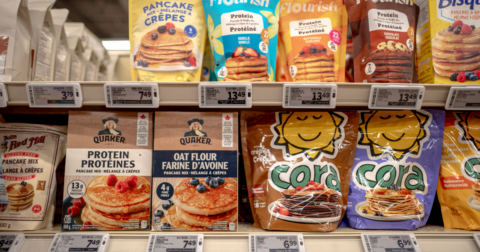
Take a stroll down the grocery store aisle, or a scroll through its online store, and whey protein can be found as the star ingredient in many surprising foods, like coffee, pastries, chips and even water — yes, “clear protein” water. Yet not long ago, whey was little more than a byproduct of cheese production: the liquid left behind after milk is curdled and strained to make cheese. For much of the 20th century, whey was considered waste, a pollutant that robs waterways of the oxygen fish need, or a low-value byproduct fed to animals.
But by the 1970s, the U.S. government was researching ways to use whey more efficiently. Advances in processing, particularly filtration, made it possible to separate and concentrate whey proteins. These ultra-filtered whey ingredients could be used in prepared foods like breads, cereals and snacks as an affordable filler that adds protein.
Today, whey’s image has made a rapid pivot, becoming one of the dairy industry’s hottest products. Rather than a byproduct used as a functional additive or repurposed to minimize waste, whey has become a sought-after protein source, driven largely by successful marketing and the high-protein or protein-maxxing diet trend. In addition, people taking GLP-1 weight-loss drugs are often told to prioritize protein consumption to avoid muscle loss.
Demand for whey protein is now so high compared to supply that some manufacturers and market analysts are warning of a looming shortage. U.S. domestic use of whey protein concentrate increased over 30% in the first half of 2025 compared with the same period in 2024, according to the USDA Economic Research Service. Recent news stories frame whey as “America’s obsession,” with which the industry can’t keep up.
Plant-based proteins made from soy and peas have also become popular in recent years, in refined powder form and added to foods like chips and cereals. These proteins can be sustainable alternatives despite the energy-intensive processing required to produce them, with some evidence suggesting that pea protein can have lower environmental impacts than whey protein when their nutritional value is taken into account. Yet, plant proteins are not seeing the same demand as whey in the U.S.
But despite all of this focus on whey protein-packed products in media headlines and influencer endorsements, important parts of whey production are often overlooked, including its potential harm to the climate and animals. And as demand for whey protein increases, so do questions about whether more whey production could compound those impacts.
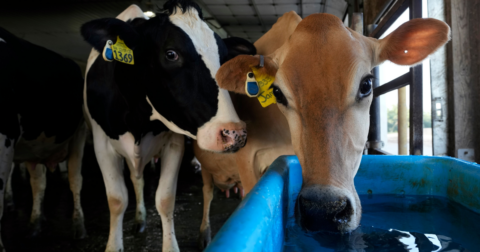
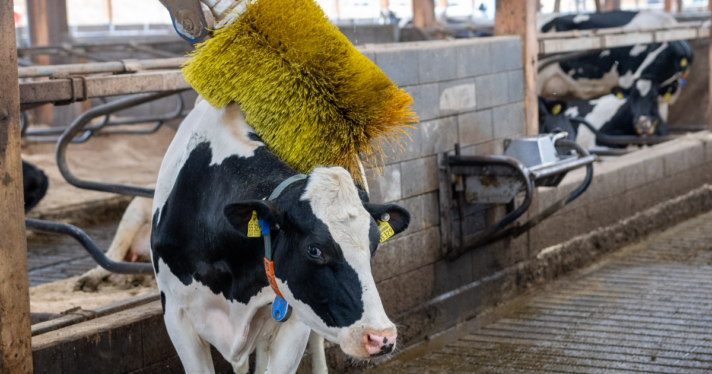
Whey production starts on the dairy farm, whose environmental costs are considerable. U.S. dairy herds include nearly 9.67 million dairy cows as of the USDA’s most recent report. The country produces more than 231 billion pounds of milk annually. Cattle used in dairy and beef production are a major source of planet-warming methane, from manure management and cow burps. These account for 9.2% and 27.4%, respectively, of all human-related greenhouse gas emissions in the U.S.
Farming cattle is also very water intensive, accounting for about 9 trillion gallons of total U.S. freshwater from natural resources used each year, with more than 95% of that water used to irrigate feed crops. In addition to using an enormous amount of water, the dairy industry also contributes to water pollution by overloading waterways with nitrogen and phosphorus compounds through manure and fertilizer runoff.
There is a range of technologies used to produce the now-trendy whey proteins. Most begin with separating liquid whey from cheese, followed by filtration, concentration, and drying to produce a protein-rich powder called whey protein concentrate, which contains up to 80% protein. Further processing can produce whey protein isolate, which is at least 90% protein. Clear whey is typically made of highly soluble whey protein isolate processed even further to be used in clear drinks like protein water.
The intensive processing from milk to cheese and then to the whey that is popular with consumers comes with added environmental considerations. A recent study focusing on greenhouse gas emissions from the production of various dairy products in the U.S. found that products that involve concentrating milk or removing water to make products like cheese, milk powders and whey ingredients generate higher emissions per pound of product.
The lead author of the study, sustainability research scientist Rylie Pelton, explains to Sentient in an email that processing steps such as “membrane separation, evaporation (depending on whey product), spray drying, cleaning and the electricity and thermal energy needed to operate those systems,” contribute to the emissions associated with whey production.
Pelton also explains that across whey products, approximately 80% of emissions originate from milk production and 20% from processing. “Post-farmgate processing is therefore important, but it is not the primary source of whey’s emissions,” she notes.
Nonetheless, demand for whey protein continues to grow, and that demand is impacting the price and production of the product. Up until recently, whey protein was relatively cheap, but data from StoneX consultancy shows whey prices have skyrocketed as demand for protein-rich foods and supplements, especially by GLP-1 users, outpaces supply.
In an April blog post, Iowa State University reported that whey protein prices rose from less than $4 per pound in 2023 to about $11 in 2026, with some cheese plants now making more money from whey than cheese. Whey’s price increase dramatically outpaces general food price inflation in the United States. The blog adds that some manufacturers are now expanding their cheese production just to make more whey. Economists are now warning of a possible future shortage of whey in the United States.
As a result, the dairy industry is investing heavily in expanding whey production capacity. Michael Dykes, CEO of the International Dairy Foods Association, recently stated that the dairy industry is investing $13 billion in expanding capacity, technology and supply chain optimization in part to meet the growing demand for whey.
Iowa State University reports some of that is going toward 53 new or expanded U.S. dairy-processing facilities. Canadian company Agropur announced in April plans to expand its “value-added dairy protein” operations to the tune of nearly $1 billion in Quebec and Nova Scotia and over $130 million in Wisconsin and South Dakota, citing growing demand for protein-enriched products.
So what does this increased processing capacity mean for the environment? According to Pelton, it could mean an increase in electricity and thermal-energy demand, which could mean more emissions. That is, unless, she writes, processing is “offset by efficiency improvements” and the use of renewable energy for electricity. That’s what makes new infrastructure design “really important,” she adds, “efficient filtration and evaporation, heat recovery, renewable electricity and low-carbon thermal energy can prevent long-lived emissions from being locked into new facilities.”
Some dairy producers are also looking at “nutritional and genetic methods to increase the protein content of milk,” Cornell University professor of agricultural economics Christopher Wolf tells Sentient in an email. “The protein craze is likely to increase incentives for more protein per unit of milk produced,” he explains. But while higher-protein milk might yield more whey protein, the relationship is not one-to-one: most milk protein is casein, while whey proteins make up a smaller share, and the proportions can vary with factors including breed and genetics.
Back on the farm, the dairy industry is also associated with animal welfare concerns. Cows lactate because they give birth. To maintain milk production, the dairy industry must repeatedly breed cows before removing calves from their mothers, a practice linked in animal welfare research to measurable distress in both.
At this time, industry investments in increased whey production appear to be focused on expanding infrastructure and processing capacity rather than increasing herd sizes. But, as Wolf writes, “increasing potential profit may drive herd expansion,” adding “the market will dictate the extent to which this occurs.”
Nonetheless, whey is primarily produced from milk. Any long-term increase in whey supply ultimately depends on expanding, reengineering or redirecting dairy production, inextricably tying the whey protein boom to the environmental and animal welfare impacts of the dairy industry.
Whey’s evolution from byproduct to high-value protein has created a rapidly growing market – one that depends heavily on emissions-intensive milk and cheese production, and energy-intensive further processing. As demand for whey increases, recognizing those dependencies is essential to understanding what the growth of whey protein actually means for the climate, for dairy production and for the animals at the center of the supply chain.
Jessica Scott-Reid is Sentient's Disinformation Correspondent covering disinformation, misinformation and the impact of both on culture. A freelance journalist based in Canada, Jessica has covered animals, the environment and food systems for major media in Canada and beyond, for the last decade. Jessica has been a contributor to Sentient since 2019, and her work also appears regularly in The Globe and Mail, Toronto Star, Winnipeg Free Press and Corporate Knights Magazine.
Feature
Research•7 min read
Perspective
If you’re looking to reduce your water impact, eating less meat is a great place to start.
Culture•8 min read

Feature
New technology can detect pain in farm animals, but critics say it may do more to bolster the system than improve it.
Science•7 min read