Explainer
Where Iowa’s Gubernatorial Candidates Stand on Water Quality
Climate•10 min read
Feature
Drey’s diagnosis comes amid national attention on Iowa’s cancer crisis, which experts believe could be tied to a “toxic mix” of environmental and health risk factors.

Feature • Health • Health • Public Health

Words by Nina B. Elkadi
In January, State Senator Catelin Drey stood at a podium on the Senate floor in front of her colleagues representing all corners of Iowa. She told them that she was about to speak candidly on a topic both “personal and political.” Behind her, legislators and staffers appeared to be half-listening, looking at their laptops and flipping through papers.
When she said that she had been diagnosed with uterine cancer, their heads shot up in astonishment. Drey, 38, was just weeks into her first term as a state senator.
“From the moment that I said ‘cancer,’ it was like everybody snapped to attention,” she tells Sentient over the phone, a few weeks after speaking in front of her colleagues and just days after she publicly announced that her surgery was successful and that, for now, she is cancer free.
Drey’s experience as a cancer patient is one shared by many people in Iowa, a state in the midst of a cancer crisis.
Iowa has the fastest-growing new cancer rate in the United States, while this rate for the country as a whole continues to fall. The state also has an abnormally high and rising rate of cancer among people under the age of 50 compared with the national average. The rate of uterine cancer is also rising in Iowa; in the U.S. as a whole it is stable. In Iowa County, located just west of Iowa City, the uterine cancer rate is almost double the national average.
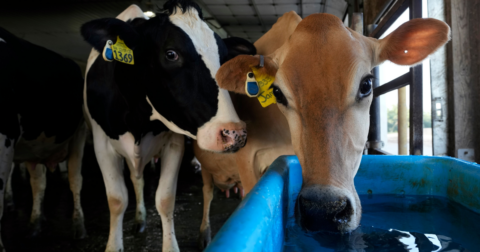
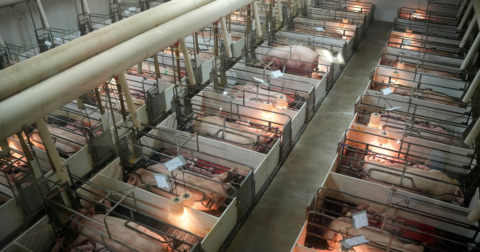
It’s always complicated to definitively answer questions about cancer causation. But a recent report found that levels of nitrates, pesticides, PFAS or ‘forever chemicals’ and radon, all of which are highly present in Iowa, are associated with cancer risk. High levels of nitrates in drinking water are often caused by the overapplication of manure and synthetic fertilizers on farms. Iowa is the state with the most factory farms, and animals in those farms produce 110 billion pounds of manure per year.
Beyond Iowa, nitrate-contaminated drinking water and manure pollution from factory farms have recently come under scrutiny in California, Minnesota, Michigan and other states.
Iowa may be a canary in the coal mine.
Drey was elected in a special election after State Senator Rocky De Witt died of pancreatic cancer in June 2025. Drey’s victory flipped a red seat blue and ended the Republican supermajority in the Iowa Senate.
“The irony of being elected because my predecessor passed away from this horrible disease is not lost on me,” she said in her speech. “Ignoring the environment that Senator De Witt and I shared is a disservice to our constituents. Silence is what perpetuates bad systems.”
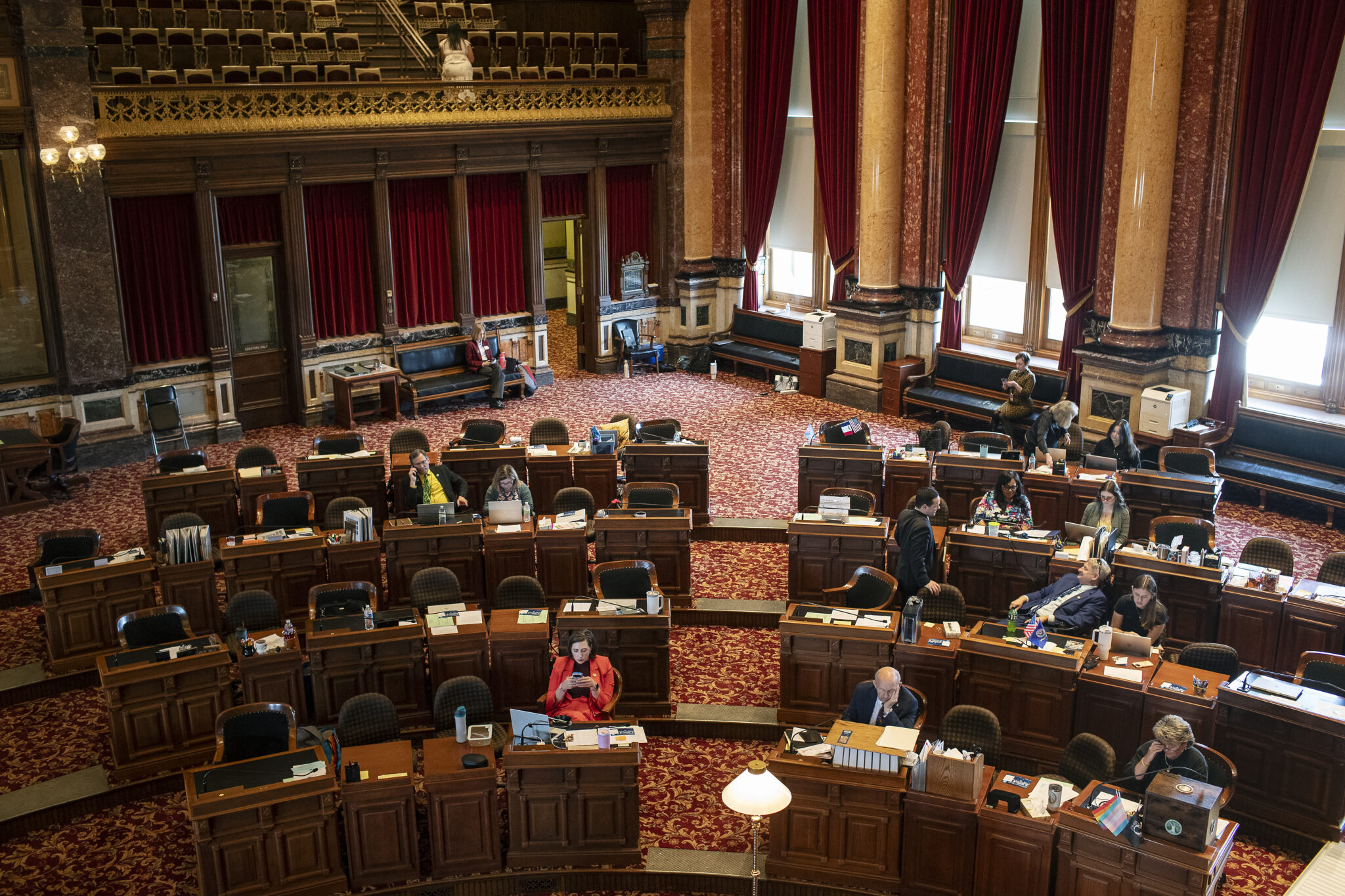
Drey is originally from the Dakotas (a fact which she says occasionally gets her skepticism from lifelong Iowans, despite the fact that she has lived in Iowa for 20 years) and represents Iowa’s first district, which encompasses the majority of Sioux City, Iowa.
Sioux City is perched at the confluence of the Missouri and Big Sioux Rivers in the northwest corner of the state. The town’s largest employers aside from the school district are the Seaboard Triumph Foods pork processing plant and the Tyson beef processing plant just across the river in Nebraska.
One zip code in Sioux City, 51106, just outside of Drey’s district, has the highest incidence of colorectal cancer in the state of Iowa, data compiled by the University of Iowa shows. More broadly, the highest age-adjusted rates of colorectal cancer are concentrated in the northwest corner of the state.
The northwest corner of Iowa is also known for its density of factory farms. The correlation between factory farms and cancer incidence is backed by a new Yale study which found that overall cancer rates were higher in counties near more factory farms in Iowa, Texas and California.

On the state Senate floor, Drey told her colleagues she was “not interested in pretending this is just a private medical matter. It is a public policy failure playing out in my body.”
She tells Sentient that, apart from representing Iowa’s first district in the Iowa Senate, she has few things in common with her predecessor. One is the place they chose to live their lives. The other is that they were both diagnosed with cancer. While she says she does not want to speculate on what exactly is causing the cancer crisis in Iowa, she acknowledges that there is something amiss in the state.
“We have air quality issues,” Drey says. “We also have water quality issues across the state … It is at this point impossible to ignore that something in the state of Iowa is causing our elevated rates and instances of cancer.”
An Iowa Environmental Council and The Harkin Institute report released in March 2026 documents Iowa’s “toxic mix” problem. In a state where 85% of the land is agricultural, Iowans are disproportionately impacted by pollutants such as manure, pesticides and nitrates. The bedrock and soil of the state is also naturally high in radon, a known carcinogen and the second leading cause of lung cancer in the United States. Radon gas can seep into homes through cracks in the foundation.
“We know that there’s something going on in our region, population-wide,” says Audrey Tran Lam, Environmental Health Program Director at the University of Northern Iowa Center for Energy and Environmental Education, and one of the co-authors of the March report.
She describes how environmental and behavioral risk factors make it complicated to determine causation — a persistent challenge with a cumulative disease like cancer. Though the exact cause of a cancer might not be clear, she says, sometimes preliminary evidence of harm is enough to determine that change is necessary.
“We know the extent to which these tendrils seep into different aspects of everyone’s life,” Tran Lam says of environmental risk factors, especially in “regions that are highly concentrated with food or agricultural activity.”
Iowa’s cancer crisis is a systems problem that requires a systemic solution, Tran Lam says. “It’s not just that we can maybe tweak one aspect of one downstream product of what we’re facing and the problem will be fixed. We need to really re-evaluate what is going on here in this region, and if it’s really serving the people who live here.”
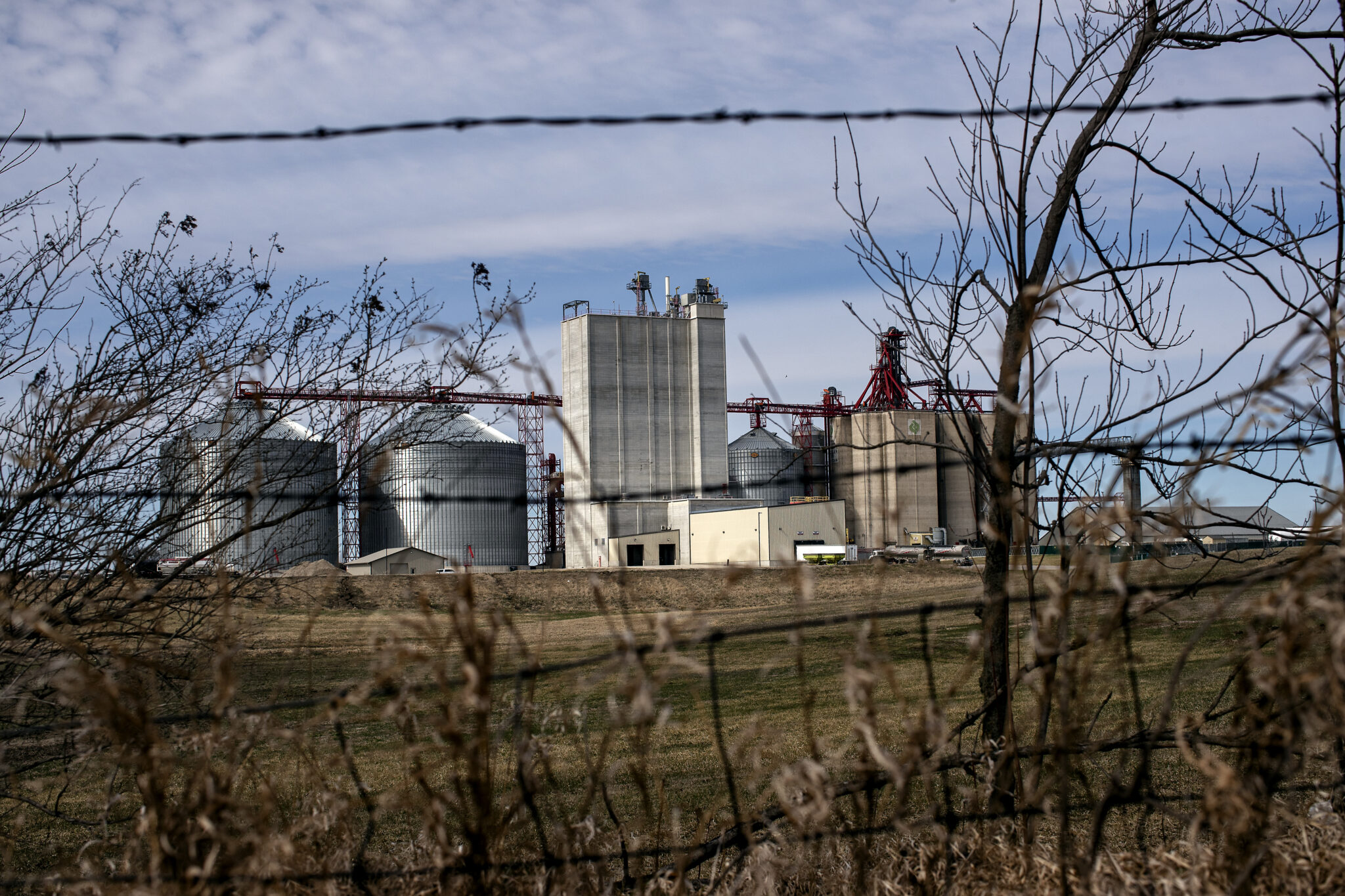
A healthier Iowa population relies in part on the health of the land, Tran Lam says. Her “fantasy” of what Iowa could look like involves diverse crops — more of which feed people, instead of animals and cars — and safe places to recreate and swim in the water. This vision is what gets her out of bed in the morning.
“Baked in that is also better health outcomes,” she says. “That is, a healthier population.”
Drey’s first term in the Iowa Senate included a crash course in legislating as well as being a cancer patient and advocate. “When you tell people that you have uterine cancer, then you have to talk to your colleagues about your uterus,” she says. “If that leads to someone getting the care that they need, or someone having the awareness to make better policy, then mission accomplished, as far as I’m concerned.”
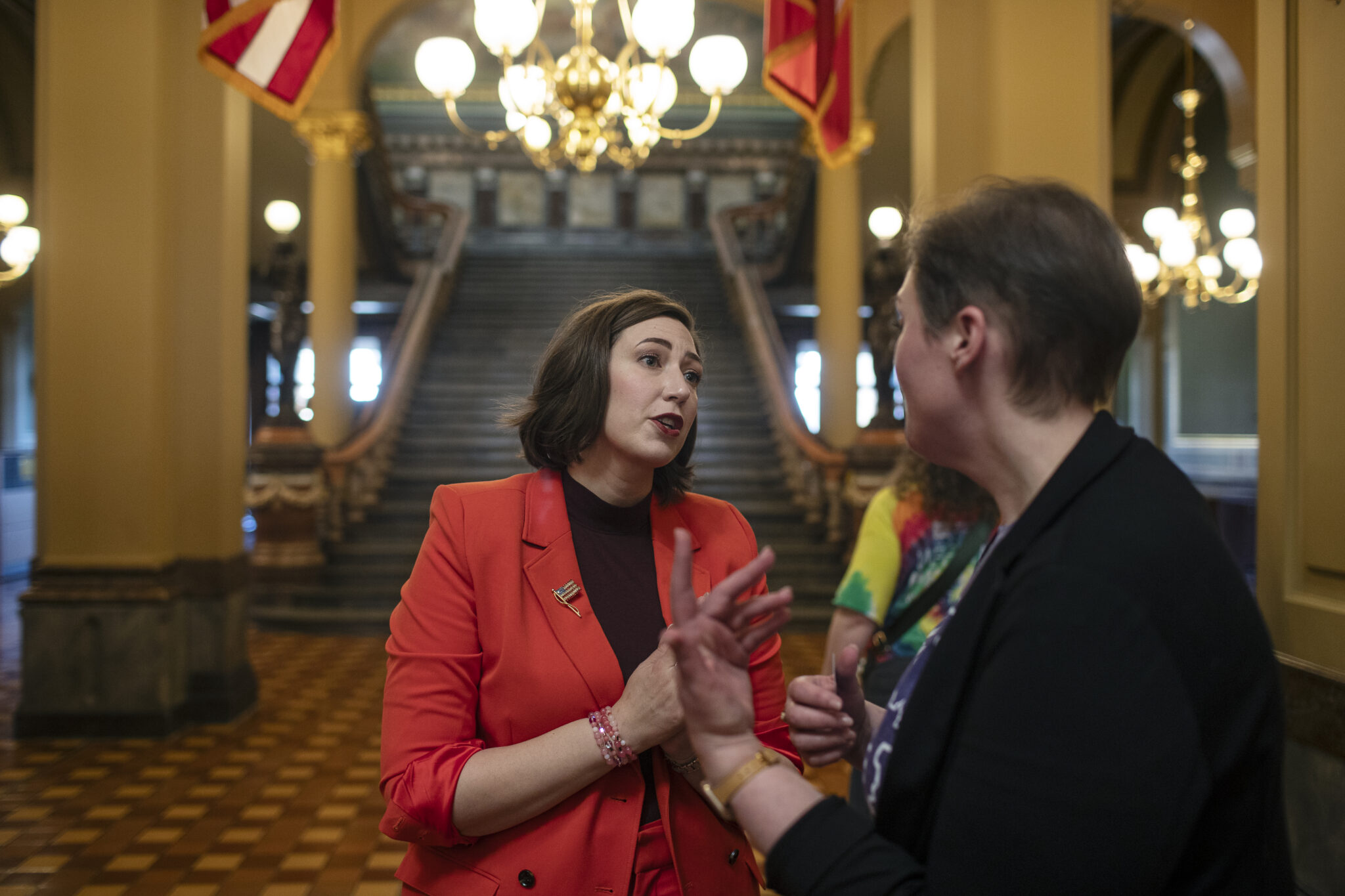
She tells Sentient that she was able to move from her cancer diagnosis to a plan of action quickly because she had the time and resources to advocate for herself within the healthcare system. With cancer, swift diagnosis and treatment can be the difference between life and death.
With this in mind, as a legislator Drey is focused on advocating for better access to screenings, diagnostic testing and overall healthcare support for Iowans.
A few weeks after Drey brought her story forward, Senator Dave Rowley of Spirit Lake announced that he was undergoing treatment for tonsil cancer. On March 13, 2026, Senator Julian Garrett of Indianola announced his prostate cancer diagnosis, making him the third Iowa state senator in three months to announce a cancer diagnosis.
“We have this perception that once someone is elected, their only job is to get reelected,” Drey says, “That leads to this secrecy and lack of transparency around people’s health problems. And for me, from the beginning, I said: this is another tool that I can use to make people feel heard and seen.”
Correction: This article was updated to reflect the fact that Iowa County, Iowa is located just west of Iowa City.
Nina B. Elkadi is a former Editor-at-Large for Sentient. Her investigative reporting explores corporate influence within the agricultural industry, the environmental impacts of factory farming and how negligence impacts consumers and workers. Her work also appears in National Geographic, Inside Climate News, Civil Eats, High Country News, Ambrook Research, JSTOR Daily, Barn Raiser and more. She splits her time between Washington D.C. and her hometown of Iowa City.

Feature
Elections•11 min read
Here’s what the data reveal about the country’s factory farm hotbed.
Inside Iowa•8 min read

Find out how much manure is in your backyard.
Inside Iowa•9 min read