News
There’s a Complicated Gap Between Our Values and What We Actually Eat, Research Shows
Research•6 min read
Feature
A new framework estimates the economic value of animal welfare for policymakers across the globe.

Words by Emily Payne
Conducting a cost-benefit analysis is a standard part of policymaking. Lawmakers and regulators routinely calculate the economic value of civic improvements like cleaner air, safer roads, reduced emissions and public health protections.
But animal welfare lacks reliable ways of quantifying its benefits, says Richard Bennett, professor of agricultural economics at the University of Reading in the United Kingdom. This makes it harder for lawmakers to pass policies that may improve it.
“It just would prove very difficult for policymakers to argue the case for animal welfare policy when they couldn’t actually show what the benefits were in any tangible way,” says Bennett, who has been researching the economics of animal welfare since the mid-2000s.
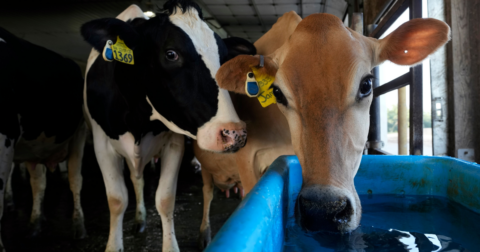
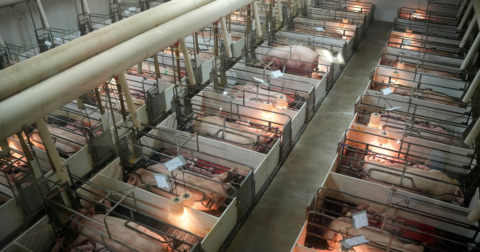
Bennett co-authored a new study in Food Policy that offers a framework for calculating those benefits, estimating billions of dollars in value in the United Kingdom alone through just a few key changes to livestock production practices, such as reducing dairy cattle lameness, eliminating farrowing crates for pigs and reducing broiler stock density.
Already, the framework has been used to assess policies in the UK government’s animal welfare strategy, including phasing out the use of farrowing crates and carbon dioxide gas stunning for pigs.
Researchers say the framework could be adapted globally to offer policymakers a new economic case for improving the lives of farm animals. But others question whether surveys can accurately predict economic benefits — and whether putting monetary value on welfare can fully capture animals’ needs.
The researchers’ approach combined two measurements. First, a panel of 13 independent experts assessed animal welfare — under existing agricultural production systems and then under proposed policies — using a 0-to-100 scale. The score incorporates factors such as animals’ health, housing, feeding, behavior and mental state.
Then, a survey of more than 3,000 U.K. consumers evaluated how much people would be willing to pay for improvements. Respondents were asked to choose among three scenarios: one in which conditions and animal-welfare scores remained unchanged, and two in which welfare improved by varying degrees, accompanied by increases of 2 or 10 pounds (in dollars, a little over $2.50 and roughly $13.50) in their weekly household food bills.
Researchers combined these assessments to estimate what could be the total economic benefit from a range of welfare improvements. Applied to several potential UK policies, the framework estimated that reducing dairy cattle lameness could garner £1.66 billion in economic benefits, which is roughly $2.25 billion USD; eliminating farrowing crates for indoor pigs could result in £1.39 billion or $1.88 billion; reducing broiler stocking density would net £997 million or $1.35 billion USD; and eliminating lamb castration could bring about £717 million or $971 million.
These “benefits” aren’t necessarily added costs to consumers in the grocery store, Bennett explains. They represent the economic value that consumers place on having farm animals experience better welfare — as well as a better food system overall.
The UK government is already using the framework to assess a range of policies to improve the welfare of farm animals, the authors write, in addition to informing the UK government’s animal welfare strategy. And it can be replicated: both the expert panel and the survey can be locally adapted to various production systems and consumer preferences. The authors say the tool can be deployed across countries and regions, potentially impacting the lives of billions of animals.
Previously, each proposed animal welfare policy would require commissioning an expert to perform a cost-benefit analysis for that specific scenario — a lengthy and costly endeavor. But according to Bennett, once the consumer survey is complete, this common economic framework requires only a couple of days of an expert panel’s time.
“Once you’ve got those valuations, you can use them for years then for all sorts of policies,” says Bennett. “You don’t have to go back out and do yet another study for every policy you want to look at.”
The tool’s simplicity helps translate the complexities of animal welfare into a score that policymakers can practically use to make decisions. But its methodology also taps into a decades-long debate among economists around how to gauge willingness to pay.
Economists typically estimate consumers’ willingness to pay using either “revealed preference,” based on real-world actions and purchases, or “stated preference,” relying on survey questions. This study used the latter — a methodology that enables research when there is a lack of market data, such as for animal welfare, but it is known to come with biases.
“The survey itself changes people’s preferences,” says Bailey Norwood, professor of agricultural economics at Oklahoma State University. “Some of them are thinking about it for the first time. They know they’re being observed. They want to be viewed as a good person, even if anonymously.”
This is what psychologists call social desirability bias — survey respondents tend to misrepresent their true selves to make a better impression.For example, historically, more people voted to ban farm animal cages than bought cage-free food products.
“We’re all kind of two-faced, right?” says Norwood. A stated preference survey “will be really good at showing us the reality of that one face. But how well it does at describing their behavior behind our backs, you need other studies to find out.”
Norwood has conducted more than 30 willingness-to-pay surveys, and he says he expects all such data to be inflated to a certain degree. People often overstate how much they will pay for a product or service, Norwood explains, because no real money or consequence is involved.
Finally, there is the factor of salience: Consumers might respond one way when confronted with the realities of farm animal welfare in a survey, but as there is often little information about welfare on grocery shelves, it may be difficult to predict whether consumers’ stated preferences will translate to real purchases.
The growth of “free range” egg labeling, however, suggests that they may: Free range eggs have expanded from 10% of total UK egg production in 1996 to about 75% today.
“It’s a ridiculously wasted opportunity,” says Bennett. “Certainly in the UK, I think people would pay a lot more even in these difficult times for higher welfare food products if they knew they were higher welfare.”
Still, Bennett emphasizes that the tool does not seek to simply assess willingness to pay. The results point to how much value consumers place on animal welfare — something policymakers can use.
“What we’re trying to get out from people is the value to them of having animals with higher welfare, and that’s a pretty complex thing to do,” says Bennett. “You have to boil it down into a believable scenario … because otherwise people just don’t give you sensible responses.”
But even if economists could reliably predict purchasing decisions, others raise a more fundamental question: Should the value of animal welfare be based on whether humans are willing to pay for it?
With willingness to pay, “if you improve the welfare of a pig, you don’t value the increase of the welfare for the pig,” says Nicolas Treich, research associate at the Toulouse School of Economics in France. “You value the increase of the welfare of the human because the human cares about the pig.”
In his 2026 book Animal Economics, Treich describes two ways of accounting for animal welfare. A “direct” approach treats animals’ welfare as valuable in its own right, alongside human welfare. An “indirect” approach measures the value of animal welfare through human preferences, such as consumers’ concern about it and willingness to pay for it.
“The problem is that [the indirect approach] is anthropocentric,” says Treich. “So if people don’t care at all about fish, they are not going to be willing to pay for fish. But maybe fish matter. They have welfare. So what do we do with that?”
Treich views the Food Policy study as a hybrid approach, with the welfare assessment being direct, and the consumer survey being indirect. Practically speaking, he says, this may be how progress is made right now — animal welfare must be measured to be counted by policymakers — and he thinks the Food Policy study provides an important tool for cost-benefit analysis.
“We humans have power on Earth. We decide, we vote. Animals don’t,” says Treich. “So at the end of the day, the direct approach doesn’t really have political traction. It’s very difficult to move forward.”
Bennett agrees that human judgments are inherent to any animal welfare assessments. And from a policy perspective, he says, humans’ assessment of animal welfare is better than none at all. This enables the cost-benefit analysis that brings animal welfare into policymaking conversations.
“It is a gross oversimplification that we use to get a value on the benefits where they have no explicit value at all,” says Bennett.
“I’m hoping this will make an enormous difference for government to be able to make the case that legislation to improve the welfare of farm animals is worth doing.”
Emily Payne is a journalist covering the intersection of food, agriculture, health and climate. Currently based in Denver, Colorado.

Solutions
Research•6 min read
Feature
At the center of protein maxxing, whey products require energy-intensive processing and emissions-intensive milk and cheese production, with climate consequences if unchecked.
Culture•7 min read
Perspective
If you’re looking to reduce your water impact, eating less meat is a great place to start.
Culture•8 min read