News
Farmed Salmon May Not Be as Nutritious as It Once Was, New Research Suggests
Health•5 min read
News
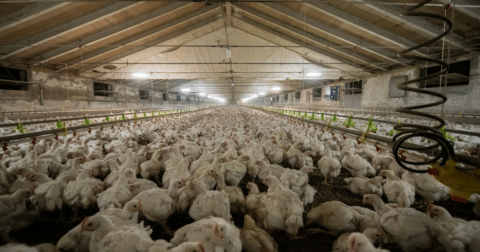
The rapid growth of chickens — now, 31 billion globally — has sped up pathogen evolution, boosting persistence, antibiotic resistance and spillover to humans.
News • Health • Public Health

Words by Natasha Gilbert
Intensive farming, where animals are kept in close quarters, creates environments that encourage the evolution of harmful bacteria and other pathogens so that they gain traits making it easier to infect people and more difficult to cure, a new study suggests.
Hygiene and welfare standards are often low on industrial farms, also called factory farms, and the rising widespread use of antimicrobials has led to concerns that overuse in animal farming is playing a key role in driving antimicrobial-resistant infections in people.
To gain insights into how intensive animal farming influences the evolution of harmful bacteria, a new study investigated how modern densely populated chicken farms have shaped the evolution of strains of Campylobacter jejuni bacteria, which are the leading cause of gut illness and diarrhea from bacterial food poisoning in people, typically after eating contaminated chicken.
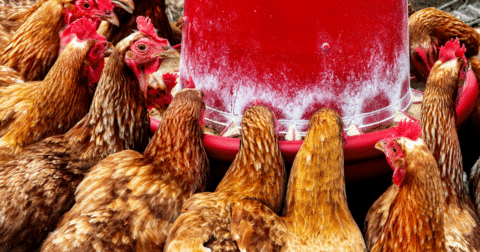
Chickens are of particular interest because populations have shot up sevenfold since the 1960s due to agricultural growth and increasing demand for poultry. Today, roughly 31 billion chickens inhabit the globe. Together, poultry accounts for around 70% of all bird biomass on Earth.
The results showed that C. jejuni evolved rapidly in chickens, developing genetic strains resistant to antimicrobials and more likely to adapt to other species, which makes it easier for them to infect people.
Published in the peer-reviewed journal Proceedings of the National Academy of Sciences, researchers from the universities of Oxford and Sheffield in the United Kingdom analyzed the genetic information of 2,747 C. jejuni samples from wild birds and chickens. They found that since 1900, the transmission between chickens and wild birds has increased by more than 100-fold.
Farming intensification has changed how pathogens interact between populations of wild birds and domesticated chickens, says Oakem Kyne, a lead researcher on the study at the University of Oxford.
There is a much wider variety of chicken-adapted C. jejuni strains now than before they were domesticated, with a large jump since 1900 when modern poultry farming intensified, says Kyne.
The transmission across species, or spillover, can occur in this case when there is direct contact between the wild birds and chickens or contact with the other species’ poop. The chickens act like “sponges,” their modeling showed, absorbing different bacterial strains from the environment, says Kyne.
“Having a lot of different strains of pathogens within these chickens means that there’s a lot more potential for human disease,” explains Kyne. The researchers also found that chicken-adapted strains developed genetic traits that help C. jejuni survive and become more antimicrobial-resistant. For example, some strains are resistant to the common antibiotic tetracycline, which is used in intensive poultry farming and to treat infections in people.
There was also evidence that some strains gained a better tolerance for environments with oxygen, and the researchers suggested this could potentially enable them to survive on food more easily and then be more likely to infect people.
Andrew deCoriolis, executive director of Farm Forward, an advocacy group campaigning to end factory farming, says that industrial poultry production is a breeding ground for bacteria and viruses that pose risks to public health.
In a report published earlier this month Farm Forward shows that modern poultry farming is also supercharging strains of salmonella that are becoming easier to spread and increasingly resistant to certain antibiotics.
Compared with 48% a decade earlier, in 2025 around 73% of poultry samples that tested positive for salmonella were resistant to at least one antibiotic that the World Health Organization considers highly important for human medicine.
Protecting the health of wild and farmed animals requires better biosecurity to prevent spillover, or transmission from animal to human, says Kyne. Farmed populations must be better isolated so that diseases aren’t entering the food system or escaping into wild populations, he says.
“When poultry companies cram tens of billions of birds into industrial facilities and dose them with routine antibiotics, they’re not just risking outbreaks,” says deCoriolis. “They’re running an evolution experiment on a massive scale and the bacteria are winning.”
Natasha Gilbert is a freelance journalist reporting on the environment, science and health. Her work has been supported by the Fund for Investigative journalism and published in Grist, the Guardian and US Right to Know, among others. She is a former staff reporter for Nature. Natasha likes telling people's stories and getting at the truth. She is a good listener, a keen observer and a bit of a cynic.

News
Health•5 min read

Monona County officials and residents fear a repeat of the communication gaps and loopholes that left them caught off guard by a plan to import treated slaughterhouse manure.
Health•9 min read

Explainer
Research links hurricanes and drought with increasing risks of antibiotic resistance genes, which are concentrated in manure.
Health•5 min read