News
There’s a Complicated Gap Between Our Values and What We Actually Eat, Research Shows
Research•6 min read
Explainer
Gelatin has made a comeback thanks to “natural” wellness trends, despite modest evidence for its effectiveness and ongoing concerns about where it comes from.

Words by Jessica Scott-Reid
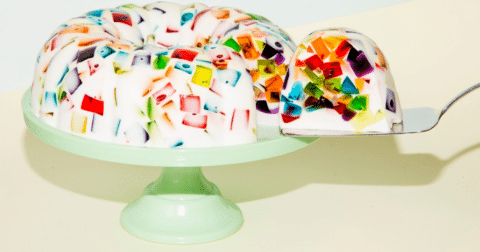
Known as “America’s most favorite dessert” at the turn of the twentieth century, jiggly, bright Jell-O was once a symbol of modernity and food innovation. Into the 1950s, the brand of gelatin mixes became a fixture of American life, with molded desserts and salads, also called aspics, centering tables and celebrated as fun, convenient and versatile. But as consumers grew wary of processed foods, Jell-O fell from its midcentury dominance, with sales steadily dropping since the 1980s.
Now, American food politics and wellness culture are shifting again. Today, the main ingredient of Jell-O — gelatin — is seeing a surge in popularity and sales, bolstered in part by social media influencers who promote its supposed nutritional and functional benefits.
The trend follows in the footsteps of collagen and tallow as part of the broader high-protein and “natural” wellness craze, but TikTok’s viral “gelatin trick” and “natural Botox” are far from natural. And questions trail the trend about how this industry impacts the environment and animal welfare.
Gelatin’s story begins far before its role as a household favorite of the 1950s. One of the earliest written records appeared in Baghdad, where a 10th-century Arabic cookbook held a written description of extracting a gel-like substance from boiling fish heads. However, Denis Papin of France is most commonly cited as the first person to produce gelatin in 1681 by boiling animal bones. According to historical records, Papin developed an early version of the pressure cooker, known as a “digester,” to soften bones and extract the gel‑forming material that he suggested using as a food source.
By the Victorian era, gelatin had become a food of the upper class. Fancy gelatin molds became a status symbol reserved for royalty and the wealthy. What appeared posh and refined on the table was, in fact, the product of significant human labor and animal use. Before factory farming, industrial production and powdered mixes, gelatin had to be painstakingly extracted from animal parts such as calves’ feet, in a slow process carried out by cooks and other servants.
The popularity of gelatin has ebbed and flowed over recent decades, and today it has some unusual food applications beyond gelled, synthetically-colored desserts (though jellied salads are also making a comeback). Some social media users are now promoting an edible “homemade Botox,” often made with a mixture of common “clean” foods and beverages such as fruit juice, green tea, yogurt or honey, along with the odorless, tasteless gelatin, which is derived from collagen. Others are promoting the same recipes as a technique for weight loss, sharing recipes for gelatin squares they claim are filling and can prevent overeating.
For the most part, these claims overstate the evidence. While some evidence suggests gelatin consumption can support collagen production, the effects are modest, and researchers note that the body processes collagen just like any other protein. The Nutrition Source at Harvard T.H. Chan School of Public Health points out that high-protein foods of many kinds — including soy and other legumes, not just animal sources — provides the amino acids needed to produce collagen, and that ”natural collagen production is supported through a healthy and balanced diet.”
The Nutrition Source also notes that “there is a lack of research to show that eating collagen can directly benefit skin or joint health.” This is echoed in a 2025 Allure Magazine story on eating gelatin gummies for better skin, which tells readers: “Don’t fall for this nonsense.”
And though some studies suggest eating gelatin can modestly increase feelings of fullness, there is little evidence that it leads to sustained weight loss. Consuming gelatin cannot burn fat nor boost metabolism.
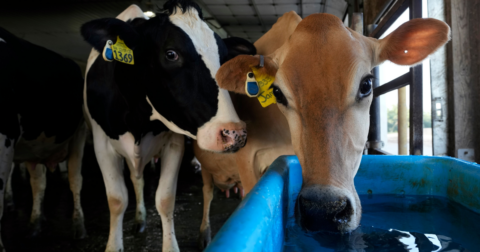
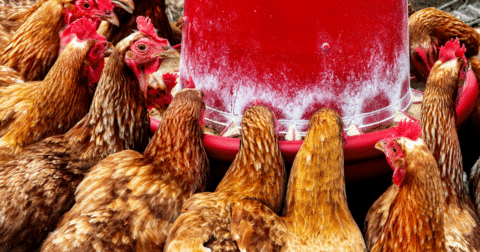
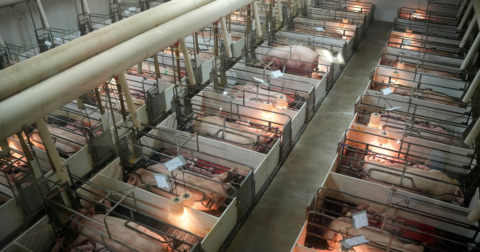
Though it may be touted as “clean” and “natural” on TikTok, gelatin production begins most commonly on factory farms, where animals are raised in intensive confinement. After being sent to slaughter, certain parts of those animals that are less commonly eaten — including pig skins, cattle bones, tissues and connective tissue, as well as fish skin and scales — are cleaned and boiled to break down the byproducts into collagen, then treated with an acid or alkali to extract gelatin, which is then filtered, concentrated and dried. In addition to foods — including candies and marshmallows — gelatin is a common ingredient in a broad range of products, such as medications, beauty products, adhesives and photographic materials.
And the market for it is booming. “The global gelatin market is experiencing a period of robust growth,” according to market research. In the United States, the gelatin market is projected to grow significantly to an estimated value of $602.32 million by 2032.
But concerns persist about the ingredient’s reliance on factory farming operations that are tied to high greenhouse gas emissions, extensive land and water use, in addition to mass animal slaughter. A report on the food-grade gelatin market for 2026 to 2035 identifies “concerns over factory farming practices and the environmental footprint of gelatin production” as part of the challenges facing the gelatin industry. The report shares that these issues, combined with a “lack of transparency in gelatin sourcing,” continue to challenge “the market’s reputation and growth potential.”
From royal dining rooms to midcentury molded salads to today’s wellness trends, gelatin has been continually reshaped to match the culture of the moment. Its latest rebrand as a “natural” health aid reflects a broader shift in food culture — one that seems to blur the realities of its source. For all its shifting identities, gelatin is a product of industrial animal agriculture, dependent on systems that raise persistent concerns about environmental impacts and animal welfare.
Jessica Scott-Reid is Sentient's Disinformation Correspondent covering disinformation, misinformation and the impact of both on culture. A freelance journalist based in Canada, Jessica has covered animals, the environment and food systems for major media in Canada and beyond, for the last decade. Jessica has been a contributor to Sentient since 2019, and her work also appears regularly in The Globe and Mail, Toronto Star, Winnipeg Free Press and Corporate Knights Magazine.

Solutions
Research•6 min read
Feature
A new framework estimates the economic value of animal welfare for policymakers across the globe.
Research•7 min read
Feature
At the center of protein maxxing, whey products require energy-intensive processing and emissions-intensive milk and cheese production, with climate consequences if unchecked.
Culture•7 min read