News
Farmed Salmon May Not Be as Nutritious as It Once Was, New Research Suggests
Health•5 min read
News
The fast food giants are silent on whether they’re still pursuing targets set a decade ago.
News • Health • Public Health

Words by Natasha Gilbert
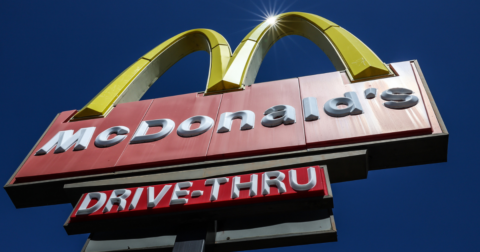
Around a decade ago, major fast food companies like McDonald’s, Subway and Taco Bell pledged to cut the routine use of antibiotics in raising animals for their meat products. The public widely lauded their efforts. Yet these companies have failed to meet key commitments, and they remain silent on whether they’re still pursuing set targets, finds a new report by advocacy groups the Food Animal Concerns Trust and U.S. PIRG Education Fund.
About 66% of all medically important antibiotics in the United States, or those that can be used in human medicine, are given to animals raised for food. Much of these critical drugs are not used to treat sick animals. Instead, farmers use antibiotics to prevent infections caused by unhealthy conditions like crowded living quarters that are rife in intensive farming environments.
Overuse can pressure bacteria to develop resistance to antibiotics, making infections more difficult to treat, says Meghan Davis, an associate professor in environmental health and engineering at Johns Hopkins Bloomberg School of Public Health who was not involved in the report.
Some of the bacteria that develop antibiotic resistance in livestock can also infect people. They can also spread resistance genes to different species of bacteria, including those that are deadly to humans.
These processes help create superbugs that cause 2.8 million antibiotic-resistant infections in the United States and kill more than 35,000 people every year.
Following pressure from consumers and advocacy groups in the mid to late 2010s, fast food companies McDonald’s, Taco Bell and Subway committed to cutting the use of antibiotics in chickens and cows that their suppliers raise for their meat products.
These companies all achieved their goals of eliminating medically important antibiotics in their chicken products sold in the United States, according to the report. But they’re falling short of their goals for beef.
“When it came time to fulfill the commitment, they didn’t do anything,” Steven Roach, a co-author of the report and director of the Safe & Healthy Food Program at the Food Animal Concerns Trust, tells Sentient.
In 2018, two years after McDonald’s announced it had stopped using medically important antibiotics in its U.S. poultry supply, the company set a 2020 target for establishing antibiotic reduction targets in its beef. At the time, the company wrote in a statement that it was “doing our part to help preserve the effectiveness of antibiotics for human and animal health in the future” and that it hoped to “help drive industry-wide progress.”
But McDonald’s did not create those targets. Instead, the company watered down its ambitions in a 2022 progress report, replacing its goal of decreasing overall antibiotic use in its suppliers’ cows with “responsible use targets.”
In a 2025 update, McDonald’s simply restated its goals, adding nothing about its progress. It has not disclosed if or how much it has reduced antibiotic use in its cows raised for beef. McDonald’s did not respond to a request for a comment from Sentient.
Subway and Taco Bell have displayed a similar lack of progress, Roach says.
In 2015, Subway pledged that it would only serve beef and pork raised without routine antibiotics by 2025. In a statement announcing the planned shift, the executive vice president of SUBWAY’s Independent Purchasing Cooperative at the time, Dennis Clabby, stated, “We hope that this commitment will encourage other companies in our industry to follow our lead, and that, together, this will drive suppliers to move faster to make these important changes for consumers.”
Similarly, Taco Bell pledged in 2019 to reduce its antibiotic use in beef 25% by 2025. By the end of 2022, Taco Bell stated it was purchasing around 15% of its beef from sources that use fewer antibiotics.
Neither Subway nor Taco Bell has publicly reported whether it has achieved its 2025 goals, according to the report. Roach adds that neither fast food chain responded to emails and letters requesting updates. Subway and Taco Bell also did not respond to requests for comment from Sentient.
Davis, a former dairy veterinarian, says it can be more difficult for farmers to cut antibiotics in beef and pork production compared to chicken because cows and pigs grow more slowly and have more complex lifecycles, making them more susceptible to infections.
Creating antibiotic-free farming environments requires improving animal welfare conditions, such as by providing animals more space, and boosting biosecurity to prevent pathogens from entering farms, she says. The United States Department of Agriculture suggests biosecurity measures such as isolating sick animals and disinfecting equipment and vehicles entering facilities.
An increase in diseases in farm animals like H5N1 bird flu and New World Screwworm make it even harder to reduce antibiotics use because these viruses weaken animals’ immune systems, making them more susceptible to bacterial infections, says Davis.
Overcoming these challenges is crucial because bacteria can reproduce in just a few hours, allowing them to evolve resistance much faster than scientists can develop new antibiotics.
However, the problem only seems to be getting worse. The Food and Drug Administration (FDA) reported a 16% hike in sales of medically important antibiotics for use in animal agriculture between 2023 and 2024. It’s not clear what’s driving the rise in sales, but it’s not due to farmers raising more animals.
There has been some progress, at least on the policy front. In August, the FDA overhauled its evaluation process for human health risks from the routine use of antibiotics in meat production, updating it from the original 2003 version to align with current scientific understandings. This reform should help preserve the most critical medicines for human health, Roach says.
This is a step in the right direction, but it’s not enough on its own. Davis says farmers and regulators need to do everything they can to slow the advance of resistant bacteria, including reducing antibiotic use in livestock. “We’re already behind the curve,” she says.
Natasha Gilbert is a freelance journalist reporting on the environment, science and health. Her work has been supported by the Fund for Investigative journalism and published in Grist, the Guardian and US Right to Know, among others. She is a former staff reporter for Nature. Natasha likes telling people's stories and getting at the truth. She is a good listener, a keen observer and a bit of a cynic.

Health•9 min read
News
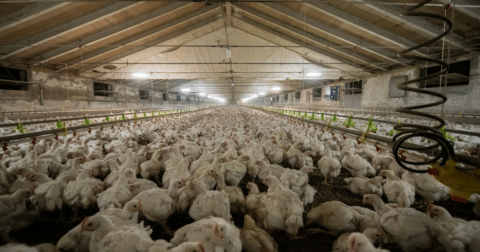
The rapid growth of chickens — now, 31 billion globally — has sped up pathogen evolution, boosting persistence, antibiotic resistance and spillover to humans.
Health•3 min read

Explainer
Research links hurricanes and drought with increasing risks of antibiotic resistance genes, which are concentrated in manure.
Health•5 min read