Feature
Too Few Vets, Too Many Animals: Inside the Farm Veterinarian Shortage
Food•6 min read
Solutions
While the country’s farms tend to have high animal welfare standards, Bhutan also imports most of its meat.

Words by Rebecca Root
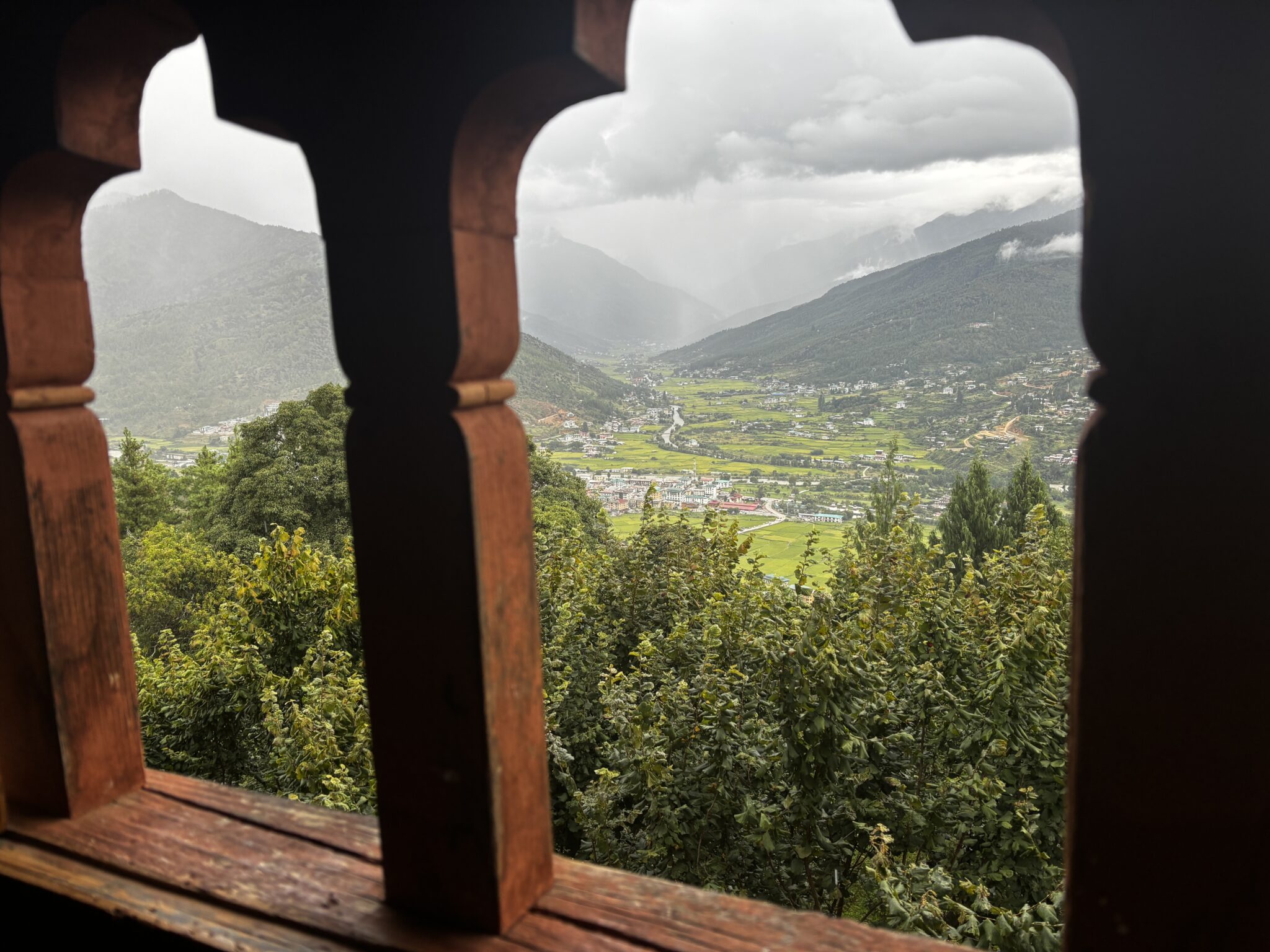
Buddhist temples nestle themselves high into the Bhutanese hills that crescent their way down into fields of maize and rice, barley and buckwheat. The Himalayan country, lying at India’s northeastern tip, has become known for promoting national happiness with a dedicated index and a commitment to becoming 100% organic by 2035. The sweeping valleys visible from almost every vantage point are almost untouched by synthetic pesticides and the animals are farmed on a small scale rather than primarily on industrial operations, like the vast majority of farm animals elsewhere.
Bhutan’s climate accomplishments have also made news. Bhutan is the world’s first carbon negative country and about 95% of farmland is considered organic by default because of the lack of synthetic chemicals and fertilizer used. Only a few alternatives, including natural pesticides, are permitted, in line with Bhutan’s organic standard, which also stipulates that livestock’s physiological and behavioral needs should be given prime importance. In practice, that means most farmers only keep a few cattle, goats and chickens, says Sonam Tashi, associate professor in the College of Natural Resources at the Royal University of Bhutan. This is strikingly different from the United States, where on some farms, hundreds of thousands of animals are raised in industrial facilities, polluting the atmosphere with vast amounts of carbon emissions. Globally, a third of all emissions come from food, with most of those food-related emissions coming from meat, especially beef.
In Bhutan, the population eats a lot less meat than elsewhere — the average yearly per capita supply of meat per person is about 33 pounds (15 kg) compared to 269 pounds in the United States according to 2023 data — and this keeps food-related emissions low, even compared to other countries in the region.
There is much the rest of the world can learn from Bhutan, says Peter Stevenson, chief policy advisor at animal welfare organization Compassion in World Farming. “Bhutan is quite special and it’s quite an important time to be rethinking how we farm. In other words, Bhutan should be seen as a model.” The biggest obstacle to any country adopting a similar model, he says, are the major global industries that are financially dependent on factory farming — fertilizer and pesticide manufacturers, animal pharmaceutical companies, livestock genetics companies — and would resist a shift away from it.
But Stevenson is also quick to point out that Bhutan faces some of the same challenges as other countries: meat imports, which account for 56% of overall meat consumption in the country, are often sourced from countries such as India, where industrialized livestock farming is more common. And as it looks to scale up its domestic meat production to reduce the need to import, there are concerns that, like other countries that have expanded into industrialized farming, what Bhutan may gain in terms of productivity could come at the cost of animal welfare and protecting the environment from further carbon emissions.
This would sit in contrast to Bhutan’s ethos, which has historically viewed well-being, environmental stewardship and cultural preservation as of equal importance with economic growth. “Of course, no doubt, we must continue to improve productivity,” said Bhutan’s Prime Minister, Tshering Tobgay. “But we also need to ask a deeper question: what are our food systems ultimately for?”
Centering its agricultural systems around that question means biodiversity is protected and animal welfare is prioritized. “Because of the Buddhist sentiment, the animals are not kept for slaughtering, it’s just for milk, cow manure and cow urine,” says Tashi.
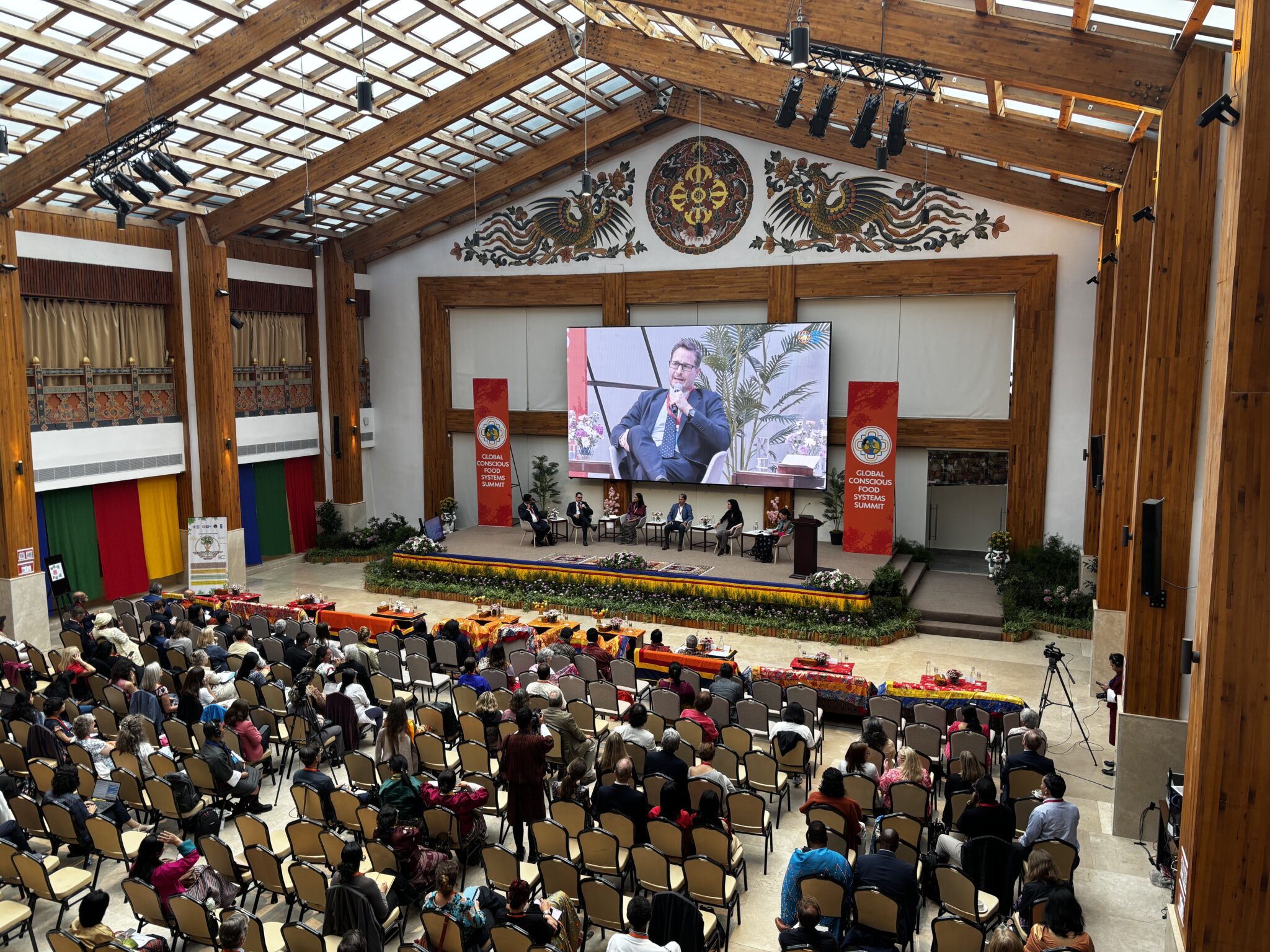
At a recent summit co-hosted by Bhutan and the United Nations Development Programme, Bhutan was largely touted as a model other countries could emulate as food systems around the world buckle under climate challenges, profit margins and resource depletion.
The system is broken, says Andrew Bovarnick, global head of food systems at UNDP, with too much focus on profit and not enough on people and planet. As it stands, food production is responsible for a third of greenhouse gas emissions, intensive livestock farming is driving up the risk of disease among animals and humans, and processed foods high in sugar and salt contribute to the growing number of noncommunicable diseases. “The current system also leaves farmers open to shocks,” he says. For example, the war in Ukraine and the conflict in the Strait of Hormuz “have both led to dramatic increases in the price of fertilizer, agrochemicals, which is having a direct impact on farmers, particularly in Africa.”
To overhaul this and better provide for people, UNDP is pushing for countries to take what it calls a conscious approach to food systems, where leaders make decisions about “how food is grown, governed, financed, prepared, and consumed” based on inner values such as empathy and deep connection.
“Wouldn’t it be amazing to go into a meeting in some government ministry somewhere and everyone’s sitting down and having a heartfelt conversation about farmer livelihoods, about forest conservation etc., and they’re generating policies that are really optimizing public welfare and environmental sustainability?” says Bovarnick.
That is the way Bhutan, which aims to be food self-sufficient by 2029, has long approached its decision-making, opting to have few commercial slaughterhouses and factory farms, limiting chemical fertilizer and engaging in traditional farming practices.
But it isn’t perfect, says Stevenson, referencing the country’s large meat imports. “If you’re just exporting your problems, bringing in meat from or eggs from elsewhere, possibly produced in rather bad, unsustainable and cruel ways, that’s not helpful and it’s not really in accordance with the Buddhist spirit,” says Stevenson.
He is also concerned about the country’s plans to ramp up domestic meat production in order to meet its self-reliance goals, with plans to add more broiler farms, pig breeding operations and fish farms.
There is an amended Livestock Bill currently awaiting royal assent, which aims to modernize the agriculture sector by setting hygiene and animal welfare requirements for more meat-processing and animal breeding facilities. Critics say this promotes the creation of more slaughterhouses and commercial operations, but the government says its intention is to make meat production more productive in a way that strengthens animal welfare.
“What I’d say to Bhutan is: Don’t change your traditional organic approach. Yes, there are probably ways of making it better. Yes, we need to rethink the import of meat so you have to produce it for yourself, but again, not in a factory farming way,” Stevenson says. The Agriculture and Livestock Ministry told local media that they remain committed to “clean meat production that meets safety and sanitary standards.”
With increased meat production will, however, come heightened carbon emissions but the country has no intention of losing its carbon negative status. Government officials argue that the country’s forests, which cover 70% of the country, can continue to act as a carbon sink offsetting the extra emissions while improved operations in terms of better quality animal feed and pasture and manure management can keep emissions at a minimum.
Climate change poses an additional challenge to farmer livelihood and food production in the landlocked country. Glacier-triggered flooding and landslides are common occurrences that destroy crops while a warming temperature brings new pests and diseases.
At the same time, the agricultural workforce is ageing and simultaneously depleting as young people leave rural areas in search of more lucrative opportunities in cities or overseas. “Actually nowadays the youths are not interested in working on the farm, so in my village there’s no one my age. Everyone is going abroad or to the city,” says Passang Om, a 28-year-old female farmer who uses TikTok to inform young people of the value in farming. “Our parents worry that working in the village will stop.”
Any agricultural producers seeing Bhutan as a potential business opportunity will have to adhere to the country’s conscious ethos, says Tashi Dorji, director of Bhutan’s Department of Agriculture Marketing and Cooperatives. He hopes the country will emerge as a health foods hub, suggesting potential investment in buckwheat and quinoa. “If it’s a livestock product, we would like to target our free-range eggs, then our trout,” he said.
Bhutan does not have all the answers, said Tobgay, but believes it has valuable experience that could be learned from as the world continues to grapple with better ways of feeding its population. As Bhutan’s food production expands, the choices that are made will be significant. “How we define progress influences how we pursue it.”
Rebecca. L. Root is a multimedia journalist based in Bangkok but reporting globally. She covers humanitarian aid, human rights, global health, development and climate, among other things. Her work has featured in The Guardian, The Telegraph, BBC, Devex and other international publications.
Feature
Food•7 min read
Feature
Cooke Aquaculture touts the jobs its salmon farms bring to the state, but local critics say the potential costs to their waters, livelihoods and wild Atlantic salmon outweigh the benefits.
Fisheries & Aquaculture•9 min read
Investigation
JBS and Cargill plants across the country are accused of pressuring unions into either accepting the same low wage structure, or mere nickels apart. The result? The largest meatpacking strikes…
Food•13 min read