News
Marine Heatwaves and El Niño Are Disrupting Fisheries
Climate•6 min read
Feature
But no matter the way it’s raised, beef comes with a steep climate cost.

Words by Claudia Steiner
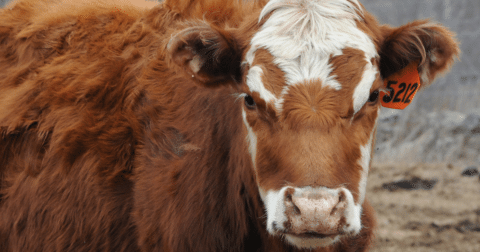
The beef industry is responsible for one-quarter of global greenhouse gas emissions from food production, making it a top contributor to the climate crisis. The coveted “certified organic” label implies environmental sustainability for many consumers — but how does organic beef actually impact the environment compared to its traditionally farmed counterpart. A new pre-print study compares the carbon emissions and other environmental consequences of traditional, grain-fed farming with organic, grass-fed beef farming, and reports that organic beef farming emitted nearly twice as much carbon as regular farming but may beat out conventional beef by other metrics.
The research on beef — organic or conventionally farmed — and climate impact is clear. As the global population and demand for food grows, so too will agriculture emissions. Two major reports from the World Resources Institute and the EAT-Lancet Commission found that people living in the Global North will need to consume less beef to curb global greenhouse gas emissions enough to limit the effects of climate change.
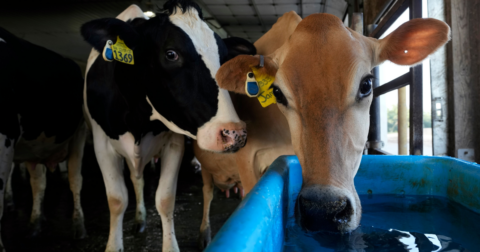
The U.S.-Brazilian research team compared organic beef farming, which feeds livestock through pasture grazing and avoids synthetic fertilizers, and conventional beef production, which feeds cattle in confined feedlots. Using 25 years of data from the New Mexico State University Clayton Livestock Research Center and a pre-established farming statistical model, the team simulated annual yields for each type of beef production.
In their preprint, a not-yet-peer reviewed manuscript detailing their study, the authors report that organic beef farming is actually more environmentally harmful than conventional methods in terms of four impacts — carbon emissions, water use, reactive nitrogen loss and fossil fuel use. Their results align with previous comparisons, which illuminate how organic farms, like conventional ones, emit a copious share of world emissions.
The most significant difference between the organic and conventional farming simulations was carbon emissions, where organic beef emitted 95% more than conventional production for every kilogram of live cattle body weight produced. The animal’s body weight is a way of calculating how much meat the farm can produce per animal.
This figure includes emissions from the production of the crops used to feed the animals, the equipment and fuel needed for the farming operation and the animals themselves — enteric methane emissions, or methane belched out by cows and other cud-chewing animals, account for 17% of global anthropogenic greenhouse gas emissions.
The authors didn’t take into account emissions from land use, but acknowledged that expanding beef production could contribute to deforestation, which would see the destruction of carbon-storing forests.
It also includes emissions from soil. Conventional farms use a mix of manure and synthetic fertilizers to prime their soil to grow food for animals, the creation of which leads to greenhouse gas emissions. Organic farms, on the other hand, use manure to fertilize the soil — but, because the nutrients manure provides to the soil cannot be controlled and adjusted the way fertilizer can be applied manually, there might be more nutrients available than needed, and they may be released in the form of emissions from the soil.
Conventional farms’ emissions can be more intensive than ones from organic farms, but calculating emissions mostly comes down to productivity — in other words, the ratio of inputs to outputs, or resources used to food produced. Because conventional farms are more “productive,” meaning they produce more meat by packing in a greater number of animals in the same amount of space as conventional farms, their emissions are considered less intensive than those of organic farms, who produce less beef altogether.
Using data from a meta-analysis of 100 life-cycle assessment studies of organic and conventional farming, Our World in Data showed that there was no statistically significant difference in greenhouse gas emissions between the two types of production — for animals or crops. While the data revealed that organic farming emits less carbon per unit of land, it also produces less food than conventional farming per unit of land. Another way to look at it: in order to produce the same amount of beef, organic farms need more land, and that land has a climate-emissions cost.
Both simulated farms released excess nitrogen in the forms of ammonia and nitrous oxide into the surrounding environment, through cattle urine and feces. The conventional farm even emitted more, but the lower density of animals in the organic farms meant that there was more nitrogen emitted per kilogram of added weight to the cows.
The organic farm did win at retaining nutrients in its soils — an outcome not always seen in these types of assessments. The conventional farm, simulated to include the effects of synthetic fertilizer on its soil, lost 77% more nitrogen — a testament to the water and air pollution fertilizer causes.
The findings tell a more complicated story than a resounding environmental victory for conventional farming, however. The scientists acknowledge that they only accounted for so many environmental factors even though they claim organic farming would score more favorable marks for conservation and biodiversity — arguing that organic practices have a lower impact on neighboring wildlife habitat and land. Organic farms can also support better air quality than conventional ones, the researchers say. But the more land needed to produce beef, the more forests and other wild landscapes that are gobbled up by expanding cattle ranches and feedlots. And beef, whether raised on a conventional feedlot or an organic cattle ranch, eats up a whole lot of land.
Claudia is Sentient's Editorial Fellow. Her background is in science journalism and environmental communications and she received a master's of Science Communication from the University of California, Santa Cruz. Her work has appeared in Science, Nature, Knowable, Mongabay, the Monterey Herald, Knee Deep Times and other publications.

News
Climate•4 min read

News
Are four years of pro-environment policies about to come to an end?
Climate•8 min read
Feature
Iceland said “No” to joining the European Union this weekend, choosing to shield its marine resources from rampant overfishing.
Climate•3 min read