Feature
What Is Animal Welfare Worth? Economists Have a New Way to Calculate It
Research•7 min read
Perspective
If you’re looking to reduce your water impact, eating less meat is a great place to start.
Perspective • Culture • Science • Technology

Words by Seth Millstein
You’ve probably heard the statistic: Generating just one email with ChatGPT consumes an entire bottle’s worth of water. It’s not true. While AI does require water, the actual water footprint of a single chatbot query is usually small. For example, a simple ChatGPT request, like writing an email, is 6mL or around a teaspoon — roughly 1% of a standard water bottle.
Still, it’s not surprising that the statistic took off. The way the technology actually works is a mystery to most people. AI companies have not exactly been transparent about how their models work or how much water or energy they consume, which is one reason among many that calculating AI’s water use is challenging. These factors, along with many other concerns about the technology, including its growth and the impact on communities where data centers are being built, has led to an understandable distrust of AI and its effects on the world.
“I think for most people, it was the first time that they had ever seen any story about a computer process using water at all,” Andy Masley tells Sentient. Masley is an independent researcher and former head of Effective Altruism DC. “You’re kind of like, minding your own business, AI is starting to pop off, and suddenly there’s this story about how literally every time you send a chatbot prompt, one bottle of water is used. And I think for a lot of people, that was really shocking.”
Masley, an outspoken skeptic of the “one water bottle per prompt” figure, has long been frustrated with the outsized attention AI’s water usage receives in comparison with other water-guzzling industries, such as meat and dairy production.
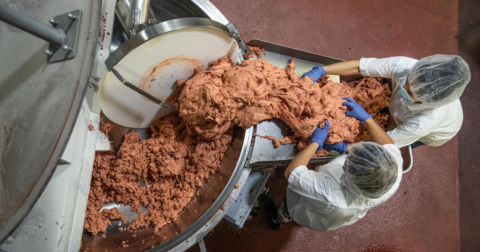
It takes around 1,078 liters of water to produce one kilogram of pork — just over two pounds. Producing a kilogram of beef consumes 925 liters of water from limited resources. When it comes to casual, everyday actions that many people take without much thought or consideration, getting those pork chops and hamburgers to a plate takes an alarming amount of water.
That doesn’t mean AI’s water use isn’t a concern. While the water bottle statistic about a simple chatbot query is incorrect, AI use can consume quite a bit of water, especially when carried out at an industrialized scale by large corporations. But that doesn’t mean we should lose track of the other everyday decisions that also drain valuable water, such as the food on your plate.
Data centers house massive networks of heat-generating equipment, like servers, data storage, computers and power backups, and water can cool these systems faster than air. But the efficiency of cooling depends on a number of factors that also impacts how much water is needed. This is partly why the amount of water a single AI chatbot prompt uses in a specific case is a very complex estimate that can vary wildly depending on a number of factors, including query details like length, and environmental details like outdoor temperature, location and access to nearby water.
Lack of transparency is another reason these estimates are so uncertain. Most of the large tech conglomerates don’t publicly disclose the inner workings of their facilities’ cooling methods.
It’s also worth noting that the water and energy consumption of a data center may not even occur on site. This means that the water used by a data center in one city could be impacting another region entirely.
“Power plants that data centers draw from can actually be very, very physically far from the data centers themselves, because energy is moved all over the grid with high-energy transmission lines,” Masley says. “If you’re talking about like, what are the water impacts of a data center being built in Loudon County [in Virginia], you might assume that this is mainly going to matter for Loudon County. But on a given day, that data center might also cause water to be used in a coal plant somewhere in West Virginia.”
Back in 2024, the Washington Post published estimated water usage by AI from its collaboration with researchers at the University of California, Riverside, led by engineering professor Shaolei Ren. The goal was to figure out how much water was required to generate a single 100-word response from ChatGPT, and the results estimated that AI consumes over 500mL of water, or a little more than a standard water bottle.
This claim took off like wildfire, with outlets like The Guardian and Forbes and organizations like the Environmental and Energy Study Institute running with it and establishing it as an accepted truth.
But it’s not true. Put another way, we now have more information that suggests it’s not true.
In an email to Sentient, Ren says that this was the best possible estimate of AI’s water usage at the time, given the information available. But a lot has changed since that initial estimate, including both the amount of information available about how AI models work and the technology data centers use to process chat prompts and cool their data centers.
“The 2024 estimate for GPT-4 was time-specific, assumption-based, and should not be used to describe general AI/ChatGPT or today’s optimized systems,” Ren wrote in an email to Sentient. “The estimate was based on publicly available information at the time: the energy estimate provided by EcoLogits (as of mid 2024) and the water usage effectiveness information disclosed by technology companies.”
EcoLogits is an organization that publicly tracks and discloses the energy use of AI services, and it now has a free, customizable calculator for estimating water usage from various types of AI prompts. As of this writing, EcoLogits estimates that generating one email via ChatGPT 5.5, the current free model of ChatGPT, uses 6.11 mL of water, or 1.2% of a water bottle.
Ren says that this updated number is due to “methodological changes and newer data sources,” though he adds that it “is also broadly consistent with Google’s reported 33x energy-efficiency improvement for a ‘typical’ Gemini text request from May 2024 to May 2025.”
There are choices we make every day with the potential to have a much higher water footprint than chatbots, yet these decisions receive only a fraction of the scrutiny people give to AI and data centers, according to Masley.
What we eat is one of the best examples of this. Meat consumption has skyrocketed over the last 60 years, and as of 2023, the average person in the U.S. eats about 82 pounds of beef and 64 pounds of pork every year. In the developed world, grabbing a cheeseburger or a bacon breakfast sandwich has become such a natural part of most people’s day-to-day lives that its enormous water footprint typically goes unremarked upon.
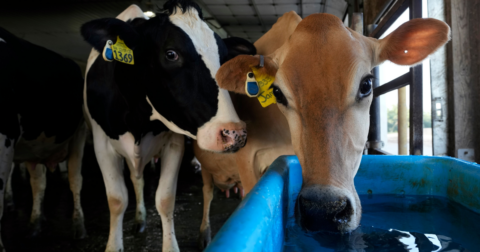
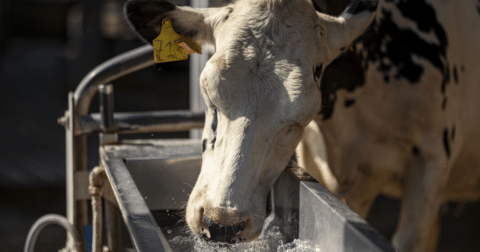
Producing meat requires water for several reasons. Animals have to drink, for one. They also have to eat, and the food they eat needs irrigation.
When comparing the water usage of various food products, water originating from rainfall, also known as green water, is generally excluded, as rainfall would have occurred regardless of whether or not food was being produced.
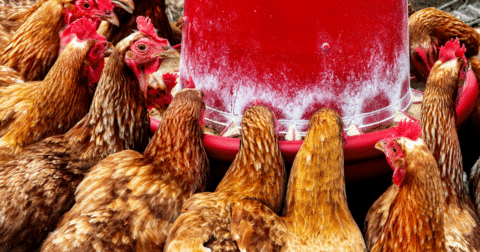
According to the Water Footprint Network, producing a kilogram of beef — or roughly two pounds — consumes around 925 liters of water. Pork is even more intensive, gobbling up 1,078 liters of water per kilogram, while chicken consumes 779 liters per kilogram.
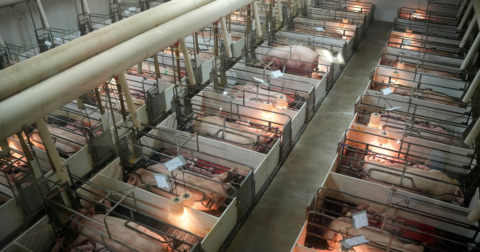
These figures only relate to water quantity issues, but water quality is affected by meat and dairy production too. Many types of livestock farming, especially dairy and pork, are major contributors to water pollution, with manure and fertilizer runoff from farms leaking into nearby waterways.
Meat still has a significantly higher water footprint than plant-based foods. For instance, soy, potatoes and bananas all require less than 20% of the limited water resources needed for producing the same weight in beef.
The same is true of animal products in general. For instance, almond milk is notorious for gobbling up water during its production process. It takes 371 liters of water to make just one liter of almond milk, which is significantly more than other non-dairy milks need, such as soy milk or oat milk. And yet, despite this, almond milk still has a much smaller water footprint than dairy milk, which requires 628 liters of water.
The point isn’t that AI is harmless, but rather that people are bad at estimating the environmental impacts of their own actions. This is one particularly glaring example of that, and it matters because many people sincerely do want to reduce their environmental footprints.
But we can’t do that if we’re not armed with accurate information. For the average person who wants to use less water, chatbots shouldn’t be the end of your inquiry, and eating less meat would be an excellent and highly effective place to start.
Update: An earlier version of this story included a quote from Andy Masley that readers flagged as misleading. The quote was removed because, on its own, it suggested a comparison between AI data centers and pig production that the story does not make.
If you have feedback or corrections, please email [email protected]
Seth Millstein is a writer and musician living in the Bay Area. He has helped launch several early-stage journalism startups, including Bustle and Timeline, and his work has been published in Bustle, Huffington Post, The Daily Dot and elsewhere.
Feature
Culture•7 min read
Feature
New technology can detect pain in farm animals, but critics say it may do more to bolster the system than improve it.
Science•7 min read
Solutions
A 60-year mystery has been solved as researchers discover a coral ecosystem on the Benin-Togo continental shelf that is still teeming with marine life.
Research•5 min read