Feature
A Scientist Was Pushed Out for Studying Iowa’s Water. Now He’s Running To Regulate It.
Elections•15 min read
Feature
In Boone, Iowa, a cottage cheese plant is meant to feed the protein craze, but will it also pollute the water?


Words by John McCracken
For nearly two years, Kevin Griggs has had a gnawing question: where will the cows go?
When Griggs, a 56-year-old environmental scientist, first heard about the local project that sparked this question, he was excited for growth in his town. A major economic development was coming to Boone, Iowa, about an hour north of the state capital of Des Moines.
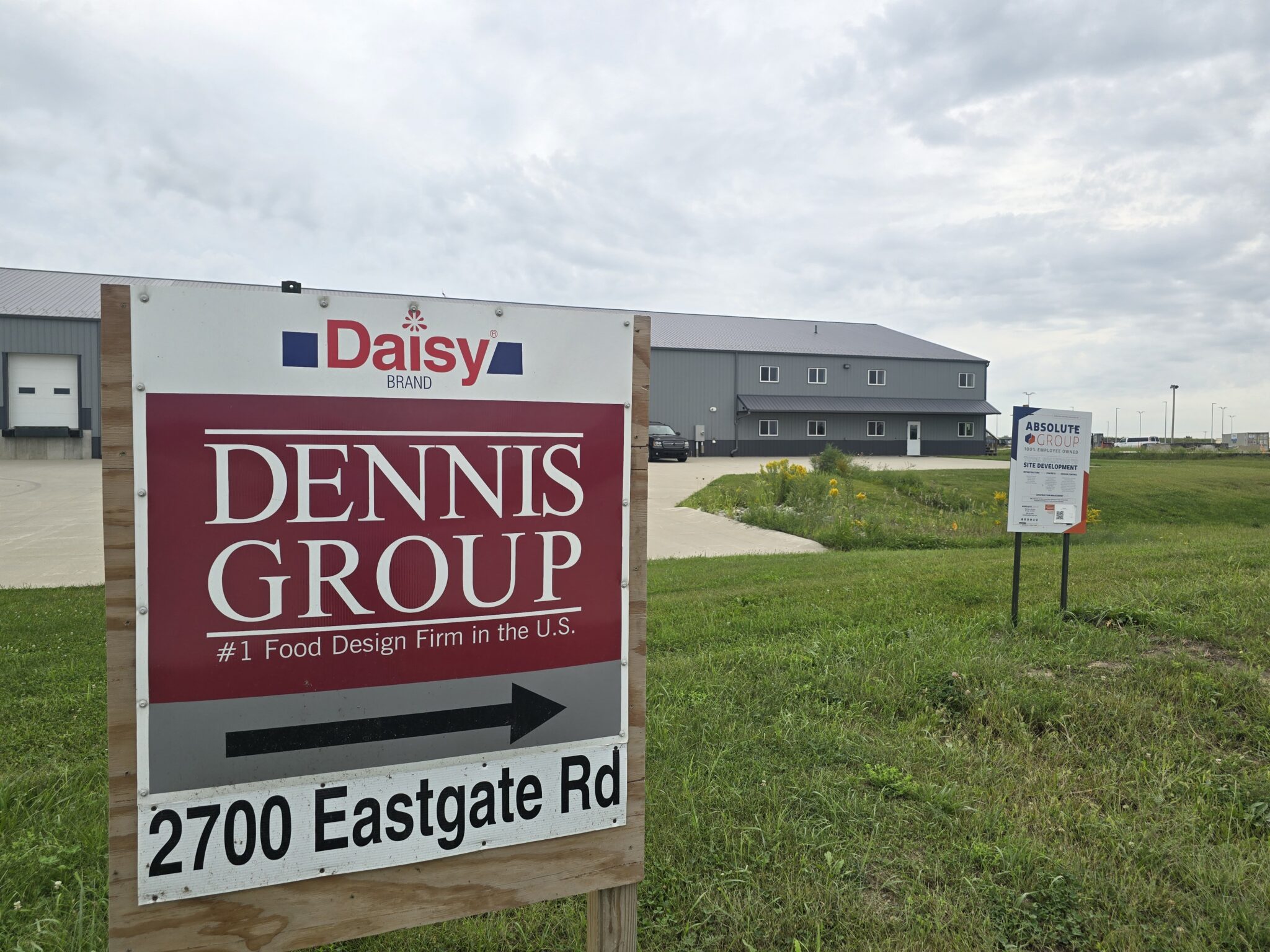
Daisy Brand, the nation’s leading manufacturer of cottage cheese and sour cream, announced the construction of a new cottage cheese plant in the city in 2024. A privately-owned company headquartered in Dallas, Texas, company sales have reached over $1 billion in recent years thanks to a global craze for cottage cheese amidst a protein boom.
This facility will be Daisy’s fourth in the United States. The Boone plant is the largest construction project ever taken up by the city of nearly 13,000. The project is estimated to cost a billion dollars and is expected to start production in 2028.
The Ames Regional Economic Alliance estimated in 2025 that the plant will bring 255 new jobs to town, and the plans have already spurred new housing construction in the region.
“I am all for economic development. I want this to happen. Everybody right now, we’re still patting each other on the back,” Griggs says. “What nobody’s talking about is where their milk supply is going to come from.”
According to officials, 43,000 additional dairy cattle will be required to meet demand for the facility.
This is where Griggs gets anxious.
Adding new cattle to the state to supply the Daisy production plant with milk would increase the number of dairy cattle in the state by about 17%. Initial Sentient reporting finds that a nearby industrial dairy farm will expand its herd to provide the plant with enough product for production to begin. Experts interviewed by Sentient estimated that existing Iowa farms can supply the milk needed for the plant at full capacity, but were vague on how that would be feasible or what that would look like.
“This keeps me up at night,” Griggs says.
Tens of thousands more cows would almost certainly largely be housed on industrial dairy farms, and would generate a lot of manure. Boone County currently hosts many farms, like any rural area in Iowa, but no large industrial dairy farms. The county contains 35 industrial hog farms, eight industrial beef cattle farms and one industrial chicken farm, according to a Sentient map based on data from the Iowa Department of Natural Resources. Collectively, these existing 44 industrial farms in Boone County produce an estimated 506 million pounds of manure per year.
Consumer demand for protein-rich foods triggered the growth of the Daisy company. Large dairy farms will get bigger to meet the new plant’s demand for milk, causing an influx of manure. When already-large dairy farms expand, many resort to a controversial technology meant to capture and sell the manure byproduct.
Growth like this comes at a cost.
This domino effect is playing out in Iowa at a pivotal moment in the state. Iowa is wrestling with a water quality crisis, with livestock waste and industrial agriculture responsible for much of the ongoing pollution. Water pollution caused by nitrates from animal manure is also linked to the ongoing public health crisis of cancer in Iowa.
“43,000 head of cattle is beyond transformational to agriculture in Central Iowa,” Griggs says. “It’s phenomenal the things that it’s going to change. Why aren’t we talking about that? Because the plant is under construction, so it’s happening. It’s not a maybe. That milk’s got to come from somewhere.”
Iowa is home to roughly 245,000 dairy cattle who make six billion pounds of milk a year. Dairy cattle are known for their large manure output; Iowa dairy farms are 5 of the state’s 10 largest producers of manure.
“I think this could be done right, but I see a thousand ways that it could go wrong,” Griggs says.
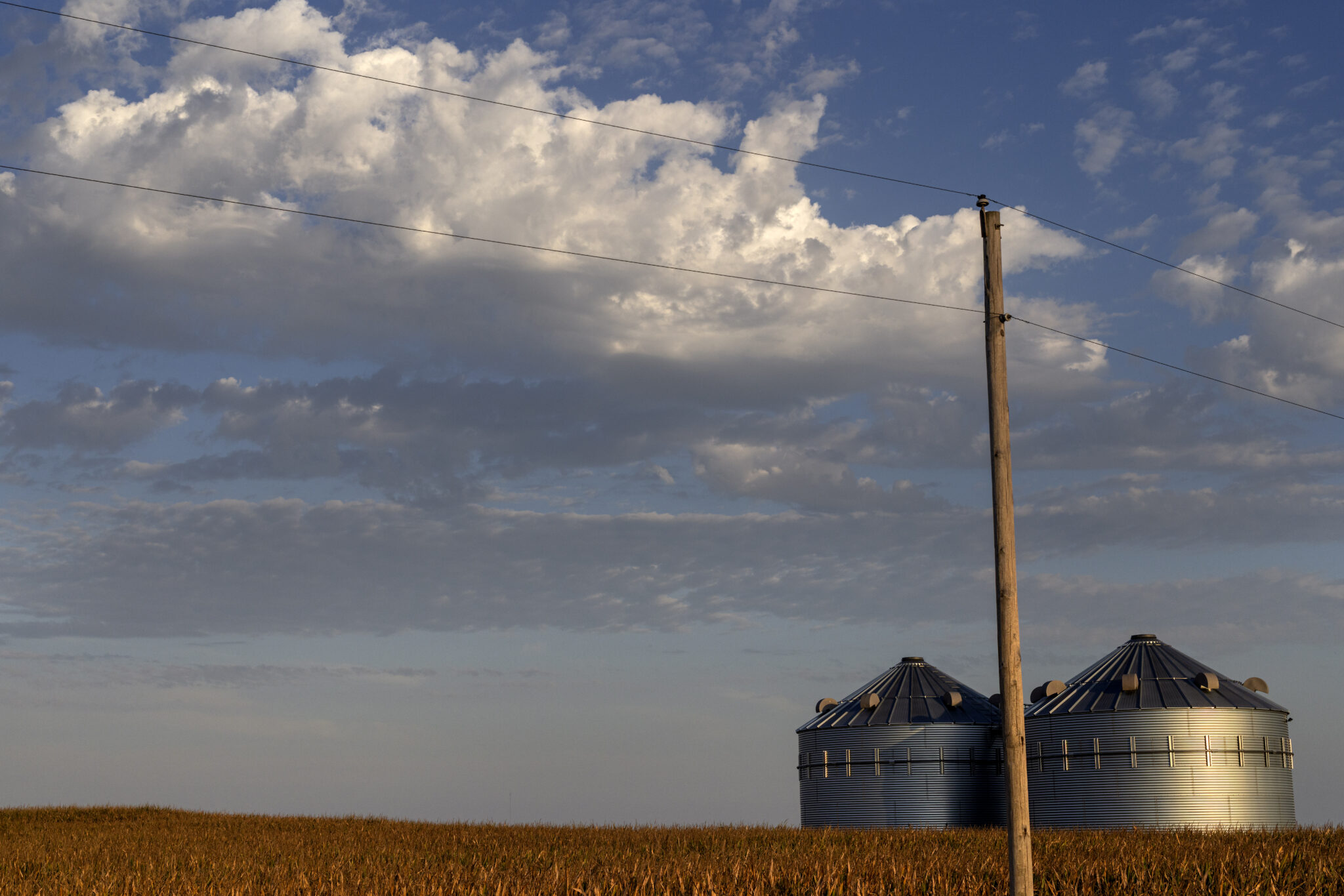
The expansion of Iowa’s dairy herd to support the Daisy plant won’t happen overnight, but seems to have already begun. The plant is expected to begin operating in 2028 and operate at full capacity in 2029.
Griggs says the conversation would be different if the project could source milk from a bigger pool of smaller dairy farms, but that’s not the reality of dairy production anymore.
“It’s going to be on one or two or three major, mega CAFOs that are going to absolutely decimate the local environments,” he says.
The cattle needed for the first phase of the plant’s production can be housed at existing dairy operations, according to regional economic developers and agronomists, though they do not specify whether existing operations already have enough cows to meet demand or how many cows would need to be added.
Dan Culhane, president and CEO of Ames Regional Economic Alliance, a regional economic development organization in Central Iowa, tells Sentient in an email that existing milk providers can handle the demand.
He writes that the facility will only require up to 43,000 cows “in five to 10 years, when the facility, as I understand it, is operating at full capacity.” The plant is expected to operate at full capacity in three years, in 2029.
Marshall Ridge Farms, one of Iowa’s three largest dairy Concentrated Animal Feeding Operations (CAFOs), has been named as one of the facilities that will support the Daisy plant’s demand for milk.
This dairy operation, located 40 minutes east of Boone, nearly doubled its size last year, from 8,000 to 15,000 milking cattle.
Fred Hall, a dairy specialist with Iowa State University Extension and Outreach, tells Sentient in an email that it is unlikely the milk the new Daisy plant buys will significantly change the number of milking cows in Iowa beyond the current growth pattern.
“In the unlikely advent of an additional 43,000 milking cows showing up in Iowa; yes, that would be a significant impact to Iowa’s dairy industry,” Hall writes.
Hall writes that milk coming to the plant could come from outside of Iowa. He also writes that other dairy producers in Iowa could stop selling their milk to processors outside of the state and sell to the Daisy plant. On average, milk travels about 100 miles from farm to fluid milk processing plants, according to the University of Wisconsin-Madison extension, though it can travel farther. Milk hauling distance is affected by the cost of milk transportation, which has risen this year.
The lack of transparency around where the plant will get its milk inputs when at full capacity is worrisome, says Diane Rosenberg, co-founder of the Iowa Alliance for Responsible Agriculture, a statewide group that advocates to stop the expansion of factory farms. She says that trucking liquid milk long distances is often not financially sound for farms (hauling costs are deducted from their milk payment checks), suggesting that more product will have to come from nearby.
“I see that whole area getting built out with dairy CAFOs,” Rosenberg says.
Daisy Brand did not respond to repeated requests for comment.
Marshall Ridge has been expanding its herd for years, thanks to another lucrative revenue stream for dairy producers across the country: methane.
The dairy operation is home to a biogas refinery. These facilities take large amounts of manure, place them in massive industrial containers and remove oxygen. This creates a process known as anaerobic digestion. When organic matter goes through anaerobic digestion, one of the byproducts is methane gas.
Dairy operations can capture the gas to sell to natural gas pipeline grids. This revenue stream has increased in popularity in the past three decades, often causing dairy farms to expand herd size.
Marshall Ridge expanded its herd from 6,000 cattle to 8,000 in 2024. The farm finalized a $42 million biogas facility in 2023 to support this expansion.
Digesters have been growing in Iowa since 2021, when the state legislature passed a law to allow dairy CAFOs to exceed the state limit of 8,500 animal units as long as they operated a biogas digester.
While these facilities are often billed as climate solutions, as they capture methane from manure, biogas digesters can also leak potent methane into the air if not properly monitored.
A September 2023 whistleblower complaint to the U.S. Environmental Protection Agency states that a fire broke out at the Marshall Ridge digester, releasing methane gas into the environment and injuring two employees.
Biogas facilities are allowed to release excess methane, a process known as flaring, when the gas is not processed correctly or during other maintenance. Marshall Ridge exceeded its limit of flare hours for two months during 2024, according to Iowa Department of Natural Resources records.
In June of 2026, the Iowa Department of Natural Resources sent a notice of violation to the facility, stating that records were not readily maintained during an inspection.
Marshall Ridge Farms did not respond to a request for comment.
The announcement of the Daisy plant in Boone came with much fanfare and public money.
In order to secure the dairy powerhouse in Boone, the city exempted the Daisy company from nearly $50 million in property taxes over two decades. The state of Iowa’s Economic Development Authority (EDA) provided $18.2 million in a combination of loans and tax credits to the plant as well.
“This project will be immensely beneficial to not only the city of Boone, but also Boone County and the entire central Iowa region. I am incredibly excited for the positive economic impact it will bring and the continued success of Daisy Brands and their impeccable line of dairy products,” Boone Mayor Elijah Stines said in a statement when the project was announced.
This plant expansion has raised concerns for what an increased dairy footprint in the region will do to the future of its already overburdened waterways.
As part of the deal to bring Daisy to Iowa, the City of Boone committed to upgrading an estimated $21 million worth of infrastructure that will be used by the plant. For one, the city will upgrade its wastewater infrastructure to be able to handle the increased wastewater the plant will generate once it is operational.
Boone will add a new well and a water tower to meet demand from the plant and keep up with nitrate removal, an ongoing issue for cities across the state. The addition of the Daisy plant will “significantly reduce” the city’s ability to manage nitrates through its current system, says a July 2026 environmental report from the Iowa State Revolving Fund.
Steven Pfannes, a Boone native and member of the central committee of Boone County Republicans, says the plant will be good for the city and surrounding area, as its population growth has lagged behind neighboring towns. He hopes the public investment will result in more growth around the city.
“There’s not a lot of money in dairy,” Pfannes says. “So whoever’s doing it now, they just keep doing it, getting bigger and more efficient.”
John McCracken is an investigative reporter whose work examining the nation's consolidated meat industry, industrial agriculture and climate change has received awards and recognition from the Chicago Book Club, North American Agricultural Journalists, Wisconsin Newspaper Association, Iowa Newspaper Association and more. He has been invited to speak about his reporting at the Society for Environmental Journalists, NICAR and more.
Feature
Factory Farms•14 min read

Explainer
What do Democrat Rob Sand and Republican Zach Lahn say they will do about Iowa’s poor water quality?
Climate•10 min read

Feature
A survey taken this past spring shows a majority of Iowans say they have experienced negative environmental impacts from industrial animal operations. But plenty are also ambivalent, or ignorant, about…
Elections•11 min read